Top 10 horse riding brands clothing Manufacturer Picks in China
Compare horse riding brands clothing Manufacturer options in China by product expertise, order requirements, sampling terms, and supplier evidence. Find suitable partners for your equestrian collection, understand sourcing risks, and build a practical shortlist before committing to samples or production.
Top 10 horse riding brands clothing Manufacturer Picks in China for Supplier Comparison
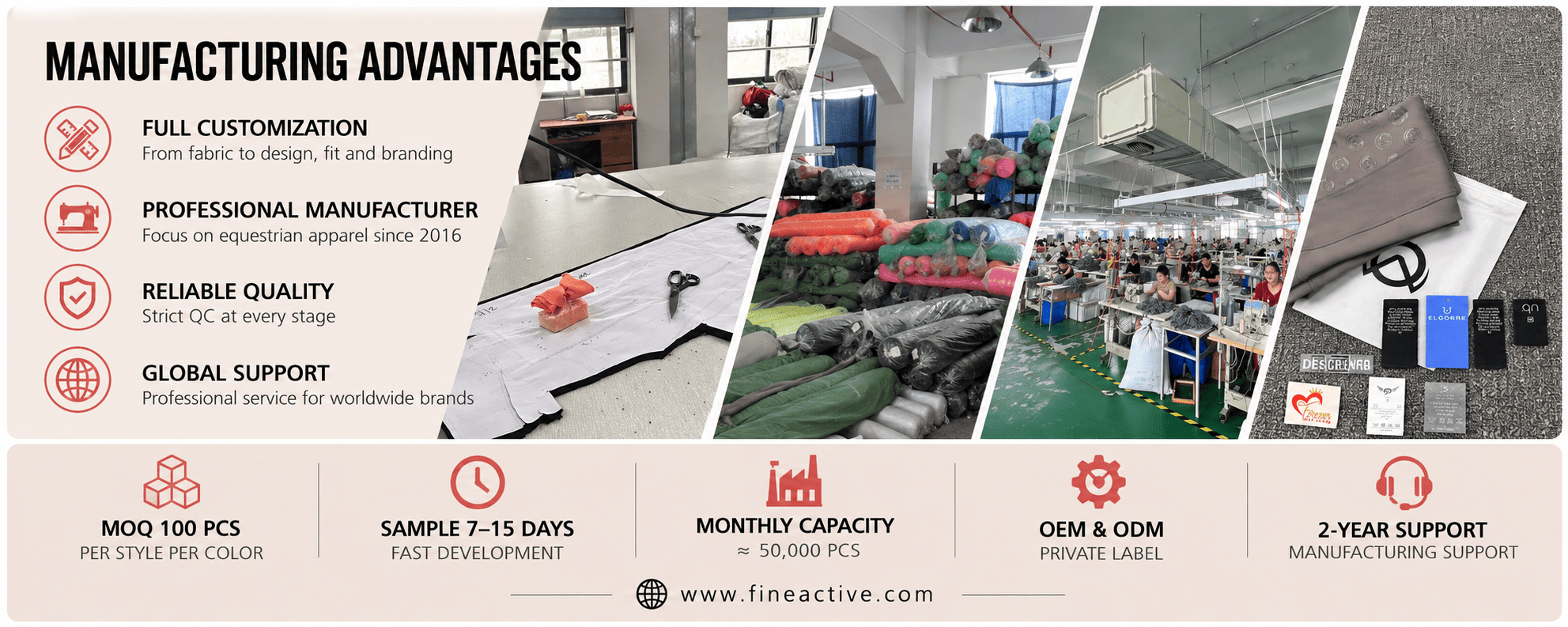
A great sample can hide a weak supplier. It may come from the best machinist in the room, use fabric that will not be available for your repeat order, or arrive with a price that excludes half the work your collection needs. For a riding brand, those gaps become very real: returns over fit, complaints about grip, and a launch date that slips while stock sits in transit. When comparing horse riding brands clothing Manufacturer options in China, the useful question is which supplier can support your particular products, order structure, and quality expectations—and show enough evidence to justify the decision.
Ten suppliers worth comparing are Fineactive, SGL Sports, Zest Equestrian, Equifactory, Kala Apparel, Dongguan Ope Equestrian, Dongguan Shuyu Activewear, REINFORM, VeloSpan, and Dongguan RW Equestrian. Start with product specialization and order feasibility, then compare equivalent quotations, sample results, and factory evidence. There is no single best manufacturer for every riding brand. A defensible shortlist identifies both what each candidate offers and what remains unverified before money moves.
This guide puts the list first, then explains how to narrow it down. Fineactive publishes this comparison and is included as a candidate, not as an independently awarded winner. Supplier information was reviewed on 28 October 2026. Published statements are not independent factory audits; project-specific terms require written confirmation.
1. Which Horse Riding Clothing Manufacturers in China Should You Compare?
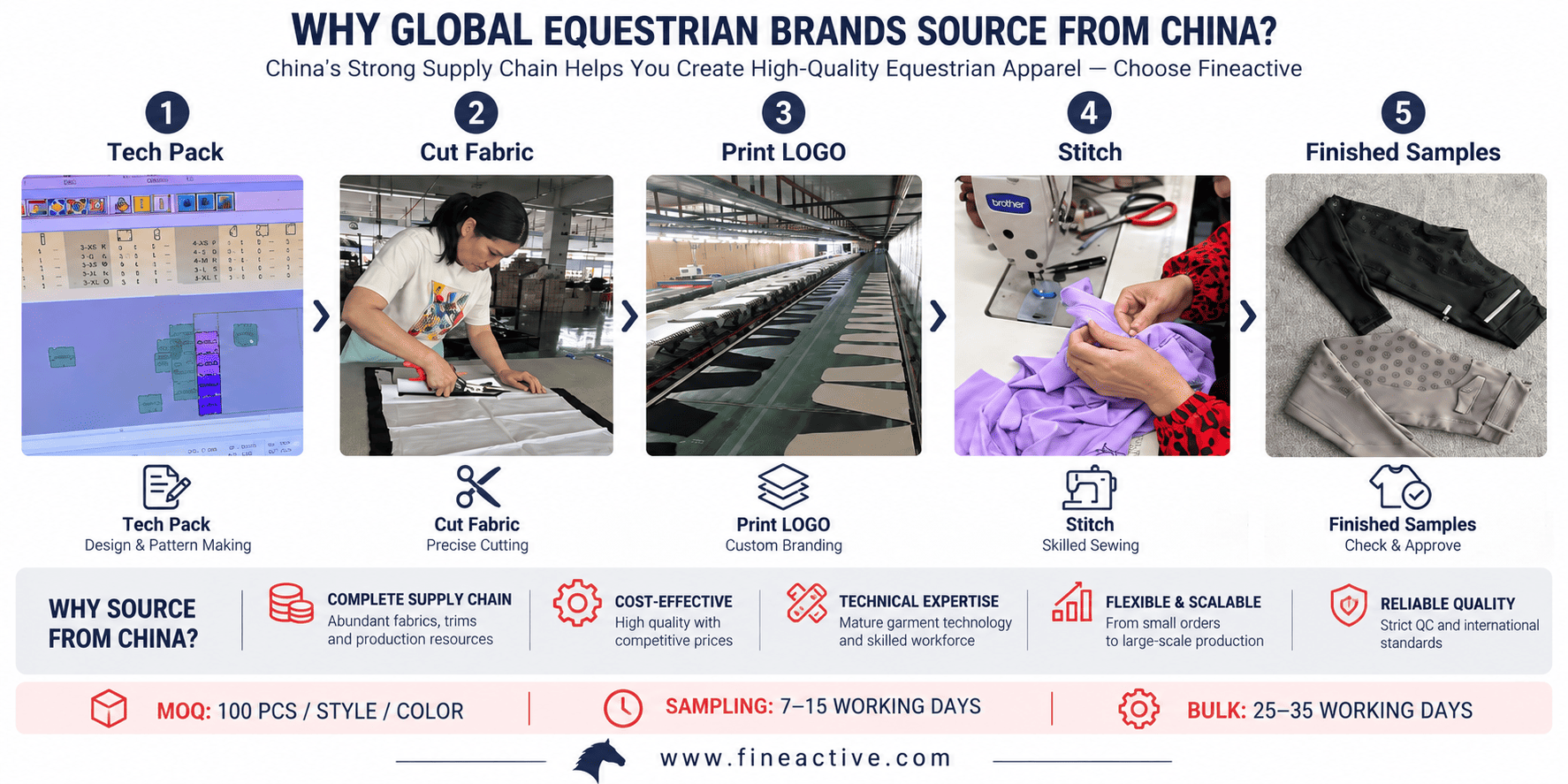
Compare suppliers that can demonstrate relevant riding-apparel work and support your order structure. The ten candidates below cover different combinations of equestrian specialization, broader apparel production, and collection sourcing. Use the table to eliminate obvious mismatches before paying for samples. A published minimum is a starting point, not confirmation that every fabric, color, size range, or product category can be ordered on the same terms.
Quick Comparison Table: Products, Order Terms, and Evidence Status
| Supplier | Published location | Apparel focus | Published MOQ indication | First issue to resolve |
|---|---|---|---|---|
| Fineactive | Dongguan, Guangdong | Breeches, tights, show clothing, technical tops, outerwear | 100 pieces per style per color | Development scope, material requirements, current capacity |
| SGL Sports | Dongguan, Guangdong | Riding clothing plus sportswear | FAQ: 200 pieces per design per color | Reconcile FAQ and homepage timing |
| Zest Equestrian | Dongguan, Guangdong | Riding apparel within wider equestrian supply | Low MOQ advertised; obtain category-specific figure | Separate apparel terms from equipment terms |
| Equifactory | Published contact address in Wuhan, Hubei; production site to confirm | Riding clothing and equestrian equipment | 100 pieces advertised; allocation to confirm | Legal entity, production location, quotation scope |
| Kala Apparel | Dongguan, Guangdong | Equestrian, activewear, golf and lifestyle apparel | Homepage: 30–200 pieces; style/fabric dependent | Identify which minimum applies to your garment |
| Dongguan Ope Equestrian | Dongguan, Guangdong | Riding wear within broader equestrian supply | General profile: 100 per design/color; some listings differ | Product-specific MOQ and factory arrangements |
| Dongguan Shuyu Activewear | Dongguan, Guangdong | Equestrian and other apparel | Commonly 100–200 per style/color | Stock branding vs custom development |
| REINFORM | Hangzhou, Zhejiang | Breeches, tights, base layers, show shirts, outerwear | 300 per style per color | Inventory commitment across colors |
| VeloSpan | Dongguan production base stated; Guangzhou contact address | Breeches, tops and outerwear | Selected product: 100 per color/design | Confirm manufacturing site and category terms |
| Dongguan RW Equestrian | Chang’an, Dongguan, Guangdong | Breeches, show shirts, jackets and base layers | Selected listings: 100; some jackets: 200 | Peak-season scheduling and product-specific minimums |
What Qualifies a Manufacturer for This Shortlist?
The entry requirements are a public riding-apparel offering, a B2B manufacturing or customization proposition, and enough information to begin a meaningful supplier review. Inclusion does not certify factory ownership, financial stability, product compliance, or suitability for your order. Those questions belong in the next stage.
How Should Buyers Interpret the List Order?
Numbering is for navigation. It is not a ranking based on factory size, search position, or unverified customer claims. A startup testing two colors and an established label transferring a complex jacket need different partners. The shortlist should reflect that difference instead of pretending one factory wins every category.
2. Who Are the Top 10 Manufacturer Picks, and Which Buyers Should Evaluate Each?
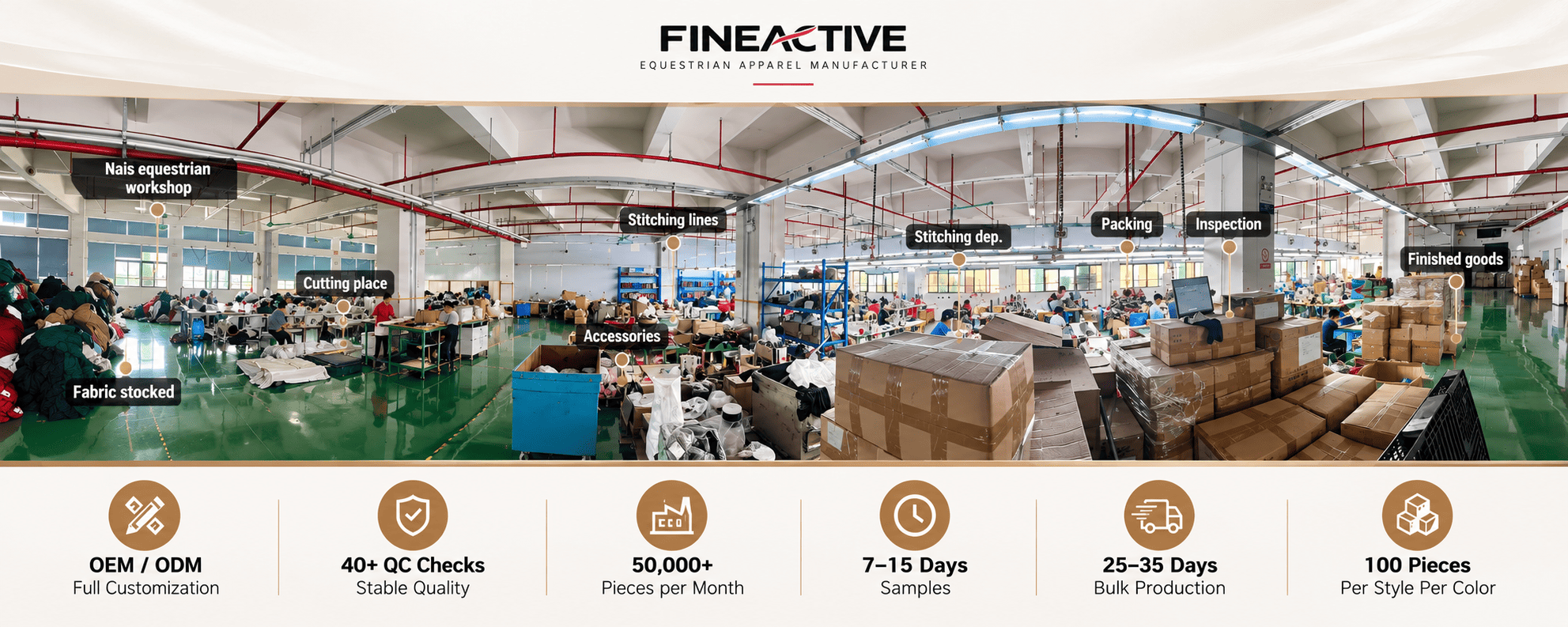
Evaluate each candidate against the same questions: where production happens, which products are genuinely relevant, what the minimum order means, how timing is calculated, and which documents support the offer. The profiles separate published facts from procurement judgments. “Best fit” and “less suitable” describe likely project compatibility, not proven quality rankings. Missing public information is a question to resolve, not evidence of poor manufacturing.
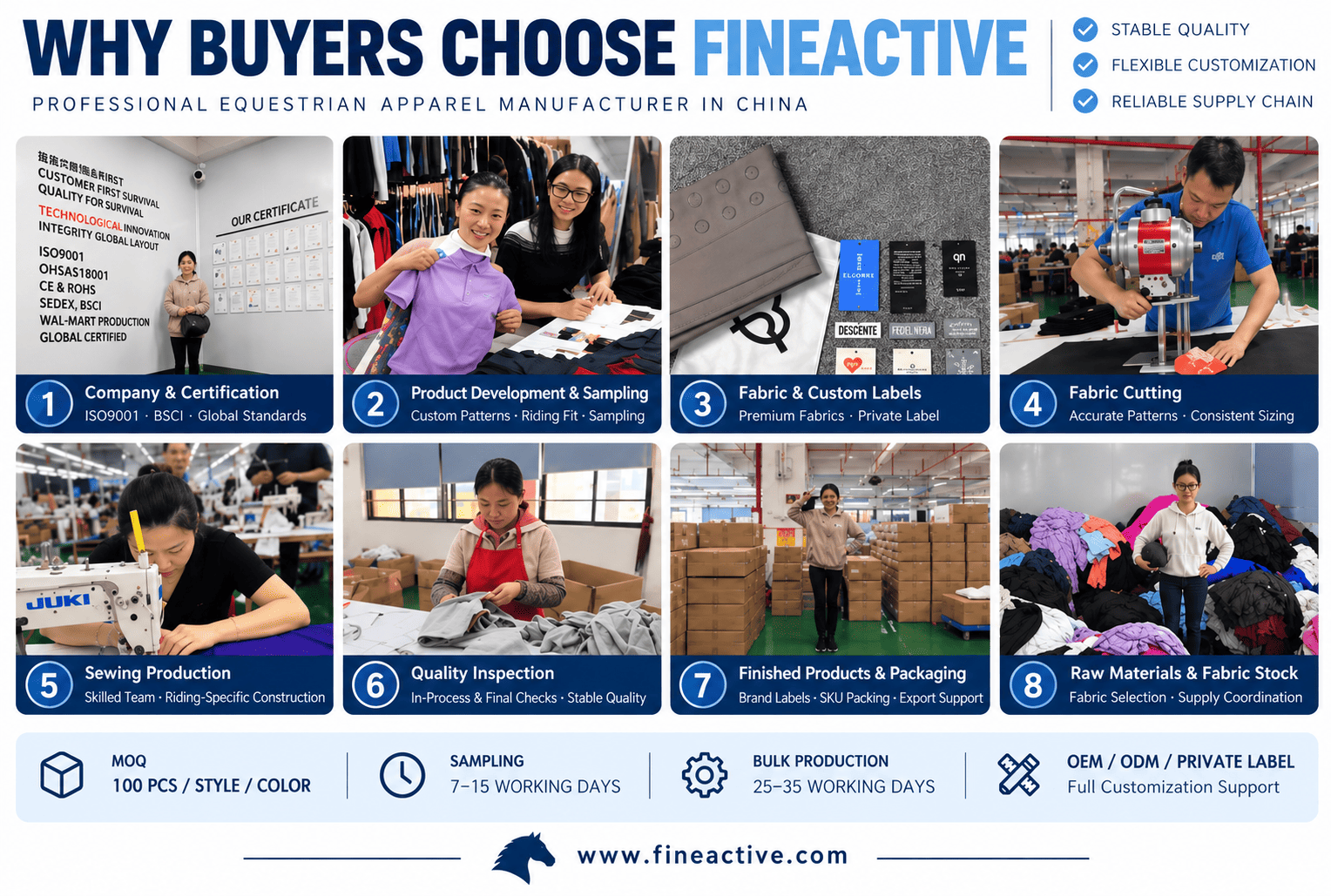
1. Fineactive — Equestrian Apparel Development with Defined Order Terms
City and history: Dongguan; factory establishment recorded as 2016.
MOQ: 100 pieces per style per color; agreed sizes within that combination.
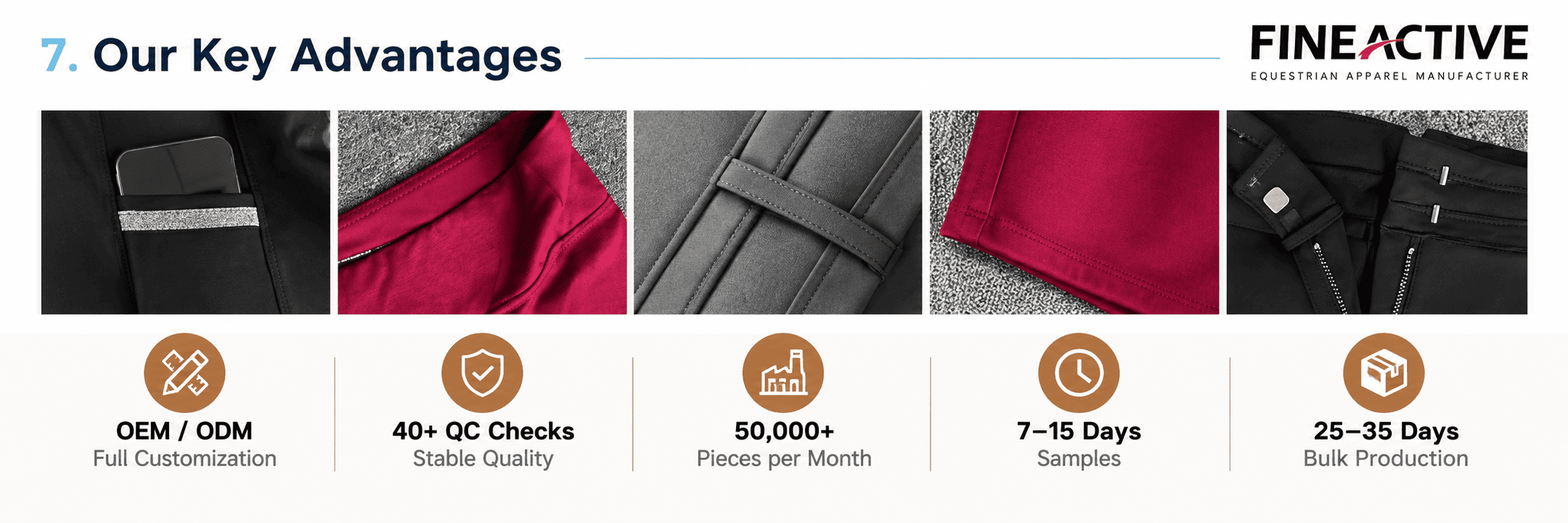
Lead time: Samples normally 7–15 working days; bulk normally 25–35 working days after relevant specifications, approvals, payment, and material conditions are met. Transport is separate.
Core products: Breeches, riding tights, show shirts, competition jackets, technical tops, outerwear, vests, riding socks, and headbands.
Certification status: Supporting factory records list ISO 9001, BSCI, GRS, CE, and RoHS references; current documents, entities, and applicability must be checked individually. These are not a blanket certification claim for riding apparel.
Best fit: Brands seeking equestrian development, defined fit requirements, and a 100-piece style/color starting point.
Less suitable: Projects below that minimum, or buyers needing horse tack, helmets, boots, or gloves.
Core advantage: A defined scope connecting development with production and replenishment.
Constraint: Custom materials and complex construction can change costs and timing.
Fineactive’s records distinguish seven factory lines, including three equestrian lines, from total factory output. Buyers should confirm capacity available for their order rather than assume the overall monthly figure is reserved for riding apparel. Review the Fineactive equestrian apparel manufacturing overview for the service scope behind these terms.
2. SGL Sports — Riding Apparel Alongside Broader Sportswear
City: Dongguan, Guangdong.
Founded: Exact legal founding year not established from the reviewed pages.
MOQ: FAQ states 200 pieces per design per color, with up to five sizes.
Lead time: FAQ states roughly one week for samples and 30 days for bulk; the homepage describes approximately ten working days for samples and 35–40 days for bulk. Request one dated project schedule.
Core products: Breeches, riding leggings, base layers, T-shirts, riding jackets, and wider sportswear.
Certification status: No current certificate scope independently verified for this comparison.
Best fit: Brands evaluating riding apparel together with adjacent sportswear.
Less suitable: A sub-200-piece custom style/color unless an exception is confirmed.
Core advantage: Public OEM/ODM and quality-control information helps structure initial enquiries.
Constraint: Published timing varies between pages.
The useful comparison is how SGL interprets your technical brief and reconciles those timing differences. A general low-MOQ message should not override a specific FAQ minimum.
3. Zest Equestrian — Broad Equestrian Collection Sourcing
City: Dongguan, Guangdong.
Founded: Website reports 16+ years of experience; exact legal establishment date needs confirmation.
MOQ: Low-MOQ production advertised; obtain a written figure for each apparel category.
Lead time: Homepage displays 7–15 days for sampling and 25–45 days lead time. Confirm calendar basis and start conditions.
Core products: Breeches, jodhpurs, show shirts, and riding jackets within a wider rider-and-horse range.
Certification status: Website includes certification and testing claims; verify documents by item. Its helmet-related CE references do not establish certification of ordinary riding clothing.
Best fit: Buyers exploring apparel alongside a wider equestrian assortment.
Less suitable: Buyers expecting one uniform MOQ or compliance document across unrelated categories.
Core advantage: Breadth of assortment and published quality-documentation topics.
Constraint: Apparel-specific production arrangements must be separated from the wider offer.
Ask who makes the garments, which operations are outsourced, and who resolves defects. A broad catalogue can simplify coordination, but does not establish that every category comes from one facility.
4. Equifactory — Riding Clothing and Wider Equestrian Products
Location: Published contact address in Jiang’an District, Wuhan; manufacturing site requires separate confirmation.
Founded: Its own comparison article states 2010; legal registration history was not independently checked.
MOQ: Homepage advertises 100 pieces; confirm style/color allocation.
Lead time: Obtain a written sample and production schedule; no single applicable range is confirmed here.
Core products: Breeches, leggings, show shirts, base layers, jackets, and equestrian equipment.
Certification status: Website discusses OEKO-TEX/GRS options and related material standards; verify actual certificates and scope.
Best fit: Brands, clubs, and sellers comparing broad collection support.
Less suitable: Projects requiring a fully documented production site before commercial discussion, until that evidence is supplied.
Core advantage: Public design, branding, and product-range information.
Constraint: Office address and marketing experience claims do not independently establish factory ownership or capacity.
Have the quotation identify the contracting company and actual production facility. This matters more than the number of styles displayed online.
5. Kala Apparel — Multi-Category OEM with Flexible Published Minimums
City: Dongguan, Guangdong.
Founded: Website refers to 12 years of experience; exact legal founding date not confirmed.
MOQ: Homepage advertises 30–200 pieces, depending on style and fabric.
Lead time: General FAQ gives samples at 7–14 days and bulk at 25–40 days; its equestrian OEM page gives sample development at 10–15 days.
Core products: Riding base layers, breeches, leggings, jackets, plus activewear, golf, and lifestyle clothing.
Audit/certification status: BSCI-related claims are published; request the actual social-audit report and relevant product documentation.
Best fit: Brands comparing equestrian products and adjacent apparel categories.
Less suitable: Buyers assuming the lowest advertised minimum applies to every custom fabric or garment.
Core advantage: Public coverage of development, materials, branding, and smaller orders.
Constraint: Category-specific minimums and timing need reconciliation.
Ask for two quotations if needed: one using an available material and another using your custom fabric. The lower MOQ may attach to only one route.
6. Dongguan Ope Equestrian — Riding Wear with Broader Equestrian Supply
City: Dongguan, Guangdong.
Founded: Legal founding date not confirmed; platform membership since 2016 is not equivalent to incorporation.
MOQ: General supplier profile states 100 pieces per design/color; selected product listings show different minimums.
Lead time: Platform profile gives one month in peak season and within 15 working days off season. These are general profile figures, not a confirmed development-plus-production timeline.
Core products: Breeches, riding pants, leggings, jackets, and wider equestrian goods.
Audit/certification status: Platform displays audited-supplier and verified-license indicators; these are not garment performance certificates.
Best fit: Buyers evaluating riding wear within a broader equestrian sourcing programme.
Less suitable: Buyers applying a general profile MOQ or lead time to every custom item.
Core advantage: Visible product listings provide concrete starting points for enquiries.
Constraint: Product-level terms and manufacturing arrangements require checking.
Request an updated quotation against one exact product specification.
7. Dongguan Shuyu Activewear — Equestrian and Activewear Development
City and history: Dongguan; company website traces its offline factory origins to 2012.
MOQ: Commonly 100–200 pieces per style/color with mixed sizes; stock and branding routes may differ.
Lead time: Selected riding-apparel pages give 7–18 days for samples after details confirmation and 25–35 days after PP-sample confirmation for delivery. Clarify dispatch versus completion and working versus calendar days.
Core products: Equestrian wear, activewear, and other apparel categories.
Certification status: Current product-relevant certification not independently verified here.
Best fit: Brands comparing riding clothing with adjacent activewear production.
Less suitable: Buyers treating a quick logo application on stock as equivalent to full original development.
Core advantage: Public development support and product-level commercial information.
Constraint: Stock, modified-design, and custom routes need separate pricing and approval scopes.
A fast branded stock sample can help test presentation. It cannot demonstrate how well a new pattern will fit your riders.
8. REINFORM — Equestrian Apparel with a 300-Piece Style/Color Minimum
City and history: Hangzhou, Zhejiang; own-factory establishment stated as 2016.
MOQ: 300 pieces per style per color.
Lead time: 7–10 working days for samples; 30–45 working days for bulk.
Core products: Breeches, tights, base layers, show shirts, outerwear, and equestrian polos.
Certification status: Current certificate scope not independently verified in this review.
Best fit: Brands able to support a focused collection at 300 pieces per style/color.
Less suitable: A first launch requiring 100 pieces per style/color without an agreed exception.
Core advantage: Clearly published minimums, timing, and equestrian-focused development information.
Constraint: Multiple colors multiply the initial inventory commitment.
One style in three colors means 900 pieces at the stated minimum. That can work for an established seller, but should be tested against expected size demand and cash flow. Also confirm the relationship between the contracting entity and production site.
9. VeloSpan — Breeches, Riding Tops, and Outerwear
Location and history: Homepage states a Dongguan manufacturing base established in 2014 and lists a Guangzhou contact address; confirm the relevant facility.
MOQ: A selected riding-shirt page states 100 pieces per color/design.
Lead time: That page gives 10–15 days for samples and 20–25 days for bulk; confirm applicability to other categories.
Core products: Breeches, equestrian tops, competition jackets, and outerwear.
Certification status: Current documents and scope not independently verified here.
Best fit: Buyers evaluating technical riding apparel against a detailed product brief.
Less suitable: Buyers expecting a shirt listing’s terms to apply automatically to tailored jackets.
Core advantage: Product pages provide starting specifications and commercial indications.
Constraint: Location, category timing, and certificate details need project-level confirmation.
Use displayed prices to frame questions, not to calculate margins before fabric, branding, testing, and delivery terms are settled.
10. Dongguan RW Equestrian — Equestrian Apparel with Product-Level Listings
City and history: Chang’an, Dongguan; supplier profile states establishment in 2019.
MOQ: Selected breeches and tops list 100 pieces; some show jackets list 200. Confirm per-color allocation.
Lead time: Supplier profile states approximately one month off season and one to three months in peak season; custom sample timing requires quotation.
Core products: Breeches, riding leggings, show shirts, jackets, base layers, and wider equestrian items.
Audit/certification status: Platform publishes an SGS audit-report reference; verify scope separately from product tests and social audits.
Best fit: Buyers comparing specific equestrian garments using item-level commercial data.
Less suitable: Deadline-sensitive launches relying on an off-season estimate without a reserved slot.
Core advantage: Public product listings and an identifiable audit reference support initial enquiries.
Constraint: Seasonal timing can materially change launch planning.
Ask whether your planned delivery falls within the stated peak period and when materials must be committed.
3. Why Source Riding Apparel from China—and When Should You Compare Other Regions?
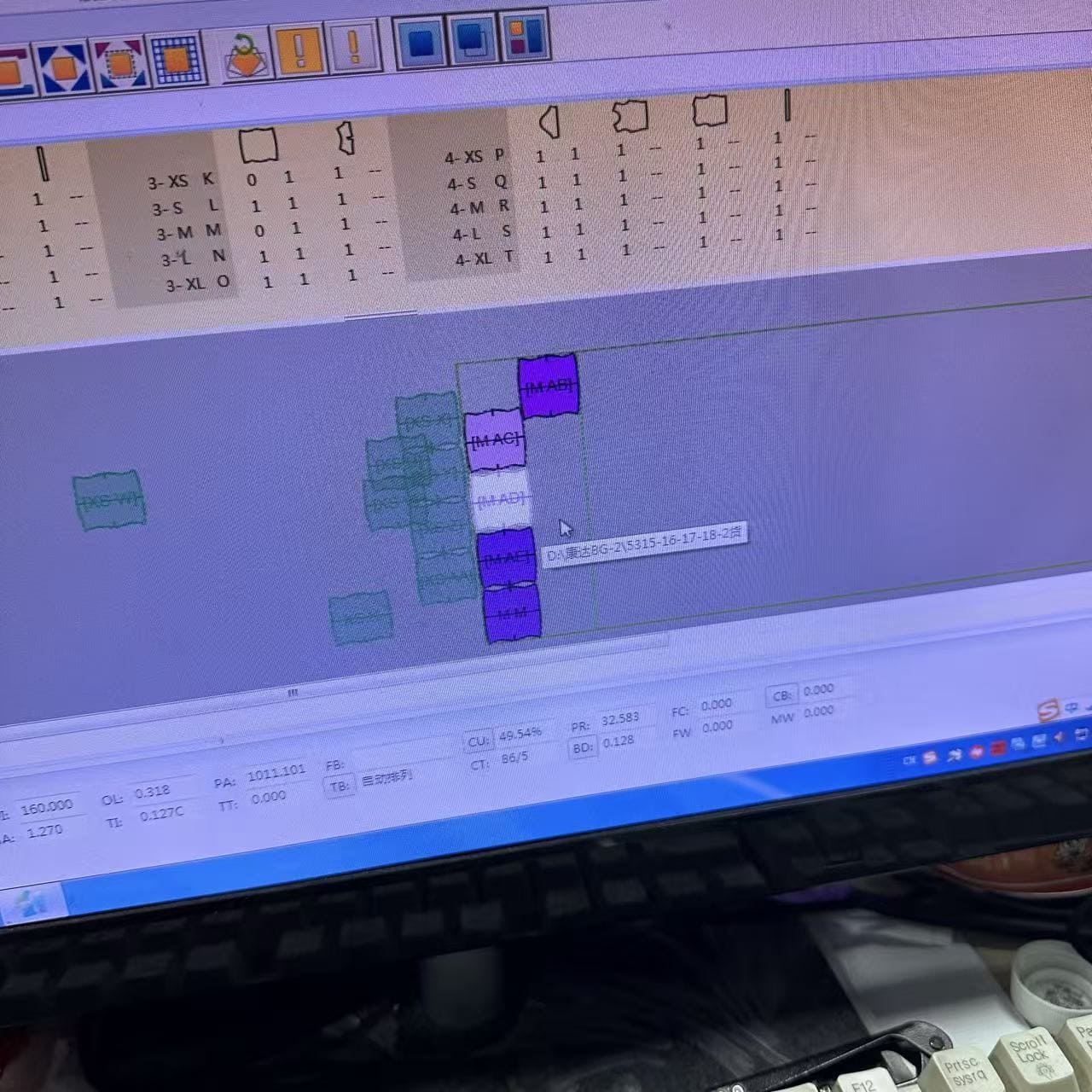
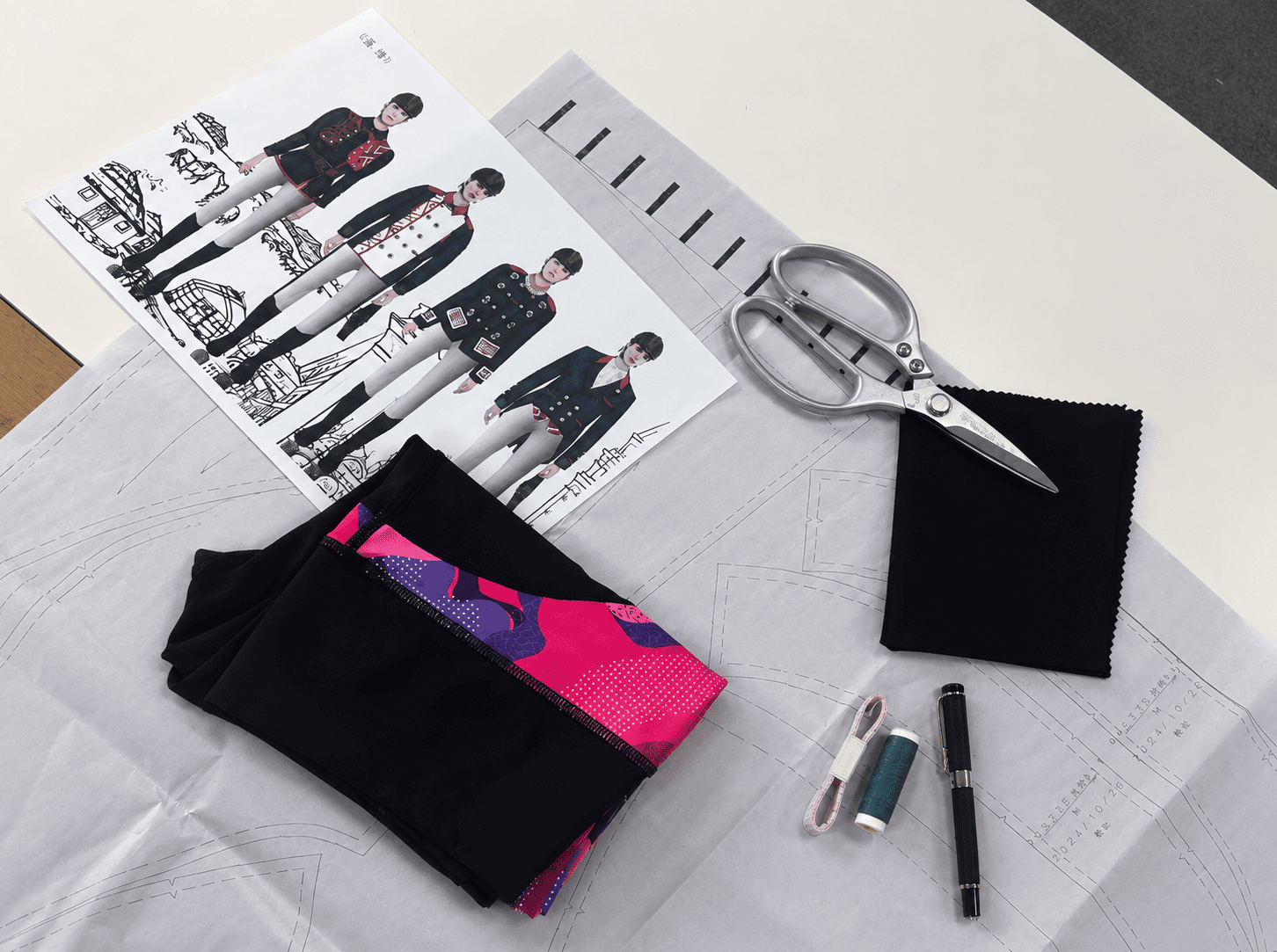
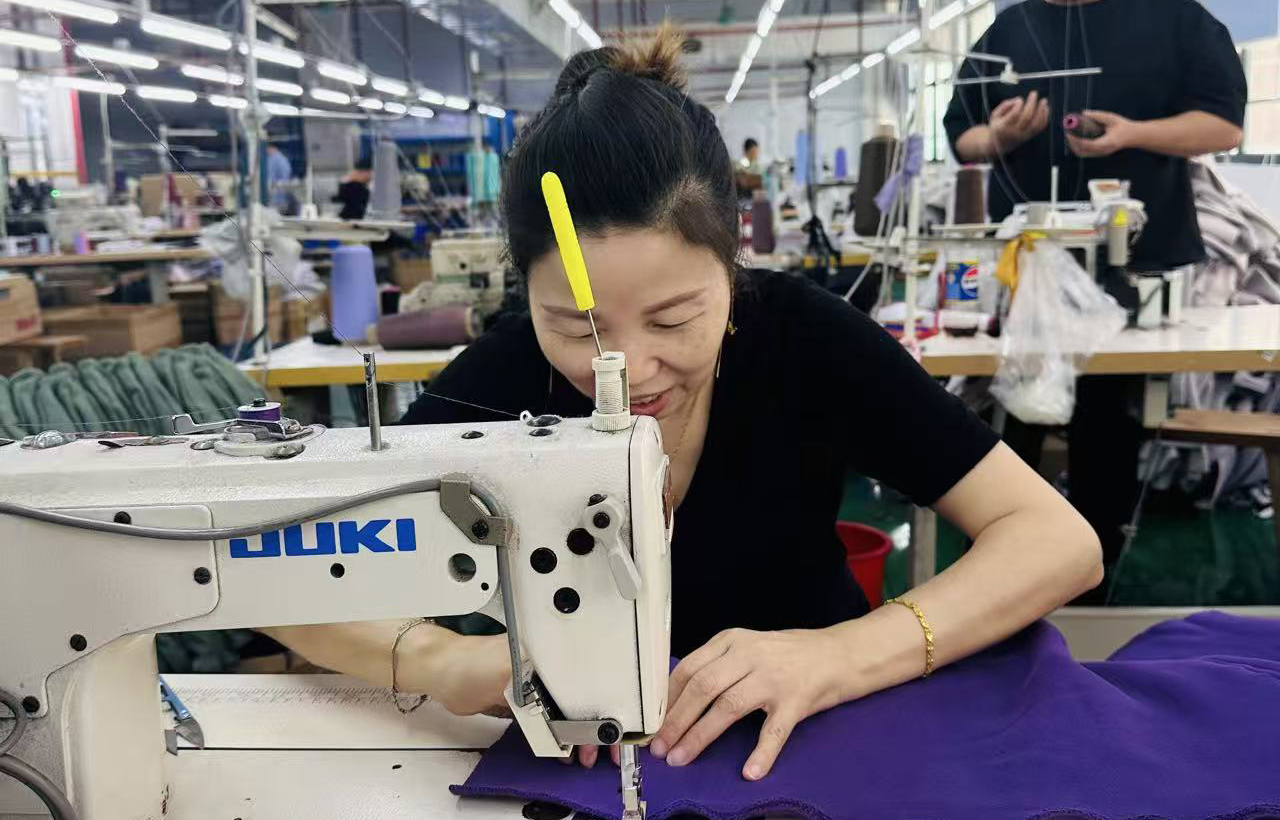
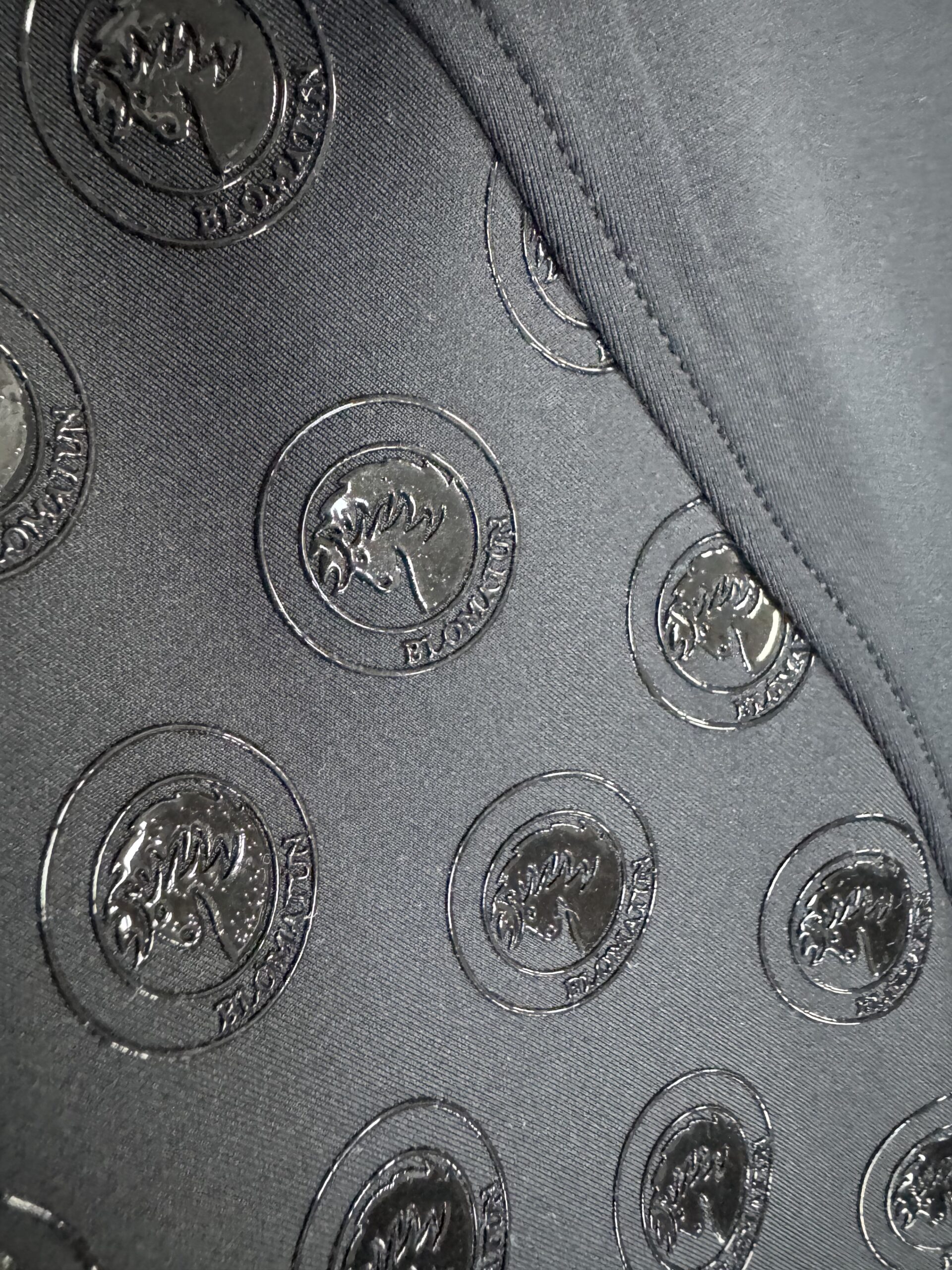
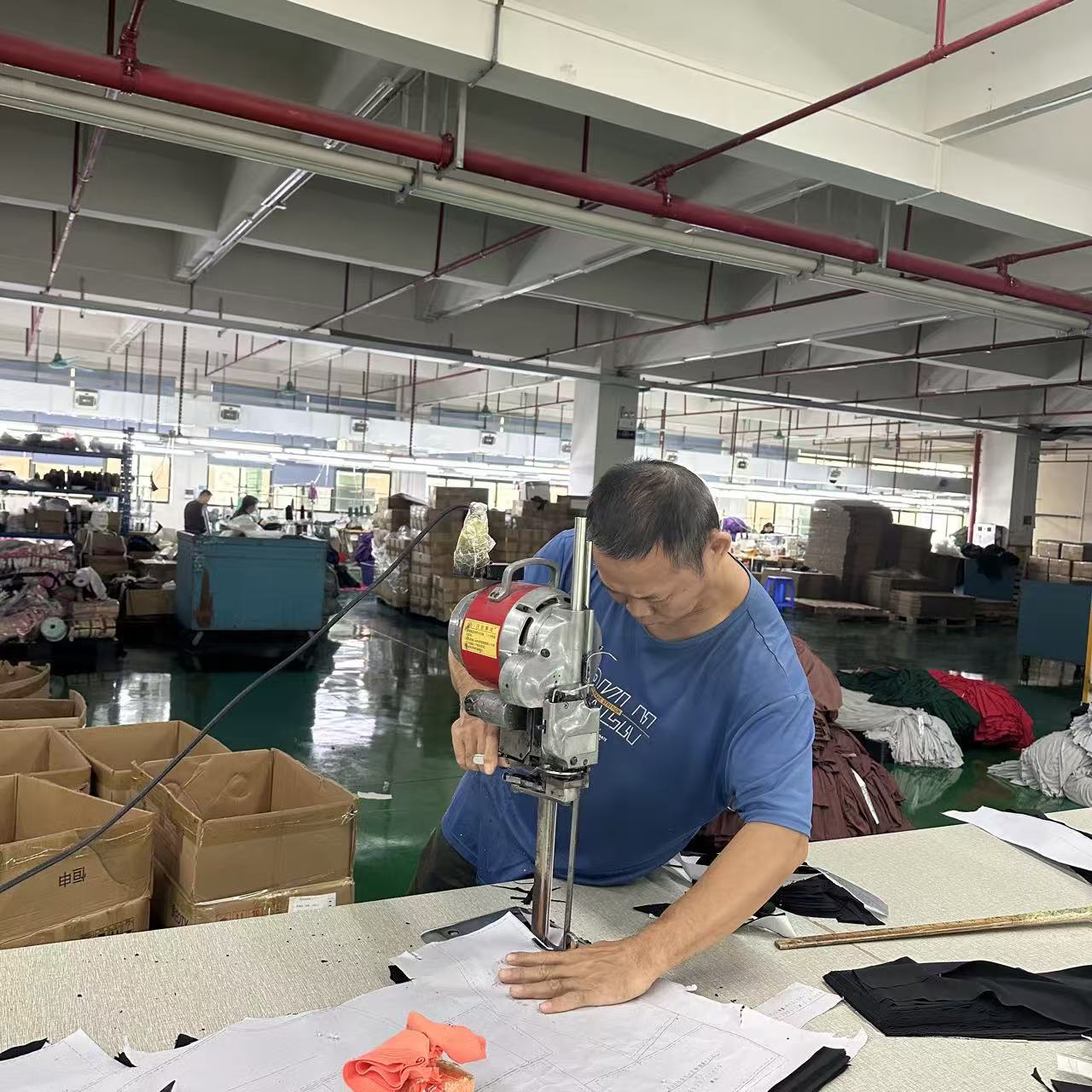

China deserves consideration when your collection benefits from coordinated fabric sourcing, garment development, branding, and repeat production. It should not win automatically on unit price. Compare the complete route from development to stock available for sale. A nearby supplier may be more practical for urgent replenishment or a tiny launch; a Chinese manufacturer may offer a stronger combination of product options and scale for a planned collection.
What Sourcing Advantages Should Buyers Evaluate in China?
The practical advantage is having a coordinated production process covering fabric sourcing, trims, grip application, pattern development, sewing, and export preparation. Ask the supplier how these steps will be managed for your order. A supplier that can identify material risks early may help you save more than one that only offers an extra logo option.
Geography is not proof of integration. A factory near a textile market can still have weak purchasing control. Compare actual supplier relationships, substitution approval, and material reservations—not a map pin.
China vs Europe vs Nearshore Manufacturing
| Decision factor | What to compare across regions |
|---|---|
| Development | Relevant product experience, sample rounds, communication, material access |
| Cost | Equivalent specification, development charges, transport, import costs, usable units |
| Speed | Earliest feasible arrival date after approvals, not quoted sewing time alone |
| Replenishment | Material availability, minimum repeat order, booking flexibility |
| Oversight | Practical access to visits, inspection, evidence, and problem resolution |
When Does the Decision Change?
A 100-piece trial with uncertain demand and a fixed event date deserves a different calculation from a repeatable 3,000-piece programme. Compare both options using your own demand forecast. The best sourcing region is the one that fits your commercial constraints after costs and risks are visible.
4. Which Type of Supplier Is the Best Fit for Your Business?
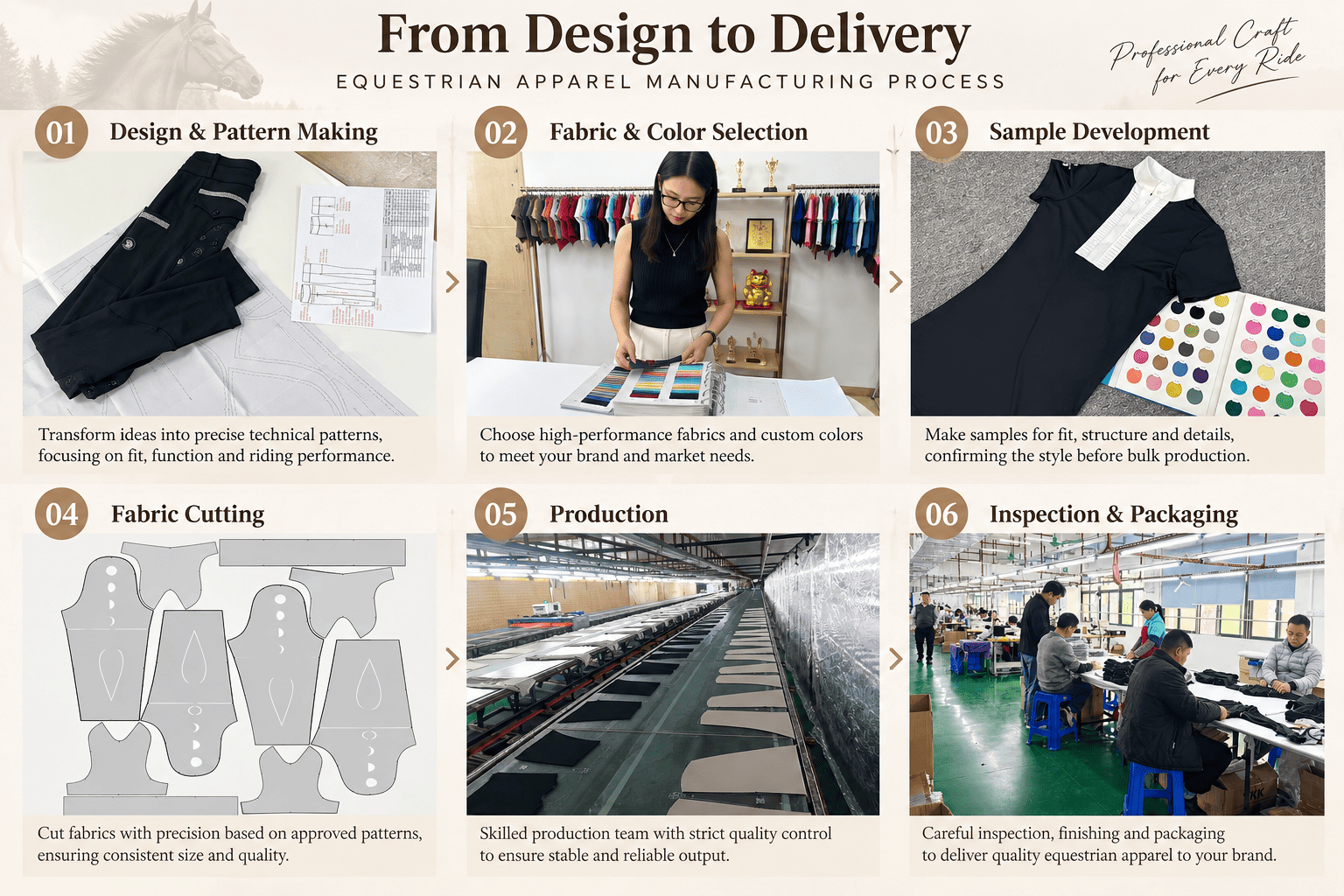
Choose the supplier model around your hardest requirement. A technically demanding breech may justify specialist development; a mixed lifestyle collection may benefit from broader apparel coordination. Direct factory access can improve visibility, while a capable trading partner may simplify multiple categories. What matters is clear accountability for the garments, the specifications, the money, and the response when something goes wrong.
Equestrian Specialist vs Multi-Category Apparel Manufacturer
A riding specialist should demonstrate relevant judgment, not just use equestrian terminology. Give finalists one real problem: a seated waistband pulling down, a phone pocket pressing into the hip, or a jacket restricting forward reach. Compare their questions and proposed checks. A considered request for missing measurements can be more useful than an instant promise.
A broader apparel manufacturer may bring suitable material sourcing or collection coordination. Equally, experience with leggings does not establish competence in competition tailoring. Ask for examples matching the difficult parts of your product.
Direct Factory vs Trading Company vs Manufacturing Network
The practical questions are straightforward:
Who signs the contract and receives payment?
Which facility makes each category?
Who approves outsourcing and substitutions?
Who pays for agreed corrections and controls shipment release?
A trading company with clear responsibilities can be a better partner than a nominal factory that will not disclose where work happens. Transparency matters more than the label.
Startup Brand vs Established Label vs Riding Club
Startups usually need manageable commitments and development guidance. Established brands may prioritize documented repeatability and multi-style coordination. Clubs need reliable size allocation, identity, and an event-ready delivery date. For Fineactive’s specific service scope, compare its OEM and private label riding apparel support with the requirements you have already defined.
Single Supplier vs Split Sourcing
One supplier reduces coordination, but only if it can manage the entire range. Splitting technical breeches and tailored jackets may improve category fit while increasing freight, approvals, and color coordination. Count that workload before deciding.
5. How Do You Verify a Manufacturer’s Claims Before Shortlisting?
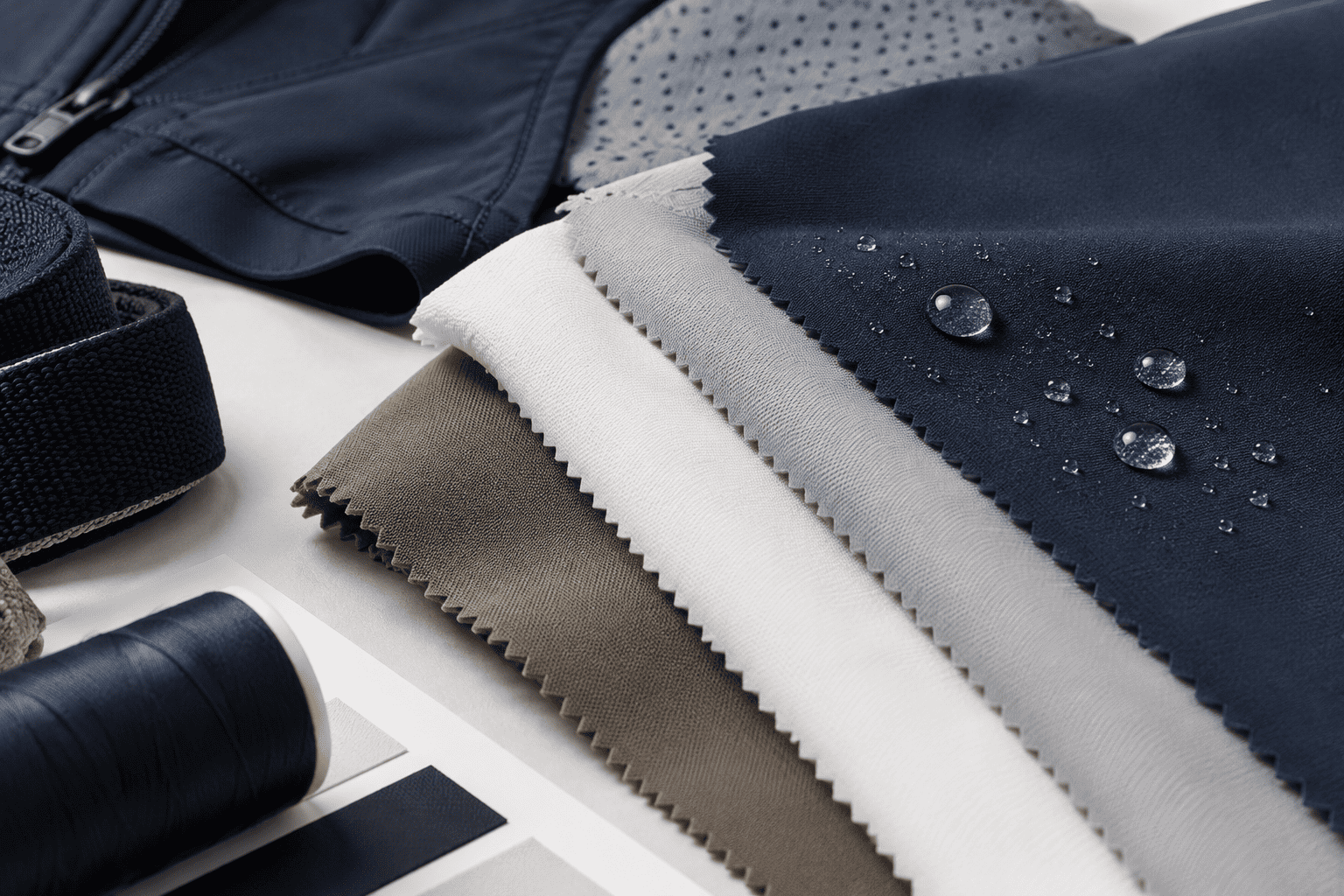
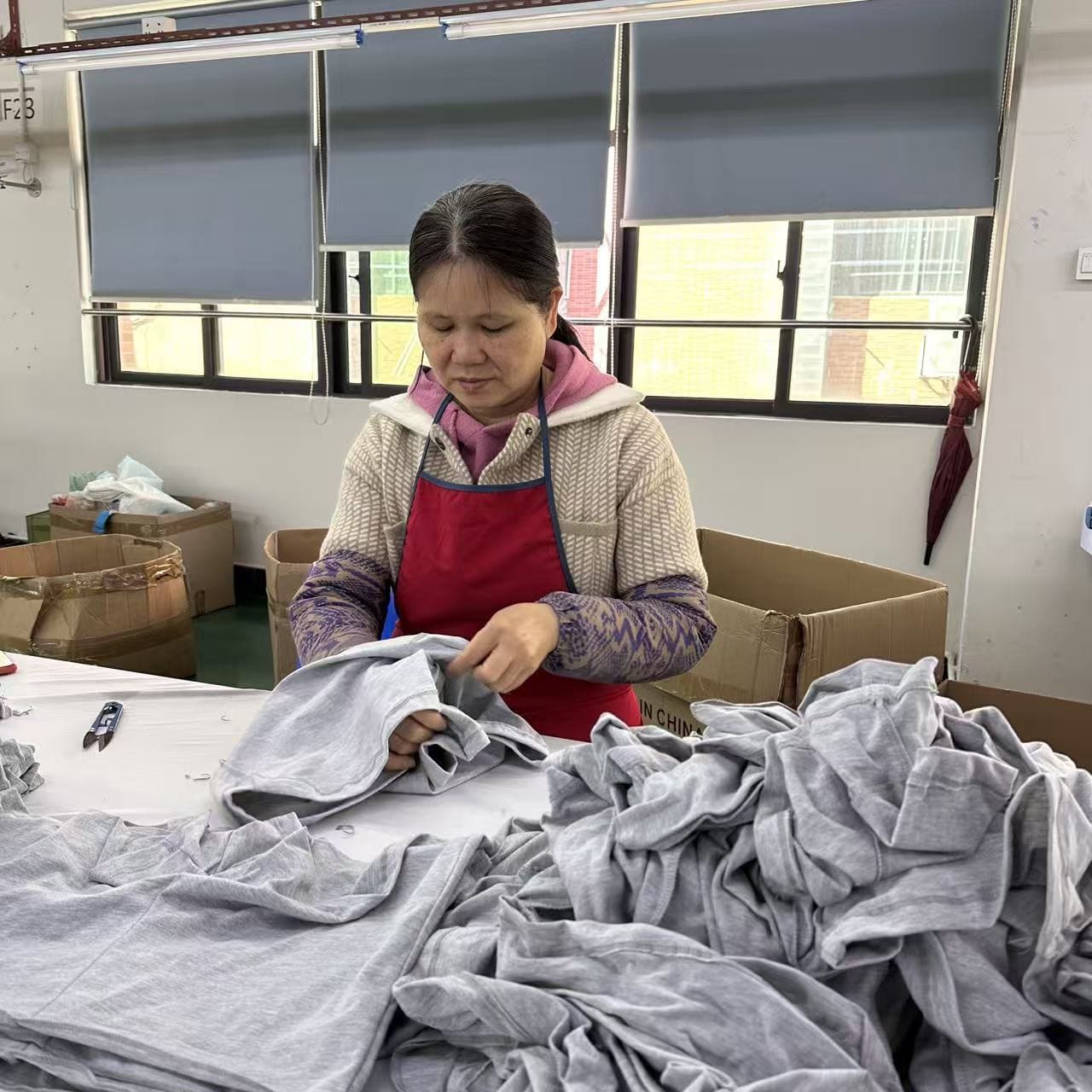
Raw material inspection based on approved quality standards
Inline sample checks during cutting, sewing, and assembly
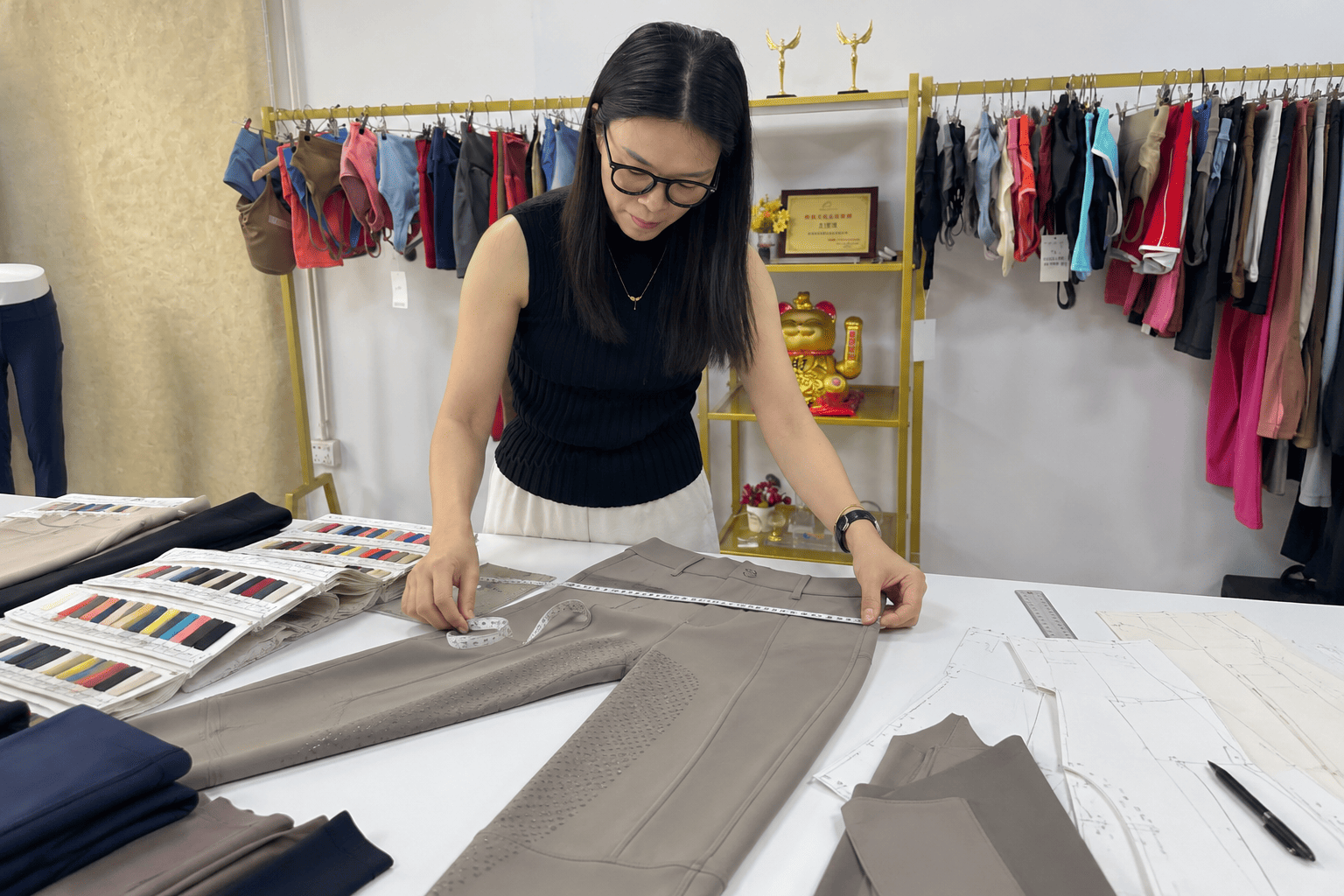
Measurements, appearance, stitching, seams, product performance
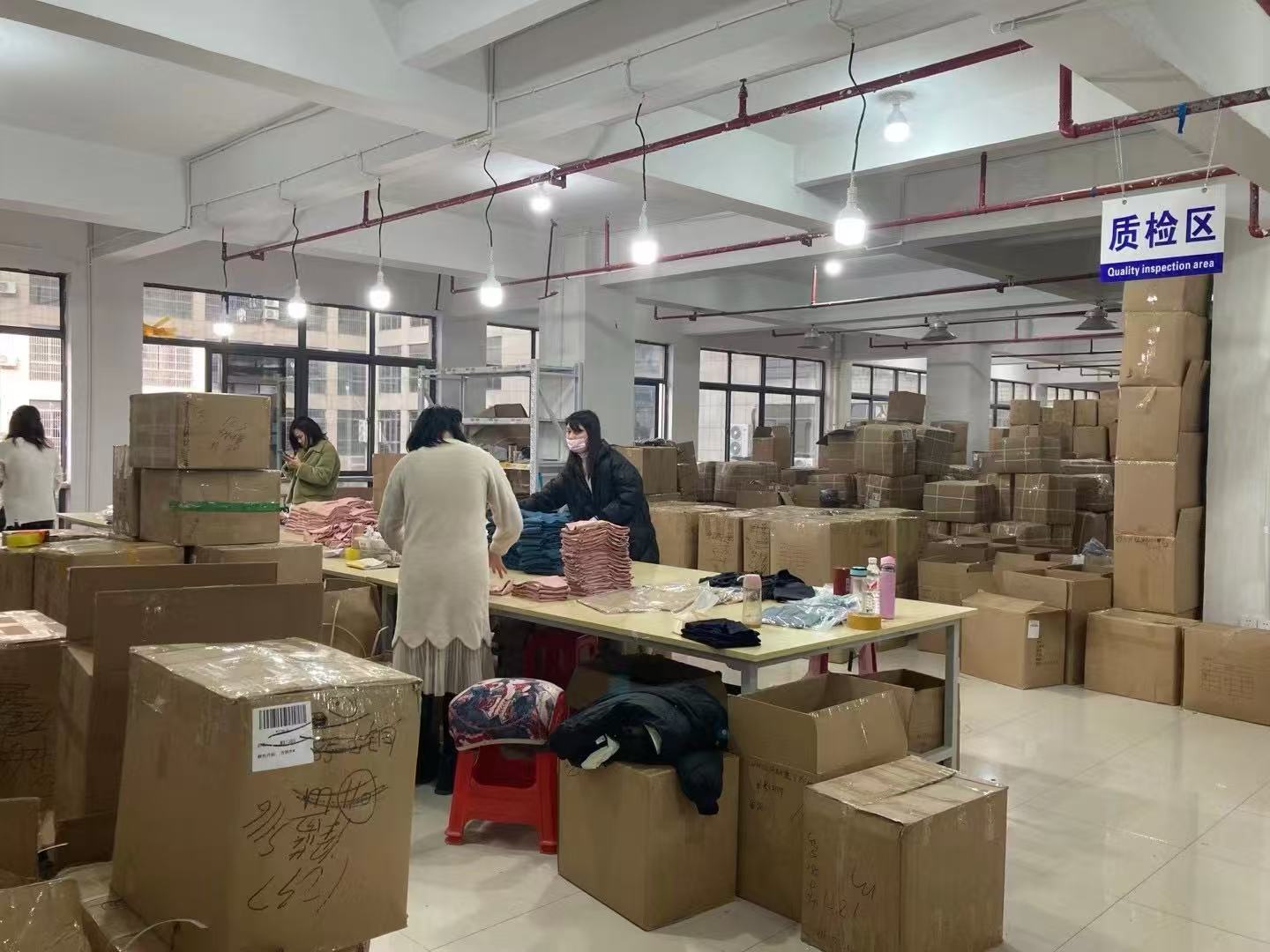
Approved AQL sampling, carton size, label, packaging
Loaded products against approved order
Verify claims by matching the evidence to the decision. Registration supports company identity; a factory review supports observations about a site; a laboratory report supports only the tested sample and stated method. None independently guarantees your future shipment. Build the shortlist using relevant, current evidence, and keep unresolved items visible until the supplier closes them with documents, samples, or direct verification.
What Does the History of the Business Actually Prove?
Separate incorporation, factory opening, management experience, and marketplace membership. They are different dates. A young legal entity may employ experienced technicians; an older company may have little experience in your category. Ask when it last produced a comparable garment and what records can be shared without breaching another customer’s confidentiality.
Are Production and Subcontracting Arrangements Clear?
An office visit does not verify a sewing floor. Request the production address, operations performed there, and the route for outsourced grip printing, embroidery, or finishing. Use a live walkthrough or independent visit when the order justifies it. If payment details unexpectedly change, verify them through an established contact before paying.
Which Documents Support the Claims?
| Claim | Evidence to request | What it does not establish |
|---|---|---|
| Socially audited production | Site-specific report, date, findings, corrective actions | Fit, colorfastness, or grip durability |
| Harmful-substance testing | Applicable certificate/report and covered articles | Every material substitution or unrelated garment |
| Performance fabric | Relevant sample identity, method, conditions, results | Automatic performance of every finished style |
| Stable delivery | Defined metric, period, order scope, supporting records | Guaranteed timing for your unbooked order |
amfori BSCI is a social auditing and improvement system, not a product-quality certification. Ask for the audit report and site details rather than accepting a badge as proof of garment performance. Intertek’s amfori BSCI guidance explains this distinction.
For OEKO-TEX STANDARD 100 claims, use the certificate or label number in the official OEKO-TEX Label Check. Check the covered articles and validity. A certificate for an input should not be described as proof that every finished garment is certified.
How Should Buyers Handle Missing or Conflicting Information?
An unknown founding year is rarely the same risk as an undisclosed production site. Prioritize gaps by consequence. Ask suppliers to reconcile conflicting lead times in a dated quotation; do not simply select the fastest number online. Persistent refusal to identify the contracting company, unexplained material changes, or pressure to skip agreed checks should pause the evaluation.
6. How Can Buyers Compare Price, MOQ, and Delivery Offers Fairly?
Compare quotations only after the specification, quantities, development scope, packaging, testing, and delivery basis match. A lower factory price can hide higher minimums, extra revisions, excluded inspections, or expensive transport. Build a comparison sheet showing both the confirmed price and every unresolved assumption. The commercially stronger offer is the one that meets the required outcome at an acceptable total cost and risk.
What Must Be Identical Across Supplier RFQs?
Send the same quotation request to each supplier and keep the requirements consistent. Clearly list the target fabric or approved reference, size range, quantity per style and color, branding, packaging, testing requirements, destination, and required arrival date. Suppliers can suggest alternative options, but these should be quoted separately. Otherwise, you may end up comparing a simpler garment with the product you actually plan to sell.
If you are evaluating Fineactive, its custom riding apparel development requirements can help you identify which project details still need definition before requesting a comparable offer.
Which MOQ Definitions Distort the Comparison?
Suppose you plan two styles in three colors. At 100 pieces per style/color, the commitment is 600 garments, not 100. At 300 per combination, it becomes 1,800 garments. Neither figure is inherently better: compare expected sales, size demand, and cash tied up in each option.
Ask separately about fabric dyeing minimums, custom zipper quantities, size allocations, and repeat-order conditions. A low garment MOQ does not erase an upstream material minimum.
How Do Samples and Delivery Terms Change the Offer?
A stock garment with your logo, a fit prototype, and a production-material PP sample are different purchases. Specify what the sample fee includes, revision charges, delivery, and any refund conditions. Treat a rebate as conditional until its qualifying order is documented.
Use a named place and stated version of the delivery rule. ICC’s Incoterms guidance explains how the rules allocate costs, risks, and obligations. “Shipping included” is not enough detail for an international price comparison.
Lowest Factory Price vs Lowest Landed Cost
Consider this illustrative example, not a market quotation. Two suppliers offer the same 300-piece specification and delivery basis:
| Cost item | Supplier A | Supplier B |
|---|---|---|
| Garments | $18 × 300 = $5,400 | $19 × 300 = $5,700 |
| Development, testing, and packaging extras | $900 | $300 |
| Transport and destination handling | $1,100 | $900 |
| Comparable pre-duty total | $7,400 | $6,900 |
| Pre-duty cost per garment | $24.67 | $23.00 |
Supplier B has the higher unit price and the lower total in this example. Applicable duties, taxes, recoverability, and usable quantities still need separate assessment; the table is not a final landed-cost estimate.
How Long Is the Full Sourcing Timeline?
Work backward from stock ready for sale: receiving, transport, inspection, production, material readiness, and approvals. Some tasks can overlap, so ask for milestones and dependencies rather than adding every estimate mechanically. A factory’s 30-day bulk period is not a 30-day journey from first enquiry to retail stock.
7. How Do You Turn the Comparison into a Final Supplier Decision?
Use a weighted scorecard after confirming that suppliers meet all essential requirements. Then compare two or three shortlisted suppliers using the same sample brief. Place a trial order only after all material, commercial, and responsibility issues are resolved. A high overall score should never make up for a critical failure. The first shipment should confirm whether the supplier can maintain the approved sample quality, report problems early, and deliver according to the approved order.
How Should Buyers Set the Scorecard Weights?
The following is a suggested evaluation framework, not an industry certification. Adjust the weights according to your collection requirements before evaluating suppliers.
| Criterion | Suggested weight | Evidence |
|---|---|---|
| Relevant product and fit capability | 25% | Comparable samples and technical responses |
| Quality evidence and repeatability | 25% | Relevant reports, sample results, production records |
| Commercial fit and total cost | 20% | Complete quotation and feasible minimums |
| Delivery feasibility and material control | 15% | Dated milestones and material plan |
| Communication and change control | 10% | Accurate answers, revision records, clear ownership |
| Identity and required documentation | 5% | Contracting entity, site, applicable documents |
Score each category from one to five and calculate the weighted result. Mark missing evidence as unresolved rather than inventing a passing score. Identity, essential compliance, and permission to use your designs remain pass/fail gates, even where their numerical weight is small.
What Should Side-by-Side Samples Reveal?
Hold the brief, wearer assessment, and evaluation conditions consistent. Compare measurable differences: specification interpretation, fit feedback, construction, application quality, and response to corrections. Do not reward an attractive sample for features you did not ask for while overlooking a missed requirement.
Distinguish a correctable measurement error from refusal to acknowledge a specification. The supplier’s explanation and correction discipline are part of the assessment, not an afterthought.
Which Issues Must Be Closed Before a Trial Order?
Approved scope and current specification version.
Agreed acceptance criteria, inspection arrangements, and shipment authority.
Quantities, materials, price, payment stages, and dated milestones.
Written approval rules for substitutions and subcontracting.
Responsibilities for defects and the agreed correction route.
Confidentiality, ownership, and access to patterns, artwork, and development files.
When Should You Qualify a Backup Supplier?
A backup becomes useful before disruption, but should not introduce uncontrolled differences. Keep authorized specification files accessible and establish what revalidation would be needed for fabric, fit, color, and grip. Two websites using the same production source do not necessarily provide independent backup capacity.
What First-Order Results Should Change Your Choice?
Review actual arrival, accepted quantities, defect categories, measurement consistency, response time, and correction closure. Compare those results with agreed targets rather than a supplier’s general marketing statistics. A successful trial supports a larger commitment; unresolved repeat problems justify keeping the order allocation limited.
If Fineactive matches your shortlist, request a project review for your equestrian collection. Share your product priorities, quantities per style/color, target market, and required arrival date. The next useful step is a defined development and quotation scope you can assess against the same criteria used for every finalist.
Frequently Asked Questions About Horse Riding Clothing Manufacturers in China
1. Which Chinese riding clothing manufacturer is best for a startup brand?
The best candidate is the one whose minimums, development support, and total cost fit your launch—not necessarily the lowest advertised MOQ. Fineactive’s standard minimum is 100 pieces per style/color; other candidates publish different starting points. Calculate the complete assortment first. Two styles in three colors can create a much larger commitment than a headline minimum suggests. Ask what is included in sample development and whether the proposed material can be reordered if the trial succeeds.
These suppliers differ in their product focus, published minimum order quantities, and business models. Some specialize in riding apparel, while others manufacture broader sportswear collections or supply additional equestrian products. Buyers should evaluate relevant product experience, current commercial terms, and supporting manufacturing evidence before choosing a supplier. No single manufacturer is the best option for every purchasing situation.
2. Do low-MOQ suppliers always offer better value?
No. Low minimums reduce initial inventory exposure, but may come with a higher unit price, restricted materials, or separate development charges. A larger minimum may improve unit economics while increasing cash tied up in unsold sizes and colors. Compare the same sellable assortment, not isolated minimums. Request separate offers for available fabrics and custom materials where relevant, then evaluate cash commitment, expected demand, and replenishment options together.
3. Is a factory better than a trading company for custom riding apparel?
Neither model is automatically better. Direct factory access can improve visibility; a capable trading partner can coordinate several product categories. The important test is whether the contracting party identifies the production route and accepts clear responsibility for specifications, changes, defects, and delivery. Ask who actually makes your garments and who authorizes subcontracting. A transparent arrangement is more useful than a factory label unsupported by evidence.
4. How many manufacturers should receive a paid sample order?
For a manageable comparison, two or three finalists are often practical after desk screening and quotation review. This is a suggested buying approach, not a universal rule. Give each the same brief and assess the same requirements so the results mean something. If only one candidate meets essential conditions, resolve that supply risk explicitly rather than paying unsuitable suppliers just to create a comparison. Complex new categories may justify a wider search before sampling.
5. Are supplier certificates enough to approve a manufacturer?
No. Documents must match the relevant legal entity, production site, material or product, validity period, and intended claim. A social audit does not prove grip durability, and a material certificate does not automatically cover every finished garment. Combine appropriate documents with relevant samples, clear commercial terms, and production verification proportionate to the order. Keep a list of what has actually been checked so an attractive badge does not silently become an unsupported assumption.
6. When should a brand move from samples to a bulk order?
Move forward when the sample meets the agreed requirements and the quotation, material plan, responsibilities, and acceptance conditions are settled. Sample appearance alone is insufficient. For a new supplier, consider a controlled trial order before committing a whole season’s stock. Confirm which sample and document versions govern production, what changes require permission, and who can release shipment. The decision should follow closed requirements, not pressure to secure a promised slot.
Get In Touch
Contact our OEM/ODM specialists for product development, sampling, pricing, and production support.