Top 10 Equestrian Tights Manufacturer in China: Supplier Comparison and Brand Sourcing Guide | 2026
Compare equestrian tights Manufacturer options in China by product expertise, MOQ, sample quality, lead times and sourcing suitability. Build a practical supplier shortlist for your equestrian brand and make informed purchasing decisions before committing to custom development or bulk production.
Top 10 equestrian tights Manufacturer Picks in China for Brand Sourcing
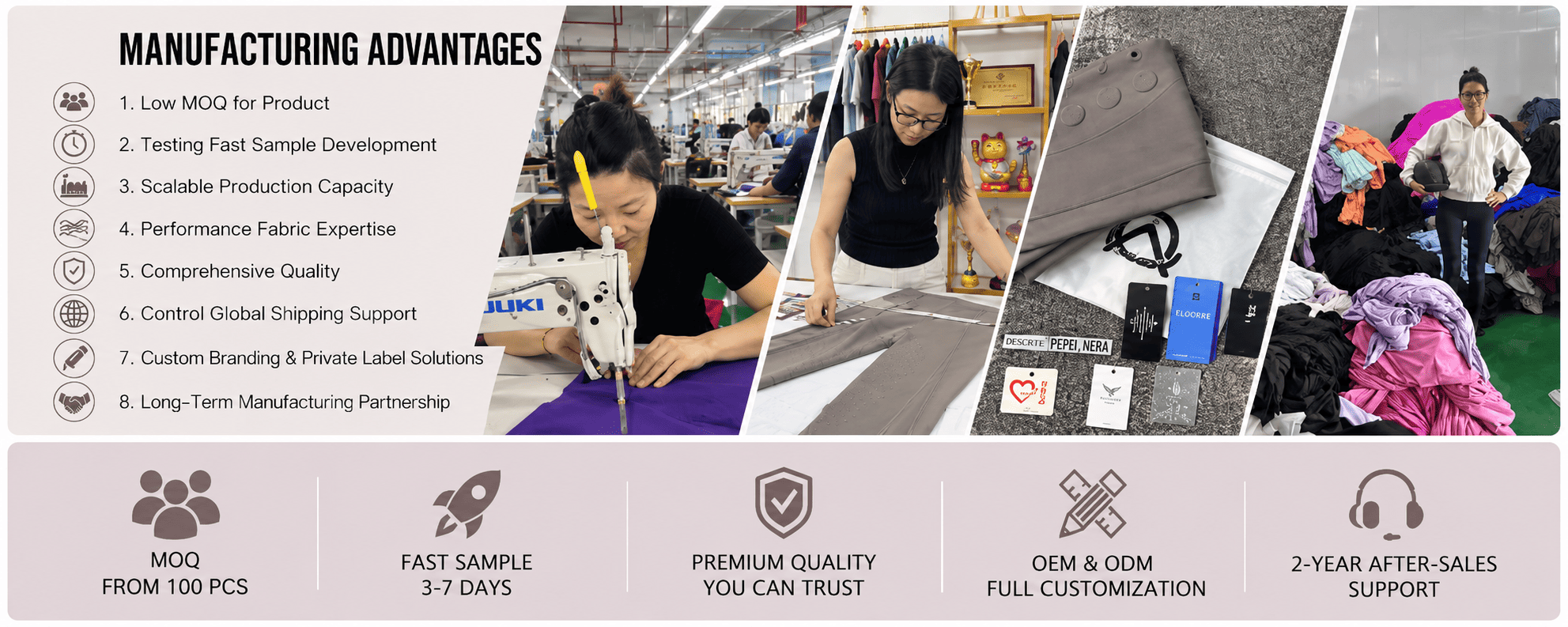
Two suppliers can quote the same riding tights and still offer very different purchasing outcomes. One price may cover an existing style with your logo; another may include original pattern development. A low minimum may apply only to stock colors, while a short lead time may exclude material sourcing and revisions. These differences matter before you spend money on samples—not after you commit to a collection. For an equestrian brand, a useful manufacturer shortlist should explain more than who sells riding tights. It should help you identify comparable offers, uncover unanswered questions and decide which suppliers deserve the next stage of evaluation.
Ten China-based suppliers worth comparing are Fineactive, SGL Sports, Zest Equestrian, Equifactory, Kala Apparel, Dongguan Ope Equestrian, REINFORM, Hangzhou Shangyou Apparel, Ohsure and Dongguan Shuyu Activewear. Shortlist them by relevant product evidence, order feasibility, production responsibility and comparable total cost. Then use consistent sample requirements to assess the strongest candidates. The best choice is the supplier whose demonstrated capabilities match your collection, budget and delivery needs—not simply the lowest advertised price.
The comparison below highlights published terms, potential purchasing fit and questions to resolve with each supplier. Use it to narrow your search before commissioning samples.
Published by Fineactive, which is included in this comparison. Listing order does not represent independently audited performance. Confirm current commercial terms directly with each supplier.
1. Which Equestrian Tights Manufacturers in China Should Brands Compare?
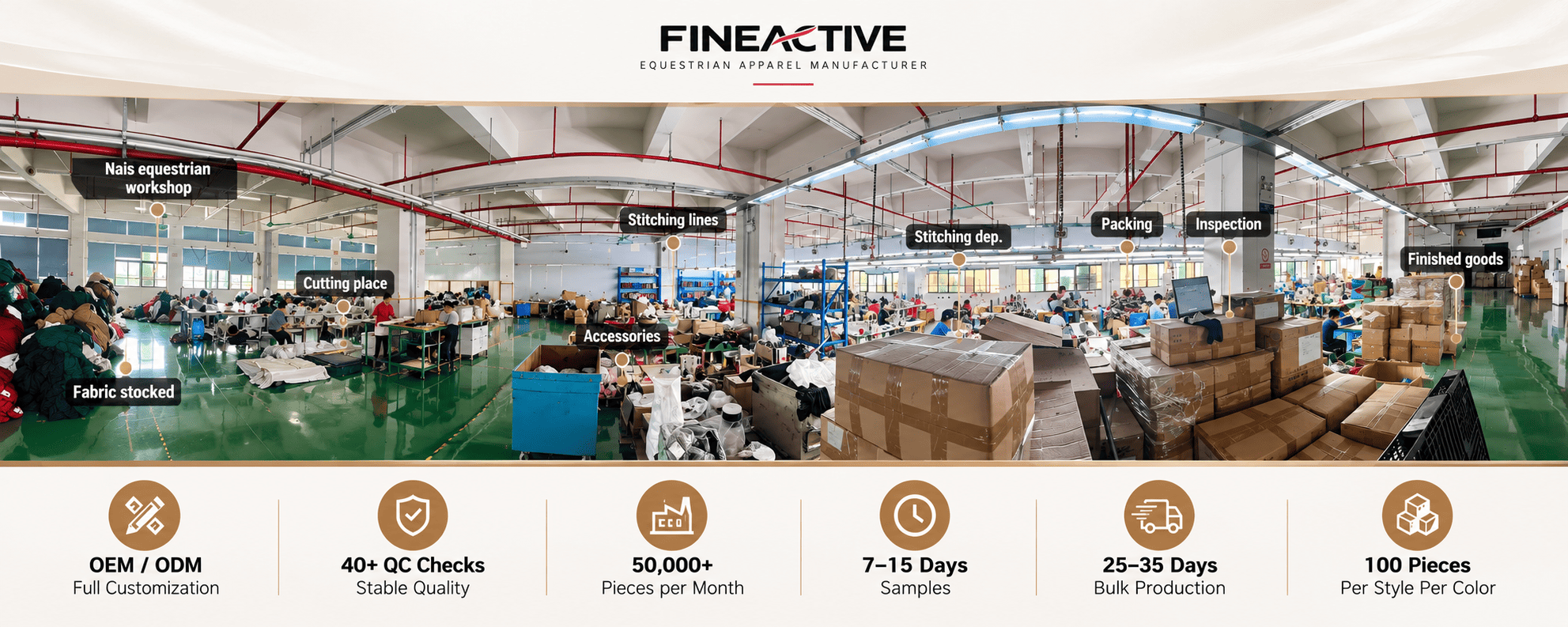
Brands should compare suppliers with relevant riding-apparel products, workable order terms and a clear production arrangement. Fineactive, SGL Sports, Zest Equestrian, Equifactory, Kala Apparel, Dongguan Ope Equestrian, REINFORM, Hangzhou Shangyou Apparel, Ohsure and Dongguan Shuyu Activewear offer different starting points. Compare their product focus and purchasing conditions first, then request equivalent quotations from the strongest candidates. A supplier belongs on your final shortlist when its capabilities fit your project—not simply because it advertises customization or a low MOQ.
A supplier offering several clothing categories may suit a brand planning coordinated riding and activewear collections. A more focused equestrian supplier may be worth investigating for a technically demanding riding range. Neither model guarantees a better result. The useful distinction is which company can demonstrate experience relevant to your particular order.
The following figures are published planning references, not binding quotations. Unless working days are expressly stated, confirm whether the supplier means calendar days or working days. Also establish whether material sourcing, revisions, inspections and transport are included.
| Supplier | Location | Published MOQ reference | Published sample reference | Published bulk reference |
|---|---|---|---|---|
| Fineactive | Dongguan | 100 pieces per style per color | 7–15 working days | 25–35 working days, after agreed approval, payment and material conditions |
| SGL Sports | Dongguan | 200 pieces per design per color; up to five sizes | FAQ: about one week; homepage: about 10 working days | FAQ: about 30 days; homepage: about 35–40 days |
| Zest Equestrian | Dongguan | Flexible MOQ advertised; confirm the tights-specific minimum | 7–15 days advertised | 25–45 days advertised; confirm scope |
| Equifactory | Wuhan contact address | 100 pieces advertised; confirm the calculation basis | Approximately two weeks | Approximately 5–6 weeks in its FAQ |
| Kala Apparel | Dongguan | General range of 30–200 pieces; confirm the selected development route | OEM samples: approximately 10–15 days | Request an order-specific schedule |
| Dongguan Ope Equestrian | Dongguan | Selected tights listing: 200 pieces per design per color | Selected listing: approximately 10 days | Selected listing: approximately 30–40 days |
| REINFORM | Hangzhou | 300 pieces per style per color | 7–10 working days | 30–45 working days |
| Hangzhou Shangyou Apparel | Hangzhou | Listing FAQ: stock 50 pieces; custom design/color 200 pieces | Published references: approximately 5–7 days | Request a riding-tights-specific schedule |
| Ohsure | Dongguan | General FAQ: 100 pieces per style per color | General FAQ: 7–12 days; other pages differ | General FAQ: 25–35 days; other pages differ |
| Dongguan Shuyu Activewear | Dongguan | Equestrian listing: 100–200 pieces; confirm the calculation basis | General FAQ: approximately 15 days | Request a riding-tights-specific schedule |
Do not compare MOQ figures without their conditions. Fifty stock garments and 100 fully developed custom garments are different purchasing options. Likewise, a company’s general sportswear schedule may not cover your chosen riding-tights construction.
1. Fineactive — For Brands Developing a Defined Riding-Apparel Collection
Fineactive focuses on OEM, ODM and private label equestrian apparel. Its offer is relevant to brands that need development support around an original product brief, rather than simply selecting an existing garment and changing the label.
- Location and history: Dongguan, Guangdong. Company materials date the underlying factory’s establishment to 2016.
- Core products: Riding tights, riding breeches, technical tops, show shirts, competition jackets, equestrian outerwear and vests.
- MOQ: 100 pieces per style per color, with sizes allocated within each approved style/color combination.
- Lead times: Standard samples 7–15 working days; bulk production 25–35 working days, subject to confirmed specifications, approvals, payment and material readiness.
- Certification and audit documents: Request current documents relevant to the contracting entity, production site and selected materials. Certification scope should be assessed separately from garment performance.
- Best suited to: Emerging and growing equestrian brands requiring pattern development, custom sizing, silicone-grip options and coordinated branding.
- Less suited to: Orders below 100 pieces per style/color, or buyers requiring immediate stock dispatch.
- Core advantage: A defined equestrian-apparel development scope supported by clear standard order rules.
- Main constraint: Original development, custom materials and additional sample revisions require time; the standard schedule is not an unconditional delivery promise.
For buyers considering this route, Fineactive’s equestrian tights manufacturing capabilities explain the available development services and approval requirements.
Buyer takeaway: Include Fineactive when you need to establish a repeatable branded product and can plan quantities around the stated style/color minimum.
2. SGL Sports — For Riding and Activewear Collection Comparisons
lists horse-riding apparel alongside yoga clothing, activewear, hoodies and other sports garments. This makes it worth considering when a purchasing program extends beyond one equestrian product category.
- Location and establishment: Dongguan, Guangdong. Request the registered establishment date when checking the contracting company.
- Core products: Riding leggings, breeches, equestrian tops, jackets, activewear and yoga clothing.
- MOQ: Its public FAQ states 200 pieces per design per color, with up to five sizes.
- Lead times: Public references differ: approximately one week versus 10 working days for samples, and approximately 30 versus 35–40 days for bulk.
- Certification and audit documents: Request current, relevant certificates and reports directly from the supplier.
- Best suited to: Buyers comparing riding apparel and broader sportswear within one purchasing relationship.
- Less suited to: Brands whose required quantity falls below the published custom MOQ without an agreed exception.
- Core advantage: Dedicated riding-leggings content alongside a broader apparel offering.
- Main constraint: The published timing differences require a single, order-specific written schedule.
Buyer takeaway: Ask which published timetable applies to your chosen material, customization and approval sequence. Do not build a launch calendar around the shortest number alone.
3. Zest Equestrian — For Broader Equestrian Purchasing Programs
presents a broad offering spanning rider apparel, horse equipment and accessories. Its potential appeal lies in purchasing coordination across several equestrian categories.
- Location and history: Dongguan, Guangdong. The company advertises 16-plus years of experience; confirm the legal entity’s establishment date separately.
- Core products: Breeches, riding shirts, jackets, horse gear and accessories.
- MOQ: Flexible or low MOQ is advertised; obtain the exact minimum for the proposed tights style and color.
- Lead times: Its homepage advertises 7–15 days for sampling and 25–45 days lead time. Confirm what each period includes.
- Certification and audit documents: The website references material testing and compliance standards. Request documents applicable to the ordered textile product.
- Best suited to: Buyers coordinating riding apparel with other equestrian products.
- Less suited to: Projects requiring a fixed tights price and guaranteed timeline before specifications are reviewed.
- Core advantage: Broad equestrian category coverage and a published quality-control framework.
- Main constraint: A wide catalog does not, by itself, demonstrate the depth of development available for a specific tights project.
Buyer takeaway: Request comparable riding-tights examples. Evaluate those examples separately from unrelated horse equipment or protective products.
4. Equifactory — For Coordinated Custom Apparel Development
describes design assistance, OEM production, private label services and a wider equestrian sourcing offer. Buyers should distinguish the breadth of available services from the precise production arrangement for their order.
- Location and establishment: A Wuhan contact address is published. Confirm the registered establishment date and actual manufacturing location.
- Core products: Breeches, leggings, base layers, show shirts, outerwear and horse-related products.
- MOQ: 100 pieces is advertised; confirm whether this applies per style, per color or another ordering basis.
- Lead times: Its FAQ gives approximately two weeks for samples and 5–6 weeks for bulk, depending on customization.
- Certification and audit documents: OEKO-TEX and GRS support is advertised. Check the relevant certificate holder, material coverage and documentation available for the order.
- Best suited to: Brands looking for development coordination across a broader riding-apparel collection.
- Less suited to: Buyers assuming the advertised minimum permits unlimited mixing of designs and colors.
- Core advantage: Detailed descriptions of development, branding and project-support services.
- Main constraint: The advertised MOQ and production responsibility need to be defined in the quotation.
Buyer takeaway: Establish who produces the tights, which operations are subcontracted and which company accepts contractual responsibility.
5. Kala Apparel — For Comparing OEM Development with Ready-to-Ship Options
offers a dedicated equestrian-leggings page covering OEM development and ready-to-ship purchasing. These routes can serve different launch strategies.
- Location and history: Dongguan, Guangdong. The company describes approximately 12 years of experience; confirm the legal establishment date separately.
- Core products: Riding leggings, breeches, base layers, jackets and other apparel categories.
- MOQ: Its homepage advertises a general 30–200-piece range. Confirm the minimum for the particular custom leggings project.
- Lead times: The OEM page states samples usually take 10–15 days; request a specific bulk schedule.
- Certification and audit documents: The website advertises BSCI audit status and other credentials. Request the current supporting reports and applicable scope.
- Best suited to: Brands deciding between a stock-based launch and more extensive OEM development.
- Less suited to: Buyers expecting stock pricing, original development and exclusive design rights within the same unspecified offer.
- Core advantage: Multiple purchasing routes and relevant riding-leggings product content.
- Main constraint: General MOQ ranges do not establish the conditions of a specific custom order.
Buyer takeaway: Confirm whether the selected design is shared, modified or exclusive. Those distinctions affect differentiation, development cost and future availability.
6. Dongguan Ope Equestrian — For Category-Specific Riding-Tights Comparisons
Dongguan Ope Equestrian displays riding tights and breeches through its . Selected listings provide useful starting specifications for a comparable quotation.
- Location and establishment: Dongguan, Guangdong. Platform membership dating from 2016 should not be treated as the company’s founding date.
- Core products: Riding tights, breeches and other equestrian products.
- MOQ: A selected full-seat tights listing states 200 pieces per design per color; other listings differ.
- Lead times: The same listing gives approximately 10 days for samples and 30–40 days for bulk.
- Certification and audit documents: The storefront displays audited-supplier status. Review the actual audit scope and request separate product evidence where needed.
- Best suited to: Buyers seeking directly relevant riding-tights and breeches examples before development discussions.
- Less suited to: Projects based on treating one listing’s price or MOQ as a universal offer.
- Core advantage: Visible category-specific products and published specification details.
- Main constraint: Commercial conditions vary across listings and need reconfirmation.
Buyer takeaway: Name the exact listing and specification in your inquiry, then request a fresh quotation covering the intended material, grip, size allocation and packaging.
7. REINFORM — For Brands Able to Support Larger Style/Color Runs
publishes riding-tights-specific ordering terms and several product directions, providing a clear starting point for quantity planning.
- Location and history: Hangzhou, Zhejiang. Its website states that its factory story began in 2016.
- Core products: Riding tights, breeches, base layers, show shirts and equestrian outerwear.
- MOQ: 300 pieces per style per color.
- Lead times: Samples 7–10 working days; production 30–45 working days.
- Certification and audit documents: Request current documents applicable to the proposed facility and product.
- Best suited to: Brands with sufficient demand and working capital for 300-piece style/color combinations.
- Less suited to: Launch plans built around 100 pieces per color.
- Core advantage: Explicit category-level MOQ and lead-time information.
- Main constraint: A multi-style, multi-color collection creates a larger initial inventory commitment.
Buyer takeaway: Calculate the whole collection. Two styles in three colors at the stated minimum mean 1,800 garments, before considering any separate material requirements.
8. Hangzhou Shangyou Apparel — For Stock-versus-Custom Purchasing Decisions
Hangzhou Shangyou Apparel lists full-seat riding tights within a broader sportswear range. Its published distinction between stock and custom purchasing is particularly important when comparing minimum quantities.
- Location and establishment: Hangzhou, Zhejiang. Platform business information lists establishment in 2014.
- Core products: Activewear, yoga clothing and sports garments, including riding tights.
- MOQ: The reviewed listing FAQ distinguishes 50 pieces for stock from 200 pieces for custom designs and colors.
- Lead times: Published sample references are approximately 5–7 days. Request an order-specific riding-tights bulk schedule.
- Certification and audit documents: Platform supplier-audit information is available; request any additional product-specific documents needed for the order.
- Best suited to: Buyers comparing stock-based demand testing with custom production.
- Less suited to: Brands treating an existing stock sample as proof of an original riding-specific design.
- Core advantage: Both stock and custom purchasing routes are described.
- Main constraint: Sample-material substitutions require explicit recording and approval.
Buyer takeaway: Ask whether the sample uses the intended production material. A sample can help assess shape while leaving final material performance unresolved.
9. Ohsure — For Activewear Brands Exploring an Equestrian Extension
lists equestrian leggings within a broad activewear customization business. Buyers should establish how its general offering translates into the proposed riding product.
- Location and establishment: Dongguan, Guangdong. Request the legal establishment date during company qualification.
- Core products: Leggings, sports bras, tops and other activewear, including equestrian products.
- MOQ: Its general FAQ states 100 pieces per style per color; confirm applicability to the chosen riding tights.
- Lead times: The general FAQ gives 7–12 days for samples and 25–35 days for bulk; other public pages use different ranges.
- Certification and audit documents: Request current credentials relevant to the ordered product and manufacturing location.
- Best suited to: Activewear brands assessing an equestrian category extension.
- Less suited to: Buyers relying on general sportswear conditions without a riding-product review.
- Core advantage: Broad material and branding options.
- Main constraint: General terms and differing public timelines require project-level clarification.
Buyer takeaway: Request comparable equestrian work and one written timetable tied to the actual brief. General leggings experience should be assessed against the additional requirements of riding use.
10. Dongguan Shuyu Activewear — For ODM Riding and Sportswear Development
lists equestrian bottoms alongside riding tops and wider sportswear categories.
- Location and history: Dongguan, Guangdong. Its company profile traces a predecessor factory to 2012; confirm the current contracting entity separately.
- Core products: Riding tights, breeches, equestrian tops and activewear.
- MOQ: The equestrian listing states 100–200 pieces; clarify the style/color calculation.
- Lead times: Its general FAQ gives approximately 15 days for regular samples. Request a specific riding-tights bulk schedule.
- Certification and audit documents: Obtain current, order-relevant supporting documents.
- Best suited to: Brands exploring ODM development across riding and sportswear products.
- Less suited to: Buyers treating an online price range as a complete final quotation.
- Core advantage: Visible equestrian categories within a wider development offering.
- Main constraint: Development inclusions, MOQ allocation and production timing need written definition.
Buyer takeaway: Clarify which parts use an existing base pattern, which modifications are included and whether grip trials or extra sample rounds incur additional charges.
2. How Were These China Manufacturer Picks Selected—and What Does the Evidence Show?
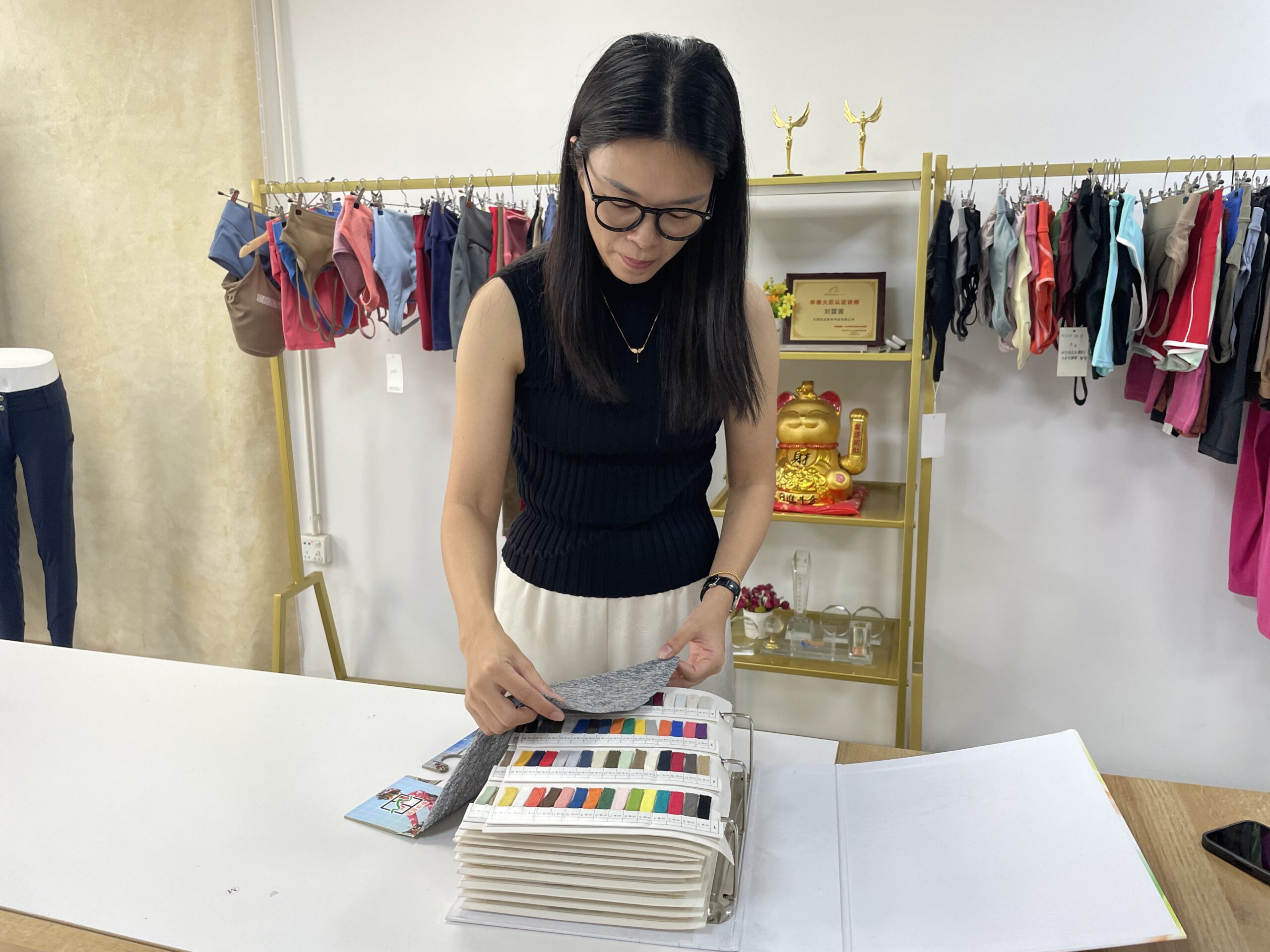
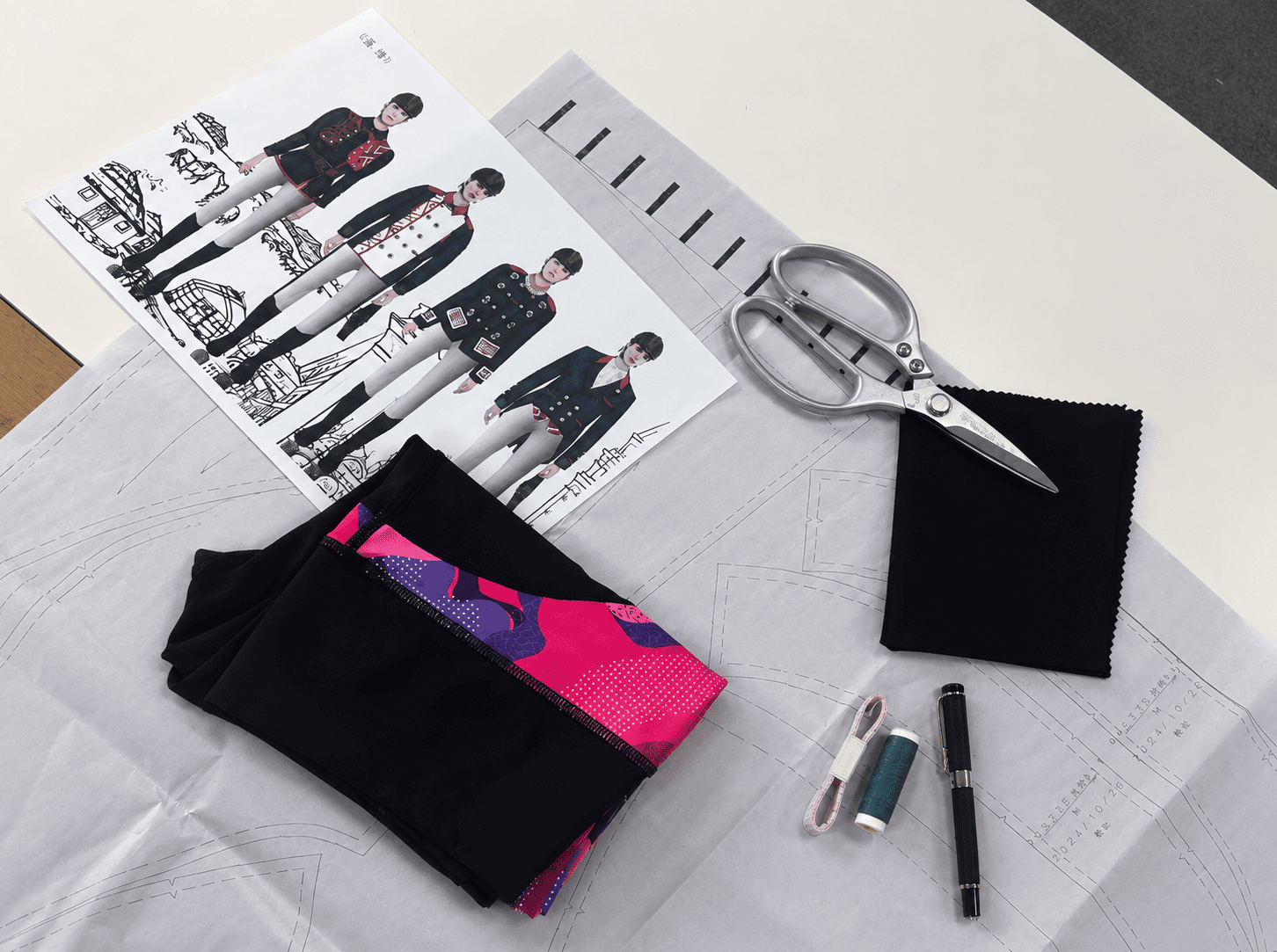
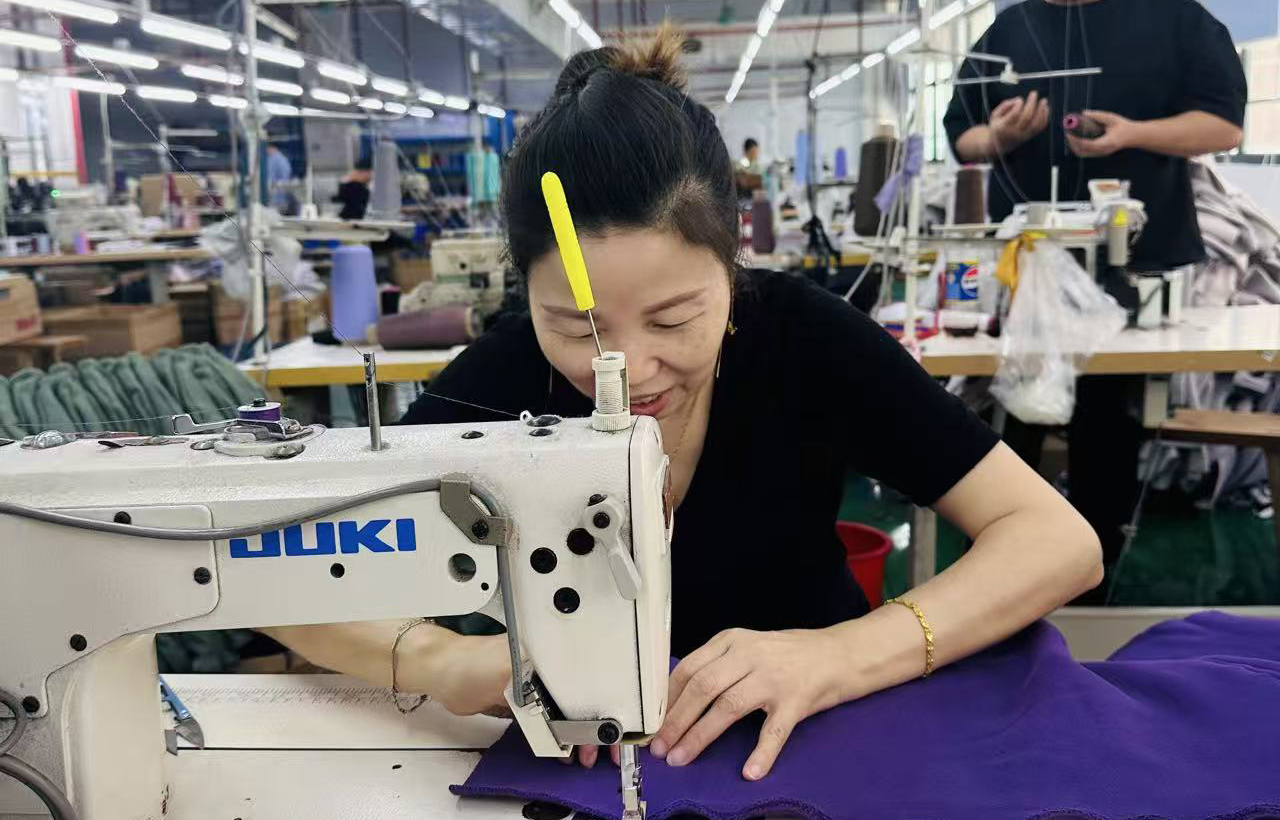
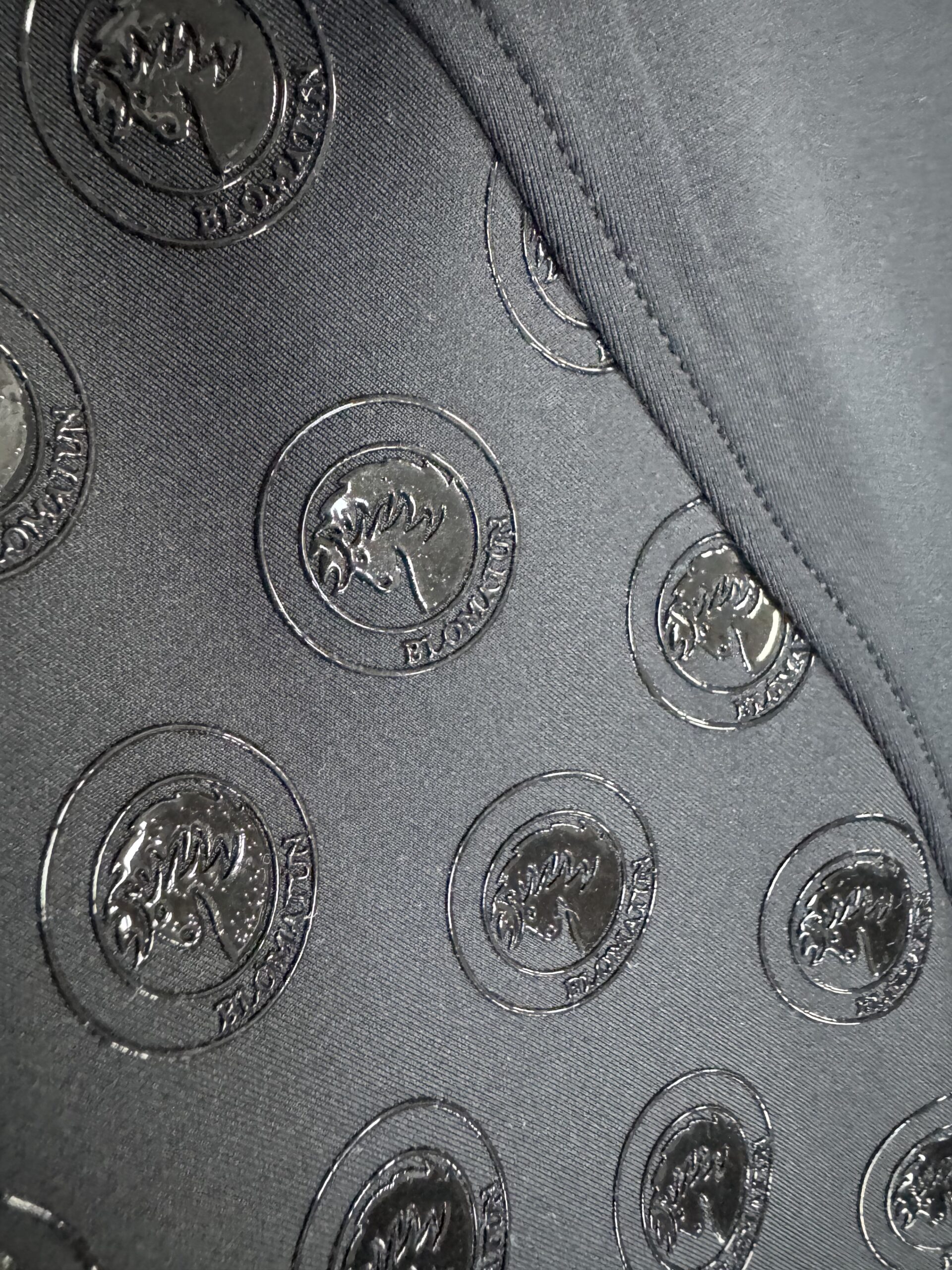
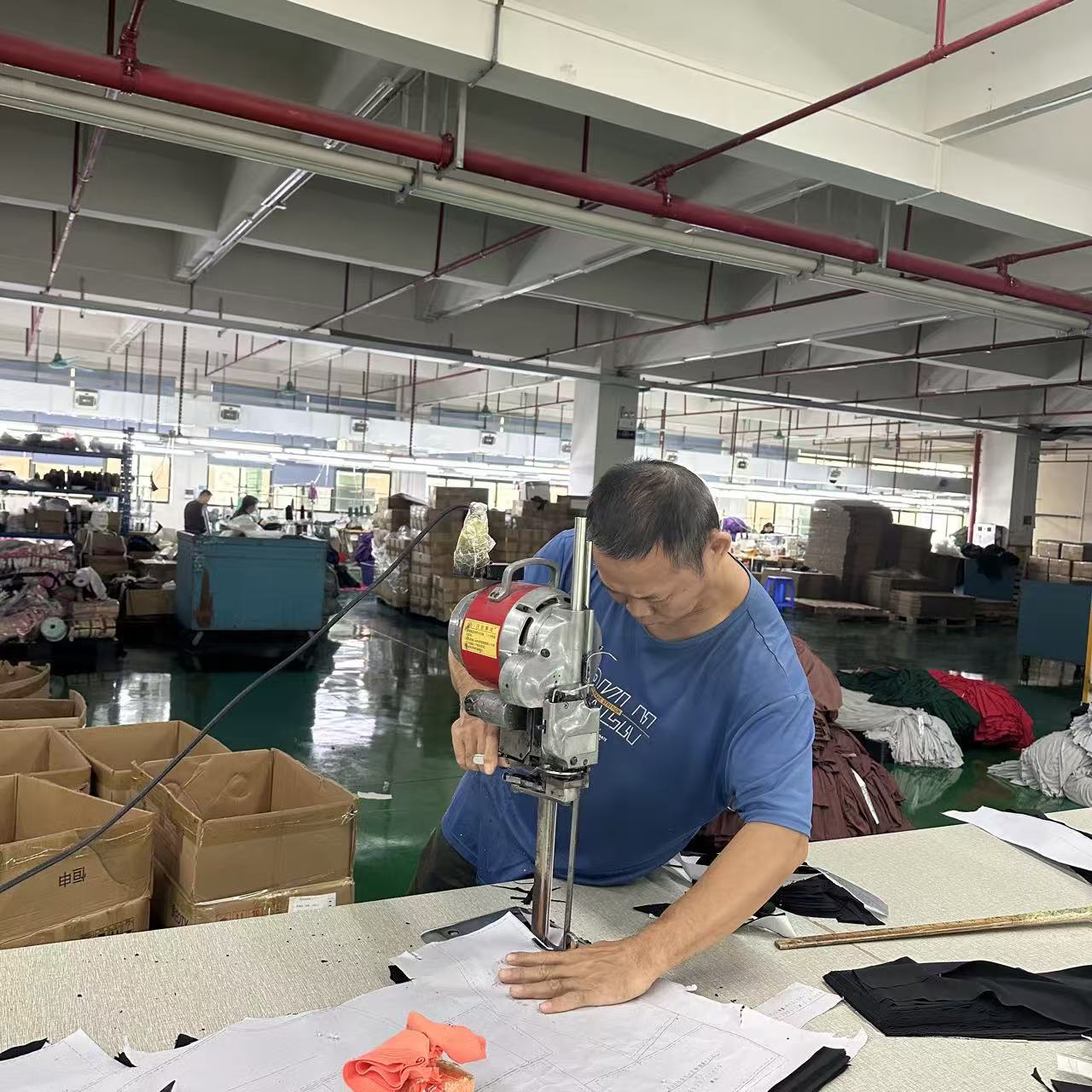
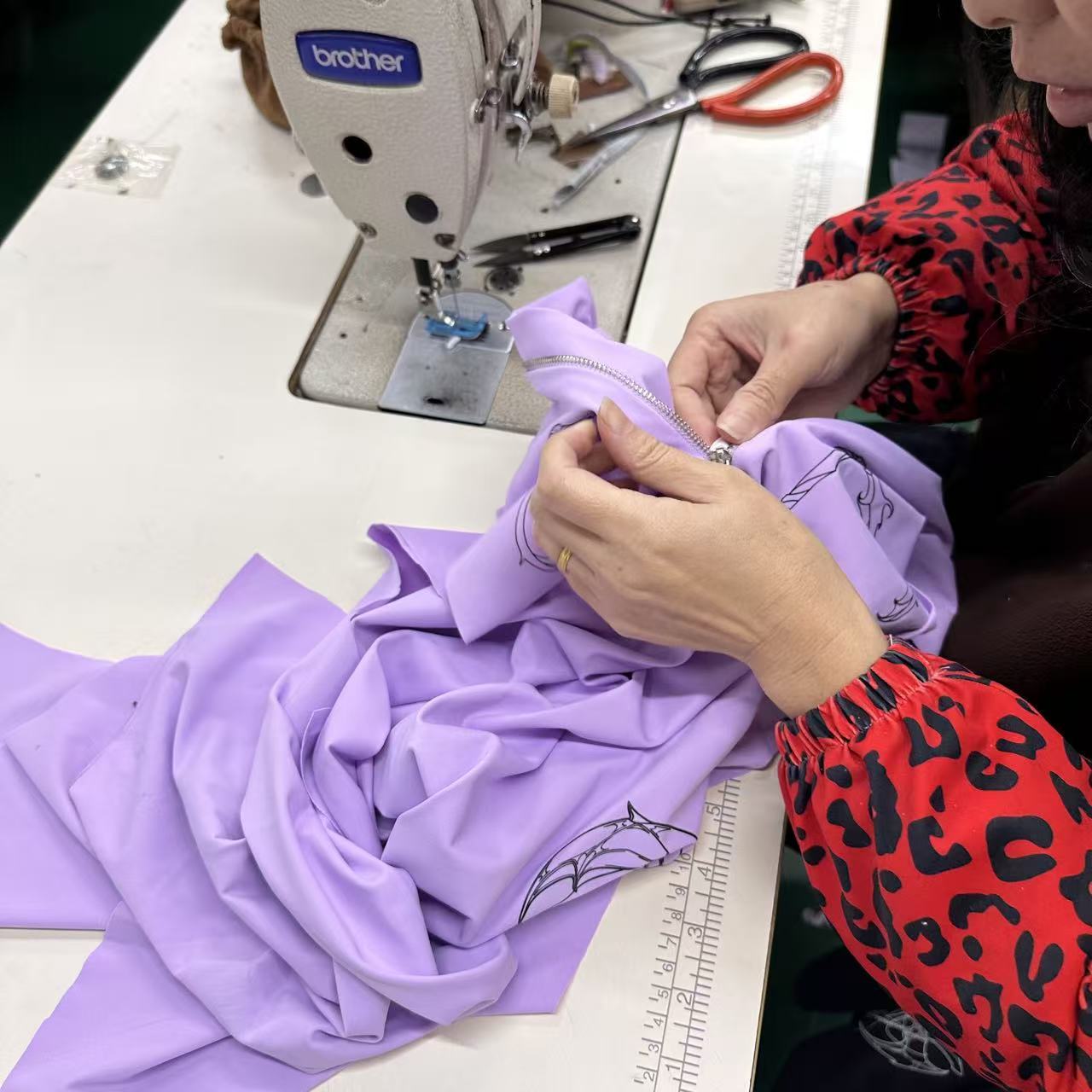

These suppliers were selected because their public materials show riding tights, breeches or relevant custom equestrian apparel services. That makes them candidates for further evaluation, not automatically approved manufacturers. A reliable shortlist separates three things: what a supplier advertises, what its documents support and what your samples or trial orders demonstrate. Use those evidence levels to decide who deserves further investment. A polished website can introduce a supplier; it cannot establish production consistency on its own.
What Product Evidence Qualifies a Supplier for the Shortlist?
Start with relevance to your planned product, rather than the size of a supplier’s catalog. A company showing riding tights with silicone grip offers a more relevant starting point than one displaying only gym leggings. However, the product image alone does not explain whether the company developed the pattern, manufactured the garment or sourced it elsewhere.
Ask each candidate to explain a comparable project without disclosing another customer’s confidential information. Useful answers identify the work performed, the production arrangement and the records available.
- Product relevance: Has the supplier handled a comparable garment, customer group or purchasing program?
- Development responsibility: Did it create the pattern, modify an existing style or manufacture from supplied specifications?
- Production responsibility: Which operations did it control, and which were subcontracted?
- Supporting records: Can it provide an anonymized specification, inspection example or development record it is authorized to share?
A supplier that respects customer confidentiality may decline to identify brands or release protected designs. That is not a reason to reject it. Ask for its own development samples or suitably anonymized records instead.
Which Details Are Supplier-Reported, Document-Checked or Sample-Validated?
Keep an evidence status beside important claims. Otherwise, a sales statement can quietly become an accepted fact as it moves between your sourcing, design and purchasing teams.
| Evidence level | What it establishes | What it does not establish |
|---|---|---|
| Supplier-reported | What the company says it offers, including MOQ, lead time and services | Independent confirmation that the offer applies to your order |
| Document-checked | Whether the reviewed identity, specification or report supports a particular claim | That every product, facility or future shipment has the same characteristics |
| Sample-assessed | How the submitted garment performs against the agreed sample requirements | Consistency across a complete production run |
| Trial-order-assessed | How the supplier handled a defined order, including delivery, consistency and corrective action | A guarantee that later orders will require no further control |
These levels answer different questions; they are not interchangeable. A checked business document can support company identity but says little about fit. A successful sample can support product suitability while leaving production capacity unresolved.
For example, a supplier may advertise a 30-day production period. A written quotation can clarify its starting conditions. Only actual order records show whether that supplier met the agreed schedule on a particular project. Evaluate the claim at the level of evidence you actually hold.
How Much Does a Supplier’s Equestrian Production History Matter?
The history of equestrian tights production matters when it reveals relevant learning and repeat-order experience. The number of years printed on a homepage is less useful if it refers mainly to unrelated apparel.
Ask what the supplier has learned from comparable production: which issues appeared, how they were investigated and what changed afterward. A practical explanation of a corrected problem can reveal more technical understanding than a claim that problems never occur.
Also distinguish company establishment, predecessor-factory history and experience within the current team. All may be relevant, but they describe different things. A newly registered company could employ experienced technical staff; an older company could have changed its production team or subcontracting arrangements.
Why Are Company Size, Certificates and Website Claims Insufficient on Their Own?
A large workforce does not tell you which team will handle your order. A wide product range does not prove equal expertise in every category. A certificate supports only the activities, materials or products within its scope. These details become useful when connected to the proposed production arrangement.
Use the same questions for every candidate, including Fineactive. Record unresolved points rather than awarding favorable scores by assumption. Before treating two suppliers as independent alternatives, also check whether they share a production site or critical subcontractor.
The result should be a shortlist with clear reasons for inclusion and specific questions for the next stage—not ten companies described as equally capable.
3. Why Source Equestrian Tights from China—and Which Supplier Model Fits Your Brand?
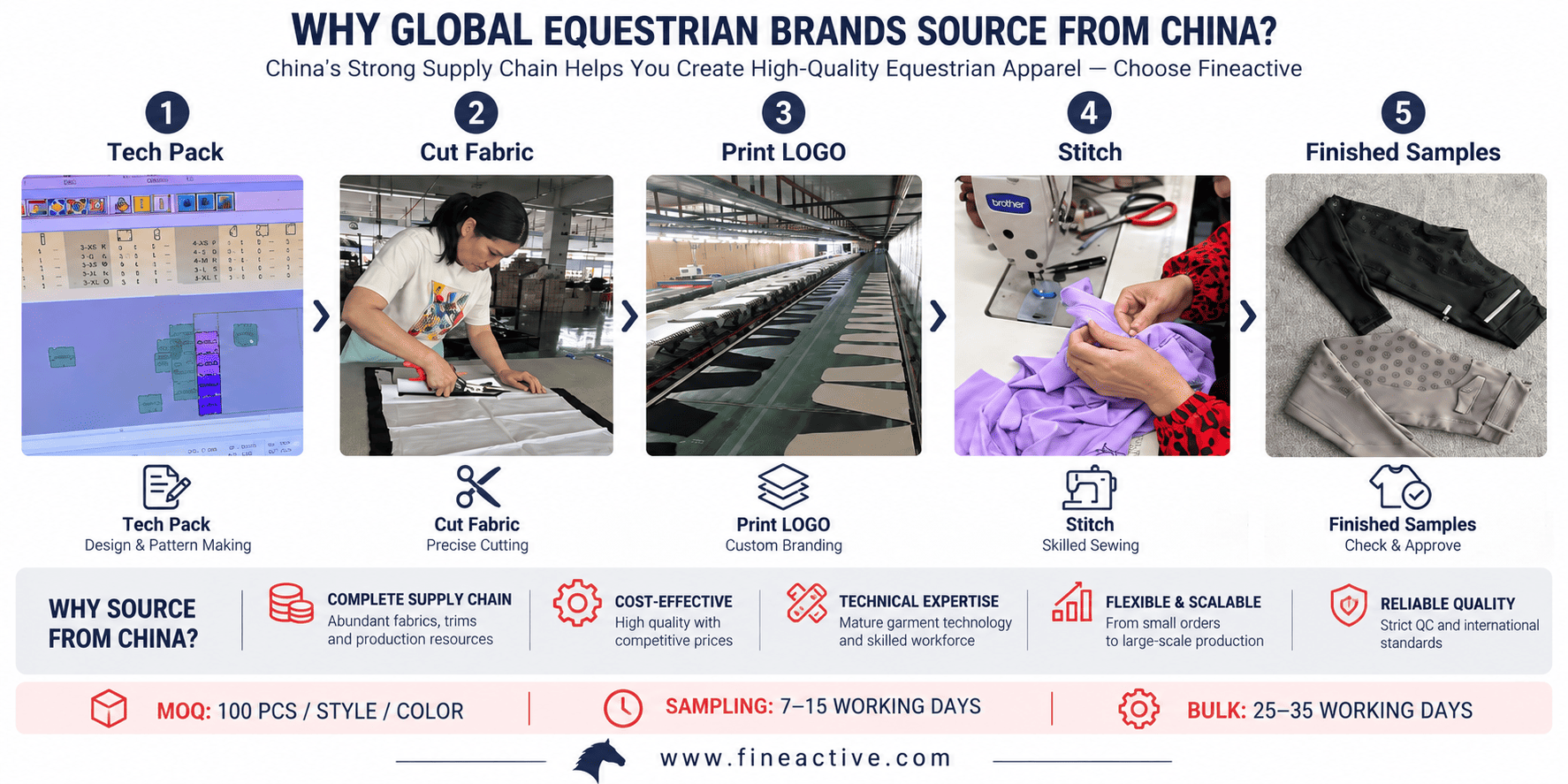
China can be a practical sourcing choice when your collection requires coordinated fabric sourcing, product development, silicone-grip application, branding and bulk production. The advantage depends on the supplier’s actual capabilities, your order structure and the delivery destination. Compare an equestrian specialist, a multi-category apparel factory and a sourcing company against the same requirements. Choose the arrangement that provides clear technical responsibility, manageable total cost and a credible delivery plan—not simply the company offering the most services.
What Supply-Chain Advantages Should Buyers Verify Rather Than Assume?
Having several connected production services can make your custom collection easier to manage. However, a supplier offering fabric sourcing, silicone printing, embroidery and packaging does not mean these services work well together. Ask who manages each process, how changes are approved, and whether the proposed materials can be ordered again. The real advantage is coordination you can check and confirm, rather than how many services are listed in the catalog.
Consider a brand sourcing riding tights and matching technical tops. One supplier may coordinate shared colors and packaging, reducing the number of separate purchasing conversations. Another may offer stronger tights development but require a second supplier for tops. Either arrangement can work. Compare the coordination saved against the technical compromises introduced; a simpler supplier list is valuable only if the products still meet your requirements.
Equestrian Specialist vs Multi-Category Apparel Factory: Which Is the Better Fit?
An equestrian specialist may recognize riding-related requirements sooner, while a multi-category factory may offer useful experience across stretch garments and coordinated collections. Treat both as capabilities to investigate. Ask each candidate to explain a comparable project and identify who will review your technical requirements.
| Supplier model | Potential purchasing advantage | What to verify | When to investigate further |
|---|---|---|---|
| Equestrian specialist | Familiarity with riding-apparel requirements | Relevant samples, development responsibility and repeat-order records | Riding performance and category knowledge are central to the project |
| Multi-category apparel factory | Broader collection support and potentially shared materials | Who handles equestrian development and how requirements differ from general activewear | Your range combines riding apparel with other clothing |
| Sourcing company or trading company | Coordination across several specialist producers | Production locations, subcontractor control and contractual responsibility | The project needs capabilities that one facility does not provide |
Your own team also affects the choice. A brand with an established Tech Pack and experienced technical staff may need accurate execution more than design assistance. A first-time riding label may need help defining the product before quotations become comparable. Choose the support your project lacks, rather than paying for an extensive development service you do not need—or expecting it from a supplier quoting manufacture only.
Direct Manufacturer vs Trading Company: Who Controls Development and Delivery?
A direct manufacturer can offer closer access to the production team, but factory ownership alone does not mean every operation is completed in-house. A trading company may coordinate several specialist facilities effectively. In either arrangement, establish who holds the approved specifications, books capacity, manages outsourced work and accepts responsibility for problems.
Ask the following questions before treating either model as an advantage:
- Technical control: Who approves the pattern, material references and production instructions?
- Process control: Which operations are outsourced, and who approves the subcontractors?
- Change control: Can materials or production locations change without your written approval?
- Commercial responsibility: Which company contracts with you and handles delays, shortages or defects?
Clear answers matter more than the promise of “factory-direct pricing.” A slightly higher quotation may include coordination your team would otherwise have to perform. Conversely, an additional intermediary offers limited value if it cannot explain the technical or production arrangements.
China vs Nearshore Sourcing: When Do Order Size and Replenishment Needs Change the Decision?
Compare China and suppliers closer to your sales market using the same order, destination and required arrival date. A planned seasonal run may allow time for overseas development and transport. A small replenishment order needed quickly may favor a closer supplier, although proximity does not guarantee available materials or production space.
| Purchasing priority | What to compare |
|---|---|
| First collection | Development support, minimum cash commitment and time to an approved product |
| Seasonal launch | Material booking, production availability and arrival before the selling window |
| Frequent replenishment | Repeat-order minimums, material continuity and actual door-to-door timing |
| Small test order | Setup charges, transport cost per garment and limits on customization |
| Complex collection | Coordination across products, processes and approval stages |
Build both options into an arrival calendar covering development, approvals, manufacturing, inspection, freight and receiving. Include the time your own team needs to make decisions. The better sourcing location is the one that supports the commercial plan at an acceptable total cost. A lower garment price is less useful if the stock arrives after demand has passed.
4. How Do You Compare Supplier Prices, MOQs and Commercial Terms Fairly?
Compare supplier quotations against the same product brief, quantity breakdown and delivery basis. Then calculate the cash required to reach an accepted, delivered order—not just the garment unit price. Stock styles, modified designs and original development involve different costs and minimums. A useful comparison identifies what each offer includes, which charges remain open and when payment becomes due. The lowest quotation is attractive only when it covers the product and purchasing conditions your brand actually needs.
Are Quotes Based on the Same Product Brief and Type of Custom Development?
Two quotations can describe “custom riding tights” while covering substantially different work. One supplier may quote an existing style with a printed logo. Another may include new patterns, revised proportions and several development samples. Comparing those prices without adjusting the scope tells you little about either supplier’s value.
Identify the purchasing route before requesting prices:
| Purchasing route | What the offer may cover | What buyers should clarify |
|---|---|---|
| Stock private label | Existing garment with agreed branding | Available quantities, label options and continuity of supply |
| Modified base style | Changes to an existing design | Included modifications, development charges and design-sharing conditions |
| Original development | Product developed around an approved brief | Pattern work, sample rounds, size development and file ownership |
For a concrete reference, review Fineactive’s custom riding tights development and ordering terms, then ask each candidate to define its own scope in comparable terms. A lower price for less work is not automatically a better offer. Equally, a brand with production-ready specifications should not pay for development services it does not require.
Do Stock, Modified-Style and Fully Custom MOQs Mean the Same Thing?
No. MOQ can apply to the finished style, each color, a fabric order or a separate component. A low garment minimum does not necessarily remove minimums for custom-dyed fabric, branded trims or packaging. Ask suppliers to distinguish their standard garment requirement from additional material commitments.
The collection-level effect can be substantial:
| Order structure | Minimum per style/color | Required garment quantity |
|---|---|---|
| One style in two colors | 100 pieces | 200 pieces |
| Two styles in three colors | 100 pieces | 600 pieces |
| Two styles in three colors | 300 pieces | 1,800 pieces |
These are quantity calculations, not supplier quotations. Sizes are allocated within each style/color combination only where agreed. Do not assume that mixed sizes, mixed colors and mixed styles follow the same rules. Before adding another color, consider whether expected demand justifies the extra inventory rather than looking only at the resulting unit price.
Which Exclusions Can Make a Low Factory Price Misleading?
A quotation becomes useful when another person on your purchasing team can understand exactly what it buys. Request a written inclusions-and-exclusions breakdown, especially where the product still requires development. “All included” is difficult to rely on unless the supplier names the relevant work and deliverables.
| Cost or condition | What to confirm |
|---|---|
| Pattern development | New pattern or existing base; ownership and access arrangements |
| Samples and revisions | Sample types, included rounds and charges for additional changes |
| Silicone and branding | Artwork preparation, screens, setup charges and application trials |
| Materials | Approved references, custom-color charges and unused-material responsibility |
| Testing and inspection | Required work, reporting, repeat-test costs and payment responsibility |
| Retail packaging | Labels, barcodes, bags, cartons and packing labor |
| Delivery | Named delivery point, transport scope and destination charges |
| Payment | Deposit, balance trigger, currency and quotation validity |
If a sample fee can be credited against a bulk order, record the conditions: qualifying quantity or value, eligible styles, time limit and how the credit appears on the invoice. A possible future credit should not be treated as an immediate reduction in the cash needed for development.
EXW vs FOB vs DDP: How Should Buyers Normalize Supplier Quotes?
Compare quotations at a common delivery point. An EXW quotation and a DDP quotation do not cover the same delivery responsibilities, so their headline prices cannot be compared directly. The agreed term should include a named place or port and the applicable Incoterms version. The ICC’s Incoterms rules explain how these terms allocate delivery tasks, costs and risks.
Ask your freight or customs adviser to identify the costs required to bring each offer to the same destination. Record which amounts are confirmed, estimated or excluded. Incoterms do not replace agreements on product quality, payment or defect remedies; those still need to be defined separately.
What Is the Total Cash Commitment—and the Cost per Sellable Piece?
Calculate both. Cash commitment shows what your business must fund and when. Cost per sellable piece helps compare the outcome after purchasing, development, delivery and agreed acceptance checks. Keep the assumptions visible so an optimistic estimate does not disguise a risky order.
The following is an illustrative calculation, not actual supplier pricing or an industry defect benchmark. Both scenarios deliver 500 garments. Costs are assumed to cover the same purchasing, development and delivery scope, before any refunds or recoveries.
| Scenario | Total included cost | Sellable garments after checks | Cost per sellable piece |
|---|---|---|---|
| A: Lower initial garment quotation | $7,000 | 450 | $15.56 |
| B: Higher initial garment quotation | $7,300 | 490 | $14.90 |
The calculation is total included cost ÷ sellable quantity. Scenario B costs more initially but less per sellable garment under these assumptions. That does not mean a higher price guarantees better quality. It means the purchasing decision should account for plausible outcomes rather than assuming every delivered unit will be ready to sell.
Finally, map payment dates against approvals and delivery. A manageable total order value can still create cash-flow pressure if development, material purchases and the production deposit fall due together. Compare the funding schedule alongside the price—and leave unresolved costs visible until they are confirmed.
5. Which Supplier Claims Should You Verify Before Paying for Samples?
Before paying the sample fee, confirm which company will receive your payment, how production will be arranged, and what evidence supports the supplier’s main claims. Ask who will develop the product, where bulk production will be carried out, and which processes will be outsourced. Check whether the documents apply to the company, production site and product involved. You do not need a full factory audit before every sample order, but you should clarify the company’s identity, each party’s responsibilities and important commercial terms before making payment.
Is the Contracting Company the Same Entity Responsible for Production?
A brand name, a sales company and a manufacturing facility may be different entities. That arrangement is not automatically a problem. The important question is whether the relationship is explained and whether your agreement identifies who owes you the sample, the goods and any agreed remedy.
Check the registered company name against the quotation, sample invoice and payment instructions. If the payment beneficiary differs, request a written explanation and supporting documentation. An office address may be suitable for commercial correspondence, but it does not establish where garments are made.
| Item to verify | What to request | Why it matters |
|---|---|---|
| Contracting entity | Registered company name and business details | Identifies the party accepting the order |
| Payment beneficiary | Account details consistent with the agreed arrangement | Helps resolve unexplained payment discrepancies |
| Development location | Where patterns and samples are prepared | Clarifies responsibility for sample work |
| Bulk production site | Facility name, address and relationship to the seller | Connects the commercial offer to production |
| Problem resolution | Named contact and written responsibility | Establishes who handles delays, defects or missing work |
Verify unexpected changes in payment instructions through a previously established contact channel. A familiar logo on an invoice is not sufficient confirmation that new bank details are genuine.
Which Critical Processes Are In-House, and Which Are Subcontracted?
Do not assume “manufacturer” means every operation happens under one roof. A garment supplier may manage sewing internally while using specialist partners for fabric finishing, silicone application, embroidery or testing. The purchasing issue is control and transparency, rather than outsourcing alone.
Ask the supplier to map the operations relevant to your order. You need to understand who issues instructions, approves the first output, checks results and manages corrections. Detailed commercial arrangements with subcontractors may remain confidential, but the supplier should explain how it controls the work. For a broader framework covering labor, environmental and other supply-chain risks, consult the OECD garment and footwear due diligence guidance.
Before proceeding, clarify:
- Technical ownership: Who holds the current specifications and approved artwork?
- Process responsibility: Who checks outsourced work against the approved requirements?
- Traceability: Can relevant material and production records be linked to your order?
- Change approval: Which substitutions or production-location changes require your written agreement?
- Corrective action: Who arranges and pays for rework when responsibility is established?
An outside specialist can strengthen the production arrangement. Problems arise when a supplier cannot explain the process or treats a change of facility as irrelevant to the buyer.
What Do Audit Reports and Certificates Actually Cover?
Documents should answer a defined purchasing question. A social-audit report concerns working conditions and management practices within its scope. A material or product certificate addresses the requirements of its particular scheme. Neither should be treated as a universal guarantee of fit, silicone durability or consistent delivery. When laboratory testing is required, ISO/IEC 17025 laboratory competence requirements provide useful context for evaluating the laboratory behind the results.
Check the holder, facility or product scope, issue details and validity, as applicable. Where an official verification service exists, use it. For example, the OEKO-TEX Label Check allows buyers to check a certificate or label number. If the result is unclear, request clarification rather than assuming that a logo covers the finished tights.
| Document or claim | Useful verification question |
|---|---|
| Social-audit report | Does it cover the proposed production facility, and what findings remain open? |
| Material or product certificate | Does the scope include the relevant material or article? |
| Performance test report | Which sample, color, method and acceptance requirement does it represent? |
| Supplier inspection report | Which order, quantity and specification version were checked? |
| Customer reference | Is the supplier authorized to share it, and is the project comparable? |
A missing public certificate does not prove poor manufacturing. It may mean the supplier does not hold that credential, the document is not published, or the proposed order requires a different verification route. Resolve the specific requirement instead of collecting unrelated badges.
How Can Buyers Check Capacity Allocation and Lead-Time Credibility?
A factory’s maximum monthly output does not tell you when your order can start. Ask about the proposed production window, material availability and dependencies affecting the goods-ready date. A useful schedule identifies what the supplier controls and what still depends on buyer approval or outside delivery.
Compare the specificity of the answers. “We can meet your date” offers less planning value than a schedule showing when materials must be booked, when approvals are due and when production capacity is available. Before sampling, the schedule may remain provisional; the supplier should identify the assumptions rather than present them as confirmed bookings.
Which Red Flags Should Pause or Eliminate a Candidate?
Separate an unanswered question from a serious contradiction. A supplier may reasonably need time to retrieve a report or confirm a production slot. More concerning is an explanation that changes repeatedly, conflicts with documents or avoids responsibility.
Pause the process until resolved if you encounter:
- Unexplained differences between the contracting company and payment beneficiary.
- Refusal to explain the relationship with the proposed production site.
- Documents presented as proof for unrelated products or facilities.
- A guaranteed delivery date offered without reviewing essential requirements.
- Material or process substitutions described as identical without supporting evidence.
- Pressure to pay before the sample scope and charges are recorded.
Apply these checks consistently to every candidate, including Fineactive. The purpose is to make a proportionate first commitment: enough information to justify paying for development, followed by stronger evidence before awarding bulk production.
6. How Should Brands Run a Side-by-Side Supplier Sample Comparison?
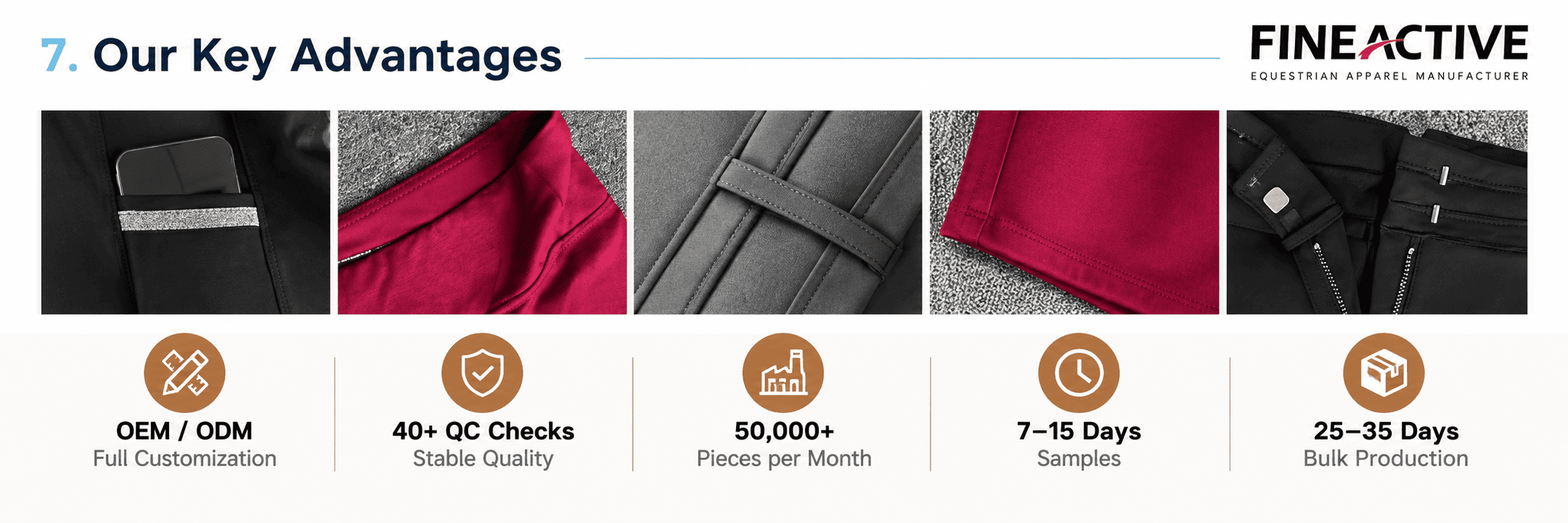
Compare supplier samples using the same product brief, intended wearer, evaluation conditions and acceptance requirements. Record what each sample was made to demonstrate, then assess both the garment and the supplier’s response to feedback. A finished stock sample, a fit prototype and a production-material sample provide different evidence. The strongest candidate is the one that meets your requirements and resolves outstanding issues accurately—not necessarily the supplier that sends the fastest or most attractive first parcel.
What Must Stay Consistent Across Sample Requests for a Fair Comparison?
Send every candidate the same dated brief and identify which requirements are fixed and which remain open to proposals. Consistency matters because a supplier can produce a convincing sample by interpreting an unclear requirement differently from its competitors. That may offer a useful alternative, but it should not receive credit for meeting a requirement it has changed.
Before commissioning samples, review Fineactive’s riding tights sampling and approval scope and ask other candidates to define their deliverables just as clearly. Confirm whether the fee covers an existing reference garment, a newly developed fit sample or a sample using the intended production materials.
| Comparison requirement | Keep consistent | Record separately |
|---|---|---|
| Product brief | Design version, intended use and essential features | Supplier-proposed alternatives |
| Reference size | Measurement definitions, size chart and intended wearer | Approved deviations |
| Materials | Agreed requirements and approved references | Substitute fabric, color or trims |
| Grip and branding | Artwork version, dimensions and placement requirements | Temporary or omitted applications |
| Evaluation | Wearer, movement sequence and agreed care conditions | Differences that limit comparison |
| Sample scope | Decisions the sample must resolve | Work deferred to a later sample |
A substitute material does not automatically make a sample useless. It may still help assess construction or proportions. However, approval should remain limited to what the sample can demonstrate. Do not treat a prototype made in substitute fabric as proof of the final garment’s opacity, recovery or grip performance.
How Should Buyers Score Sample Results Against the Same Acceptance Brief?
Score against the agreed requirements rather than personal preference alone. Keep measurements, observed results and wearer comments separate so the purchasing team can understand why one sample performed better. A garment that feels softer is not automatically more suitable if the brief prioritizes support, durability or a particular appearance.
Use a record that distinguishes a failed requirement from an unanswered question:
| Assessment status | Meaning | Purchasing response |
|---|---|---|
| Pass | Meets the agreed requirement under the stated conditions | Retain evidence and proceed |
| Revise | A defined issue requires correction | Request a specific change and reassess |
| Not demonstrated | Sample scope or missing information prevents a conclusion | Obtain the required sample or evidence |
| Fail | Does not meet a critical requirement | Pause or reject, unless a credible resolution is agreed |
Avoid allowing a high average score to hide a critical failure. For example, attractive finishing should not compensate for a required fit or function that remains unacceptable. Similarly, “not demonstrated” is not a pass—but it should not be recorded as a manufacturing defect when the sample was never intended to prove that point.
What Do Revision Accuracy and Technical Responses Reveal About a Supplier?
The first sample shows how a supplier interprets the brief. The next round shows how well it manages correction. Compare whether requested changes were completed, whether unaffected details remained stable and whether the supplier explained any linked consequences before proceeding.
Send feedback that identifies the issue, its location and the conditions under which it occurs. Ask the supplier to explain the proposed correction rather than prescribing a technical fix without discussion. One symptom can have several causes, and an unnecessary change can introduce another problem.
Useful comparison points include:
- Understanding: Does the supplier address the actual issue or answer a different question?
- Technical reasoning: Can it explain the proposed correction and any trade-offs?
- Revision accuracy: Are agreed changes present in the next sample?
- Version control: Do measurements, artwork and comments refer to the same revision?
- Issue closure: Is each point resolved, deferred or awaiting a buyer decision?
A quick “yes, we can fix it” has limited value without accurate execution. A supplier that asks a focused question may help the project move faster than one that agrees immediately but requires repeated corrections.
How Long Does Each Supplier Take from Complete Brief to Accepted Sample?
Measure the time to an accepted product, not just the time to first dispatch. Record supplier working time, buyer feedback time, transit and testing separately. This makes the comparison fair: a delay caused by missing buyer approval should not be attributed entirely to the manufacturer.
A useful milestone record includes:
- Date the brief and essential references became complete.
- Date the supplier confirmed scope, charges and material assumptions.
- First sample dispatch and receipt dates.
- Feedback dates and agreed revision deadlines.
- Date remaining issues were closed and the sample was accepted.
Compare total development cost alongside elapsed time. Include additional sample rounds, size samples, testing and delivery where applicable. If a fee is refundable against a bulk order, confirm the conditions before subtracting it from the expected cost.
When Is a Pilot Order Needed to Resolve the Remaining Uncertainty?
A pilot order can help when the sample is acceptable but questions remain about consistency across units, size allocation, packing or production communication. It must meet agreed commercial conditions; “pilot” does not automatically mean a quantity below the supplier’s MOQ.
Choose the pilot scope around the uncertainty you need to resolve. A single-size run cannot demonstrate a full size range, and a stock-material order cannot establish continuity for a custom material that has not been used. Agree the specifications, release conditions and defect remedies before production begins.
After delivery, compare the pilot with the approved reference and the supplier’s written commitments. Advance the candidate when the evidence supports it. If important questions remain, resolve them before increasing order volume rather than assuming that a larger order will improve control.
7. Which Manufacturer Is the Best Fit for Your Brand—and How Do You Finalize the Shortlist?
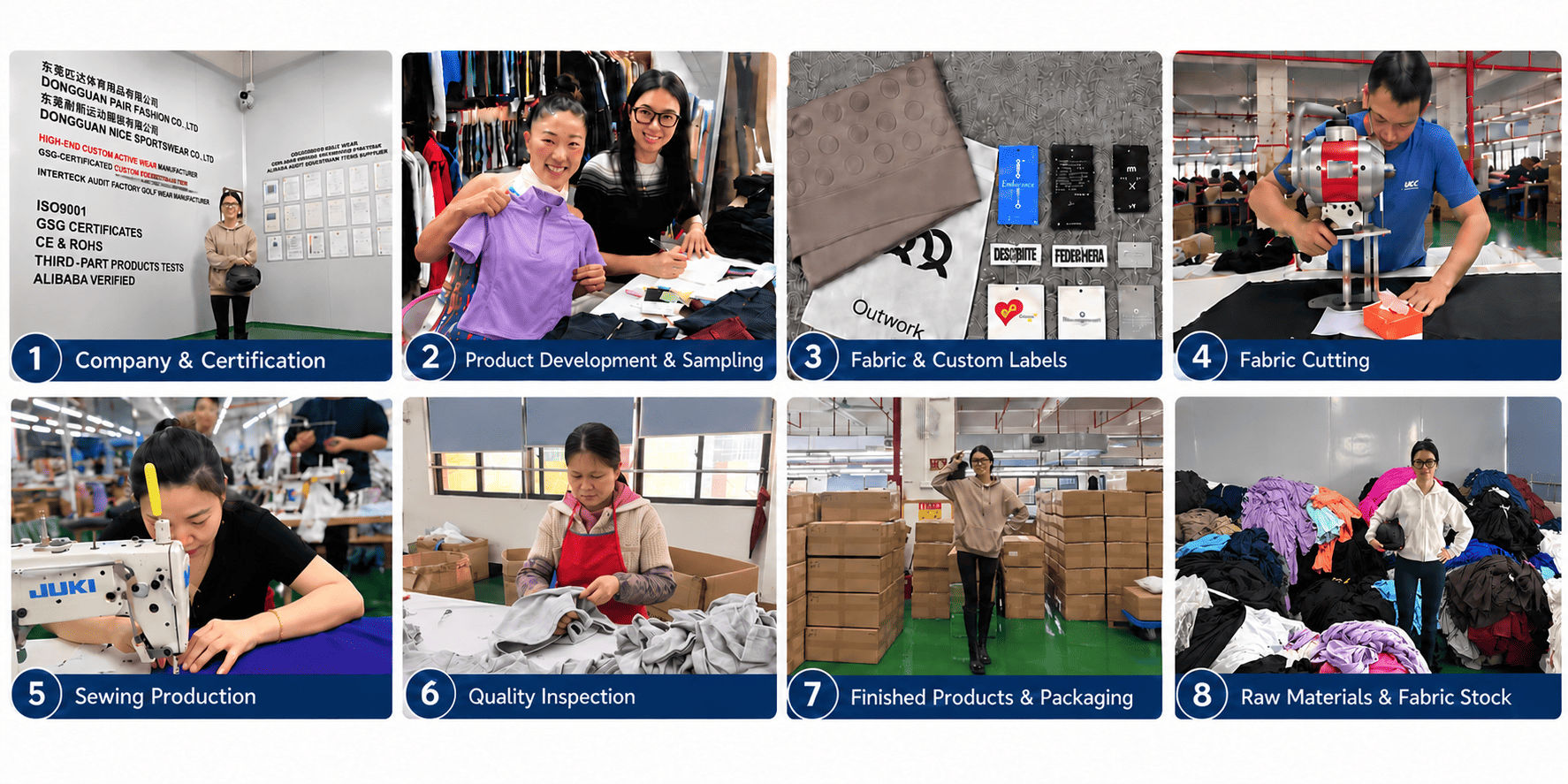
The best manufacturer is the supplier that meets your essential requirements and offers the strongest verified fit for your order—not necessarily the largest company or the lowest bidder. First remove candidates with unresolved critical issues. Then compare technical results, commercial conditions and delivery credibility using the same scorecard. Award a trial order only after responsibilities are clear, and increase purchasing volume when actual production results support that decision.
Who Should Prioritize Launch Flexibility, Technical Development or Repeat Supply?
Your brand’s stage changes the importance of each supplier capability. A first collection needs a manageable financial commitment and a realistic route to an approved product. An established riding label transferring a proven style may place greater value on accurate execution and continuity. Neither should choose solely on MOQ.
| Buyer situation | Prioritize | Evidence worth requesting |
|---|---|---|
| First equestrian collection | Development support and manageable initial commitment | Defined sample scope, revision charges and style/color minimums |
| Growing DTC brand | Reorder consistency and seasonal coordination | Specification records, change tracking and replenishment arrangements |
| Established riding label | Accurate technical transfer and production control | Comparable sample results, inspection records and material-substitution procedures |
| Club or team program | Size allocation and arrival-date feasibility | Approved size breakdown, production milestones and packing instructions |
| Multi-category retailer | Coordination without losing product accountability | Named responsibility for each category and production location |
Choose the capabilities that meet your actual needs. If your team can already manage product development, a full design service may not bring much extra value. If your product requirements are still incomplete, a low quotation covering production only may leave your team with work it is not yet able to handle.
How Should Brands Weight Quality Evidence, Commercial Fit and Delivery Risk?
Set the evaluation criteria before final quotations arrive. Otherwise, an attractive price can influence how the team interprets weaknesses elsewhere. The scorecard should make your priorities visible, not produce a convenient justification for a preferred supplier.
The following weights are an example for a custom riding-tights project. They are not an industry standard or scores assigned to the suppliers in this guide.
| Evaluation area | Example weight | What supports the rating |
|---|---|---|
| Technical fit and sample outcome | 30% | Results against the agreed product requirements |
| Quality evidence and production control | 25% | Relevant records, clear responsibilities and corrective-action arrangements |
| Commercial fit and total cost | 20% | Comparable quotation, workable MOQ and manageable payment schedule |
| Delivery plan and capacity credibility | 15% | Defined dependencies, realistic milestones and available production capacity |
| Communication and document control | 10% | Accurate responses, revision tracking and timely issue closure |
Rate each area from 1 to 5 and calculate its contribution as weight × rating ÷ 5. The contributions total a score out of 100. Keep evidence confidence beside each rating: supplier-reported, document-checked, sample-assessed or trial-order-assessed.
Do not give unknown information an average score simply to complete the table. Mark it unresolved. A supplier with a high provisional score and several critical unknowns should not automatically outrank a candidate supported by stronger evidence.
Which Go/No-Go Criteria Should Reduce Ten Candidates to Three?
Use mandatory requirements before weighted scoring. A supplier that cannot meet a genuine requirement should not recover through strengths in unrelated areas. Apply the same rules to every candidate, including Fineactive.
Before advancing a supplier, confirm that:
- The order is feasible: The style/color quantities meet agreed minimums and material constraints.
- The product is achievable: Sample results meet critical requirements, or a credible correction remains scheduled.
- Responsibility is clear: The contracting entity and production arrangement are understood.
- Costs are sufficiently defined: Major exclusions and payment obligations are recorded.
- Timing is credible: The plan accounts for approvals, materials, manufacturing and transport.
- Changes are controlled: Substitutions affecting the agreed product require approval.
Three is a useful working shortlist, not a compulsory target. If only two candidates qualify, compare two. If none qualifies, revisit the brief, commercial expectations or supplier search rather than selecting the least unsuitable option.
What Must Be Confirmed Before Awarding a Trial Order?
Turn the selected proposal into a clear written order. Align the specification version, approved sample, material references, quantities, price, payment terms and delivery basis. Identify any accepted exceptions so neither party has to reconstruct the agreement from scattered messages.
Also address development ownership, confidentiality, inspection, shipment release and defect remedies. Clarify what happens if materials become unavailable or the agreed schedule changes. These provisions should reflect the actual project and be incorporated into the parties’ agreement; a general promise of “full support” does not define the solution.
When Should You Expand Order Volume or Qualify a Backup Supplier?
Increase volume after reviewing what the trial order demonstrated: product consistency, delivery against the agreed plan, packing accuracy and the supplier’s response to problems. Separate a promptly corrected isolated issue from a recurring failure that remains unexplained. Repeated promises are weaker evidence than completed corrective action.
Qualify a backup before an urgent replacement is needed. Confirm that it can make the required product and that its capacity is genuinely independent where that matters. Two sales contacts relying on the same production site may provide less supply protection than expected. Allocate future business according to demonstrated performance, while keeping expectations and change approvals clear.
Frequently Asked Questions About Horse Riding Clothing Manufacturers in China
1.Which Chinese Manufacturer Is Best for a New Equestrian Tights Brand?
The best fit combines a manageable first-order commitment with the development support your team needs, supported by relevant samples, a clear quotation and a credible schedule rather than a low advertised MOQ alone. Fineactive is one candidate for brands planning at least 100 pieces per style per color. Compare its proposal with other qualified suppliers using the same brief. If a lower minimum is offered elsewhere, check whether it covers stock, a modified existing style or original development before treating the offers as equivalent.
2. Is a Direct Factory Better Than a Trading Company?
A direct factory is not automatically the better choice; compare who controls the technical work, manages production and accepts contractual responsibility, then assess whether the arrangement offers value for your particular order. A factory may provide closer production access, while a capable trading company can coordinate specialist operations. Either model can involve subcontracting. Ask who holds approved specifications, authorizes changes and handles defects. Choose the arrangement with understandable responsibilities and relevant evidence rather than relying on the supplier’s business-model label.
3. Can a Low MOQ Make a Supplier the Best Choice for a Small Brand?
A low MOQ helps only when it applies to the product you need and produces a manageable total commitment after development, materials, branding, packaging and delivery costs are included in the comparison. Ask whether the minimum is per style, color, fabric or total order. Separate component minimums may still apply. A small brand may benefit more from launching one well-defined style in fewer colors than from spreading its budget across many low-volume combinations. Compare inventory exposure and likely demand alongside unit price.
4. Do Certificates and Audit Reports Prove Riding Tights Quality?
Certificates and audit reports support specific claims within their scope; they do not collectively replace assessment of the actual garment, production arrangement and acceptance requirements relevant to your riding-tights order. Check the holder, facility or article coverage and validity, as applicable. A social audit addresses different questions from a performance test. Request evidence that answers your purchasing requirements rather than collecting unrelated documents. Relevant certification can be important, but sample and production evaluation are still needed to establish product suitability and order consistency.
5. How Many Suppliers Should a Brand Sample Before Choosing?
Two or three qualified candidates can provide a manageable first comparison, provided they receive a consistent brief and offer commercially feasible terms; there is no universal number that guarantees a good sourcing decision. Screen identity, product relevance and order conditions before paying for samples. Increase the candidate pool if the initial group cannot meet critical requirements. Sampling ten suppliers without clear criteria can create more administration without improving the decision. The objective is enough comparable evidence to choose responsibly, not the largest possible sample collection.
6. When Should a Brand Contact Fineactive About a Custom Project?
Contact Fineactive when you can describe the intended rider, product direction, approximate quantities by style and color, and required arrival date, even if some material or technical decisions still need development support. To evaluate the next step, discuss your riding tights sourcing brief and identify what is fixed, what remains open and whether your priority is sampling or costing. Request a written scope covering inclusions, exclusions and approval milestones. Commit to bulk production after the relevant product and commercial conditions are confirmed.
Get In Touch
Contact our OEM/ODM specialists for product development, sampling, pricing, and production support.