Top 10 best horse riding pants Manufacturer Picks in China | Supplier Comparison
Compare 10 China suppliers to find the best horse riding pants Manufacturer for your brand. Review product focus, MOQ, sample terms and sourcing risks before shortlisting.
Which 10 Riding Pants Manufacturers in China Should You Compare?
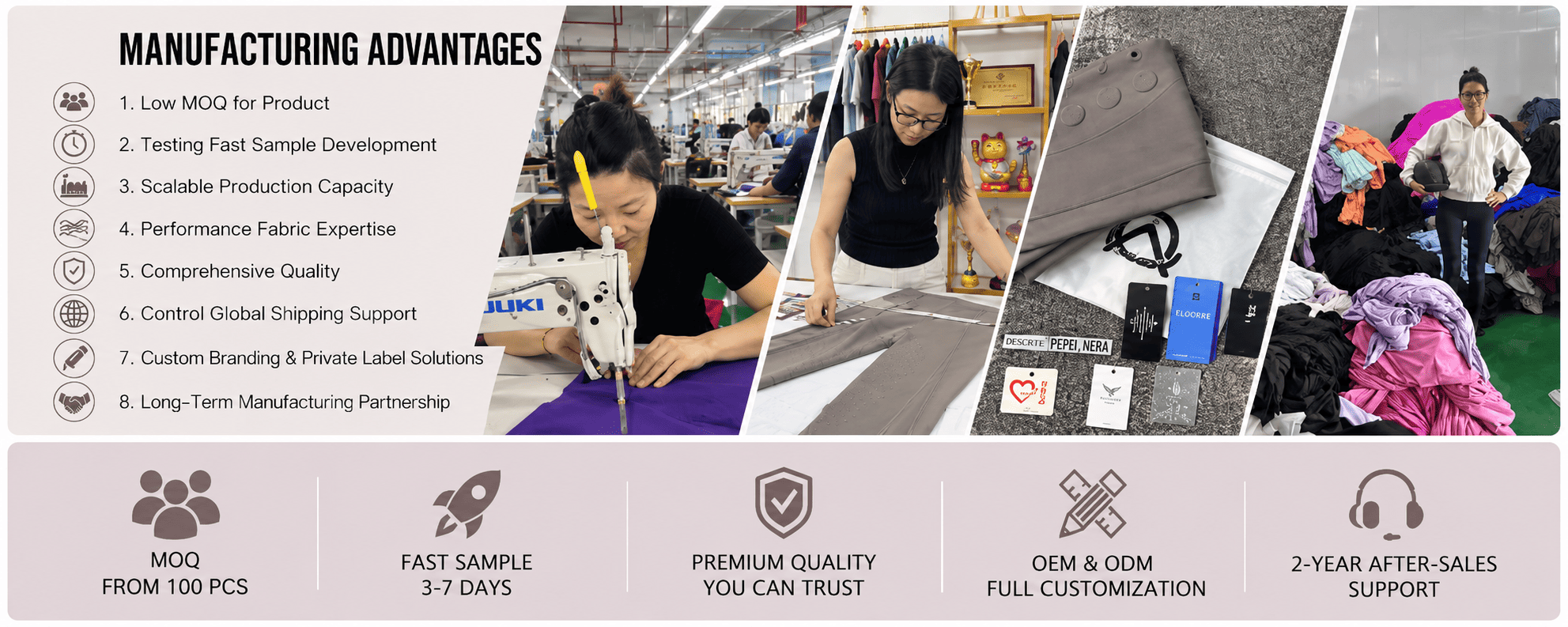
Compare manufacturers based on whether their product experience and order terms match the riding pants you plan to buy. The ten suppliers below give brands different sourcing options, but their published information cannot be compared on the same basis without checking the details. Confirm how MOQ is calculated, what sampling includes, where production takes place and what the delivery estimate is based on before comparing quotations. A supplier suitable for repeat orders of existing breeches may not be suitable for a small collection that needs new fit development.
Supplier Comparison at a Glance
| Manufacturer | Product focus relevant to this guide | Published MOQ reference | Priority question |
|---|---|---|---|
| Fineactive | Breeches, riding tights and rider apparel | 100 pieces per style per color | What development and approval work does the quotation include? |
| SGL Sports | Breeches, riding leggings and broader sportswear | Confirm for the proposed style | Can you review a sample with comparable construction? |
| Zest Equestrian | Breeches and wider equestrian products | Flexible minimums described | What minimum applies to your exact material and design? |
| Equifactory | Breeches, leggings and broader equestrian collections | Confirm for the project | Who performs each production stage? |
| Kala Apparel | Breeches, equestrian leggings and other apparel | Project-dependent | Does the general MOQ range apply to your riding pants? |
| UBI Garments | Breeches and other equestrian garments | Selected model: 200 pieces per color | Which written delivery schedule applies? |
| Ope Equestrian | Breeches, leggings and wider equestrian products | Published reference: 100 per design per color, with three sizes | What changes if you need more sizes? |
| REINFORM | Breeches, tights and rider apparel | 300 pieces per style per color | Can your sales plan support the quantity per color? |
| Run Equestrian | Breeches, jodhpurs and competition apparel | Advertised from 100 pieces | Which terms apply to original development? |
| EquiClothing | Breeches, show shirts and jackets | Advertised at 100 pieces for breeches | What garment or decoration sample will you receive? |
Published minimums are reference points, not confirmed offers. Product-specific terms can differ from company-wide claims. The buyer-fit assessments below identify conditions to investigate; they do not represent independently verified production results.
1. Fineactive
Fineactive is an option to investigate for brands sourcing custom breeches or riding tights alongside coordinated rider apparel. Its stated order terms make the initial quantity commitment relatively straightforward to calculate.
- Location and history: China; company information states establishment in 2016. Confirm the contracting entity and manufacturing address.
- Main products: Riding breeches, riding tights, show shirts, competition jackets and other rider clothing.
- MOQ: 100 pieces per style per color.
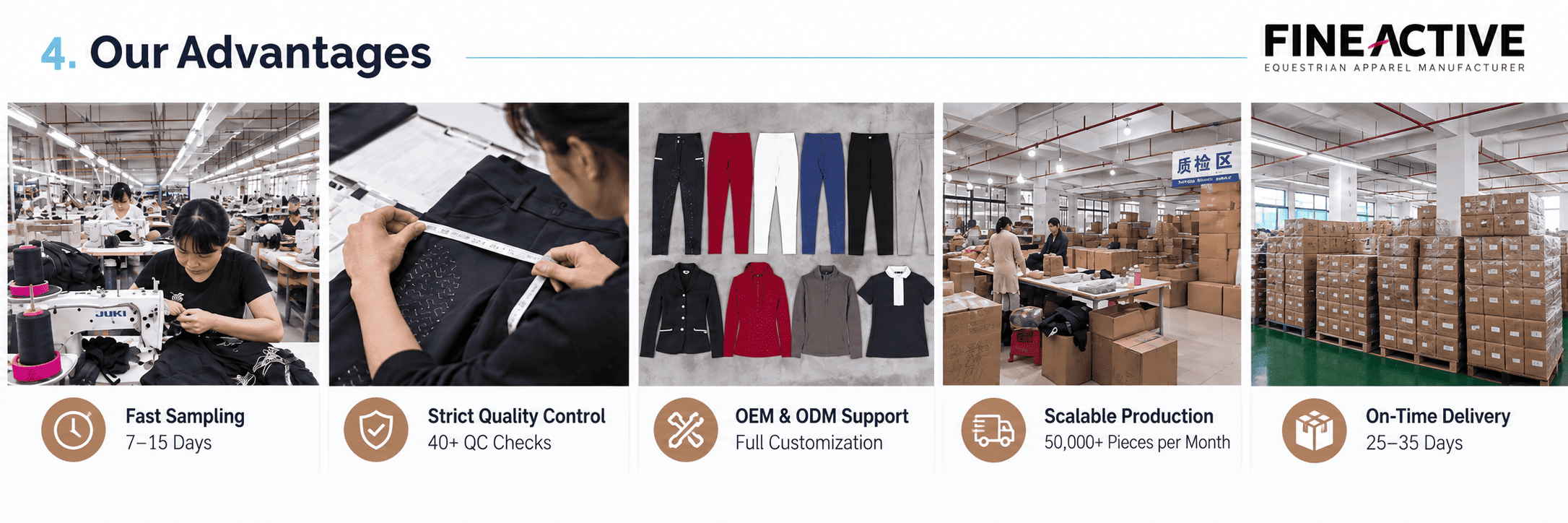
- Lead times: Normally 7–15 working days for samples and 25–35 working days for bulk production, subject to confirmed materials, specifications and approvals.
- Certificates and audits: Request current, applicable documents; company references alone do not establish product compliance.
Potential fit: Brands seeking sample development and private label production at the stated minimum.
Less suitable when: Your planned quantity falls below the minimum in each color.
Confirm before ordering: Sample charges, revision scope, testing responsibilities and the conditions that start production. Fineactive’s custom breeches and riding tights manufacturing services provide further detail on its offering.
2. Dongguan SGL Sports
SGL’s catalogue combines equestrian clothing with activewear and other sports garments. Its breeches page displays full-seat and knee-grip products, while its company profile describes pattern development and material sourcing.
- City: Dongguan, Guangdong.
- History: Confirm the establishment date against company documents.
- Main products: Breeches, riding leggings, base layers, jackets and broader sportswear.
- MOQ: Obtain a style-specific minimum.
- Lead times: Its homepage gives references of around ten working days for sampling and approximately 35–40 days for bulk production; confirm the applicable schedule.
- Certificates and audits: Request documents covering the proposed production arrangements.
Potential fit: Brands evaluating equestrian and activewear sourcing together.
Less suitable when: The project requires equestrian-only production allocation that has not been demonstrated.
Confirm before ordering: Ask for a comparable garment, its specification and the production route proposed for your order. A broad catalogue provides options, but it does not establish equal experience across every construction.
3. Zest Equestrian
Zest presents riding apparel alongside horse-related products. Its dedicated breeches page addresses fabric choices, silicone grip, sizing and branding, making it a relevant candidate for buyers investigating coordinated equestrian sourcing.
- City: Dongguan, Guangdong.
- History: Advertises over 16 years of textile experience; verify how that relates to the contracting company.
- Main products: Breeches, rider apparel and wider equestrian categories.
- MOQ: Flexible minimums are described; a firm quantity requires confirmation.
- Lead times: Published references include 7–15 days for samples and 25–45 days for manufacturing. Confirm working-day definitions and approval conditions.
- Certificates and audits: Verify scope for the specific product.
Potential fit: Buyers exploring several equestrian categories.
Less suitable when: A purchase decision depends on a fixed minimum or arrival date before the specification is reviewed.
Confirm before ordering: Obtain written material specifications and identify which performance claims will be supported by testing.
4. Equifactory
Equifactory offers a broad equestrian catalogue and describes design support, OEM and private label services. Its published scope includes breeches and leggings as well as tops, jackets and horse products.
- Location: A published contact address is in Wuhan’s Jiang’an District; confirm the garment manufacturing address separately.
- History: Its own article states establishment in 2010; verify against company records.
- Main products: Breeches, leggings, rider apparel and horse-related products.
- MOQ and lead times: Obtain current project-specific terms.
- Certificates and audits: Clarify the document holder, facility and product coverage.
Potential fit: Buyers assessing collection coordination through one commercial contact.
Less suitable when: You require all processes at one facility and that arrangement has not been verified.
Confirm before ordering: Identify who performs cutting, sewing, silicone application and inspection. Coordinated sourcing can be useful, but the buyer still needs a clear account of responsibility if a subcontracted process fails.
5. Kala Apparel
Kala’s riding breeches page covers full-seat, knee-grip, summer and winter styles, together with women’s, men’s and children’s products. Its wider business also includes other apparel categories.
- City: Dongguan, Guangdong.
- History: Verify the legal establishment date rather than calculating it from changing experience claims.
- Main products: Breeches, equestrian leggings, base layers, jackets and other apparel.
- MOQ: The homepage advertises a general 30–200-piece range; the breeches page says terms depend on the project.
- Lead times: Request a dated sample and production schedule.
- Audit information: The website references BSCI; review the actual audit report and scope, and consult the amfori BSCI social audit overview from UL Solutions to understand the type of assessment involved.
Potential fit: Brands comparing multi-category development support.
Less suitable when: Your plan assumes the lowest general minimum covers an original riding breech.
Confirm before ordering: Ask separately about stock fabric, custom dyeing, new patterns and size allocation. These can produce different quantity requirements within the same supplier.
6. Quanzhou UBI Garments
UBI’s riding breeches listing provides a specific model, fabric options, size references and packaging information. That detail can help buyers prepare a more precise inquiry.
- City: Quanzhou, Fujian.
- History: Request the establishment date and company registration information.
- Main products: Breeches, equestrian jackets and tops, alongside other garments.
- MOQ: The reviewed model, RJ0118, lists 200 pieces per color.
- Sample time: Listed at 7–10 days.
- Bulk timing: The product page contains different delivery references; obtain one applicable schedule in writing.
- Certificates and audits: Request documentation relevant to the selected material and order.
Potential fit: Buyers developing an inquiry around an existing product specification.
Less suitable when: The launch depends on the shortest displayed delivery estimate without clarification.
Confirm before ordering: Specify the fabric option, approved construction and quantity. A detailed listing is useful only when the quotation clearly identifies which version it covers.
7. Dongguan Ope Equestrian
Ope publishes breeches, leggings and other equestrian products through its supplier profile. Its information describes OEM/ODM cooperation and sample availability.
- City: Dongguan, Guangdong.
- History: The profile records export activity from 2014; confirm the legal establishment date separately.
- Main products: Breeches, leggings, riding apparel and horse-related products.
- MOQ: Published information states 100 pieces per design per color with three sizes.
- Lead times: Seasonal references are available, but custom development needs an order-specific schedule.
- Audit information: Request the current report and verify the entity and manufacturing address.
Potential fit: Buyers considering rider apparel and other equestrian categories.
Less suitable when: A broad size range has not been reconciled with the published quantity arrangement.
Confirm before ordering: Ask how additional sizes, new patterns and custom materials affect MOQ and cost. Platform membership, export history and legal establishment are different facts; none should substitute for the others.
8. REINFORM
REINFORM publishes clear reference terms for MOQ and timing, including the treatment of revisions and transit. This makes the initial order commitment easier to compare.
- City: Hangzhou, Zhejiang.
- History: States that its own factory was established in 2016.
- Main products: Breeches, riding tights, base layers, show shirts and outerwear.
- MOQ: 300 pieces per style per color.
- Lead times: 7–10 working days for samples and 30–45 working days for bulk.
- Timing conditions: Specifications and materials must be confirmed; revisions and transit are planned separately.
- Certificates and audits: Request project-relevant supporting documents.
Potential fit: Brands whose demand can support the stated quantity in each color.
Less suitable when: A first launch needs substantially fewer pieces per color.
Confirm before ordering: Agree on size allocation, development charges and current scheduling. Explicit website terms help with planning, but they do not reserve capacity or settle the final specification.
9. Run Equestrian
Run Equestrian advertises breeches, jodhpurs and competition apparel with OEM/ODM support. Different pages present different delivery references, making clarification important before scheduling a launch.
- Location: Describes itself as China-based; confirm the city and production address.
- History: Claims operation since 2009; verify the corresponding legal entity.
- Main products: Breeches, jodhpurs, shirts, jackets and competition clothing.
- MOQ: Advertised from 100 pieces; confirm the style, color and size rules.
- Lead times: Request one written schedule for the actual development scope.
- Certificates and audits: Check material certificate details and applicability.
Potential fit: Buyers investigating a broad equestrian catalogue.
Less suitable when: Original development must meet an unqualified headline delivery promise.
Confirm before ordering: Separate stock-product supply, logo application and original pattern development. These involve different work, and a delivery estimate for one should not be applied automatically to another.
10. EquiClothing
EquiClothing presents breeches, show shirts and jackets for boutique brands and clubs. Its advertised sample service deserves particular attention because the stated scope includes logo or design samples.
- City: Dongguan, Guangdong.
- History: States a factory history from 2013; verify the relevant entity.
- Main products: Breeches, show shirts, jackets and selected accessories.
- MOQ: Advertises 100 pieces for breeches; confirm color allocation.
- Sample timing: Advertises 48-hour logo or design samples.
- Bulk timing: Request a project-specific schedule.
- Audit and certification: The website references BSCI and OEKO-TEX; obtain the relevant documents, verify any supplied OEKO-TEX certificate or label number through the official OEKO-TEX® Label Check, and confirm what the documentation covers.
Potential fit: Boutique buyers investigating existing product directions.
Less suitable when: An original garment needs a complete fit-and-test cycle within the advertised sample window.
Confirm before ordering: Define whether the deliverable is a decoration sample, stock garment or newly developed fit sample. A fast sample is useful only if it answers the purchasing decision you need to make.
Why Source Riding Pants from China—and When Does It Make Sense?
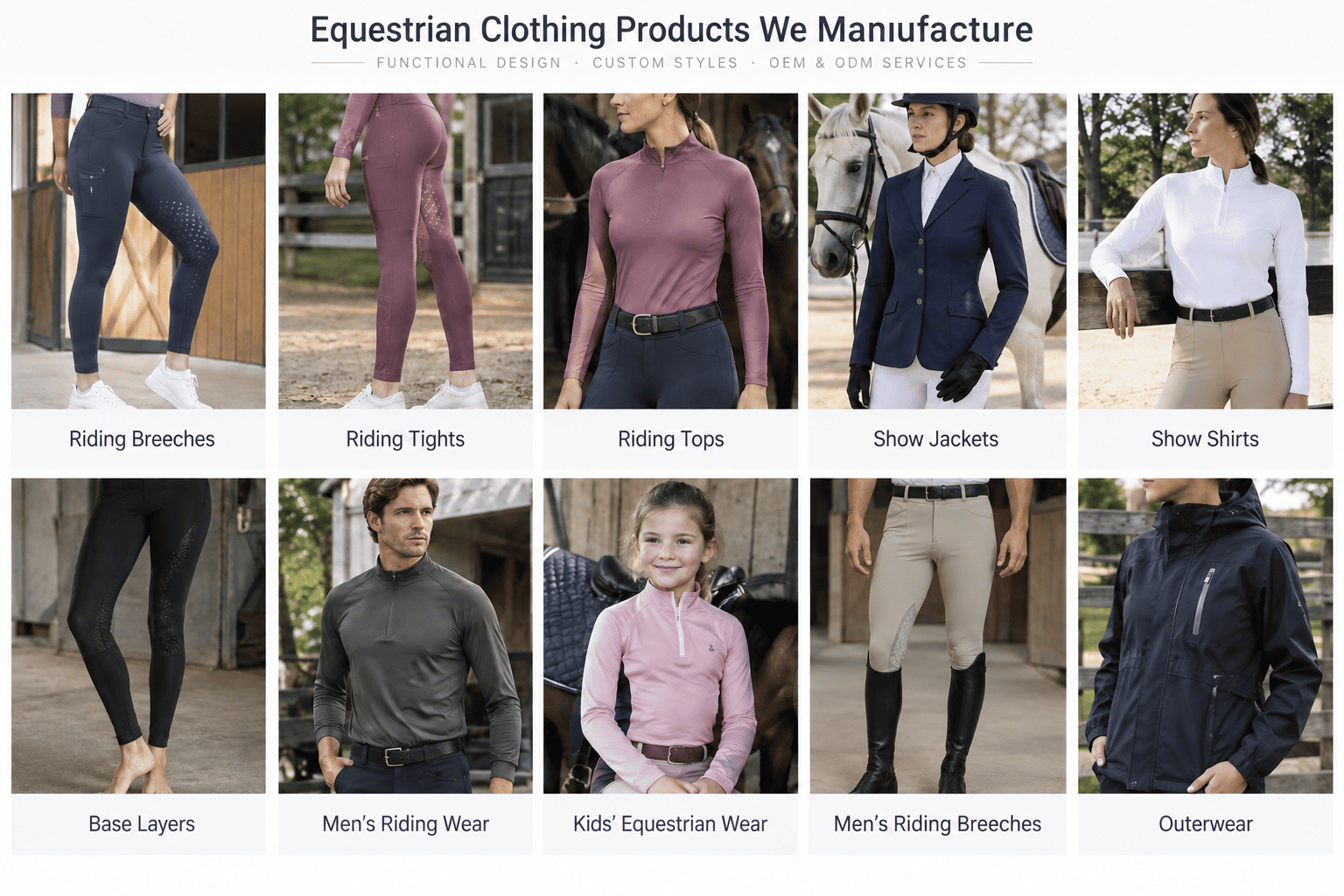
China can be a practical sourcing option when your riding pants project requires coordinated fabric sourcing, stretch-garment construction, silicone application and private label finishing. The decision should depend on the complete order cost and development requirements, rather than an assumption that Chinese production is always cheaper. Compare available suppliers against your quantities, technical brief and delivery needs, especially if your collection requires frequent replenishment or several rounds of fit approval.
What Can China’s Fabric, Trim and Silicone Supply Network Offer?
A custom riding breech may involve several suppliers before it reaches the sewing line: one for fabric, another for elastic, a specialist for silicone application and others for labels or packaging. Working with a manufacturer that can coordinate these inputs may reduce the number of separate businesses your team needs to manage.
However, access to materials is different from control over them. Ask who approves the fabric, whether replacement materials require your permission and how the manufacturer checks silicone compatibility with the selected fabric. A supplier’s location does not answer these questions; its project records and sample results should.
China vs Nearshore Production: Which Fits Your Order and Launch Date?
Compare actual suppliers rather than treating entire countries as one production model. An overseas manufacturer with suitable materials already available may offer a workable schedule, while a nearby facility waiting for imported fabric may still face delays.
| Purchasing situation | When a China-based supplier may fit | When to investigate a nearer supplier |
|---|---|---|
| New collection development | You can allow time for sampling and approvals | Frequent physical fittings are essential |
| Coordinated product range | One supplier can manage the required categories | Local production offers better coordination for your specific range |
| Repeat orders | Approved materials and specifications remain available | Small, frequent replenishment is the priority |
| Fixed launch date | Production and transit leave a realistic buffer | The remaining timeline cannot accommodate overseas shipping |
When Can Freight, Development and Inventory Costs Offset a Lower Price?
A lower unit price can lose its advantage if the minimum order requires more stock than you can sell. For example, 100 pieces per color across three colors means 300 garments, before considering additional styles. Compare that commitment with expected demand, not only your purchasing budget.
Compare development fees, production costs, inspection fees, freight and applicable import costs. Also consider the money tied up in inventory. If urgent replenishment may need air freight, include this possibility in your plan. Choose a sourcing option that fits your product and inventory plan, instead of only choosing the lowest first quotation.
Is the Manufacturer Equipped for Your Type of Riding Pants?
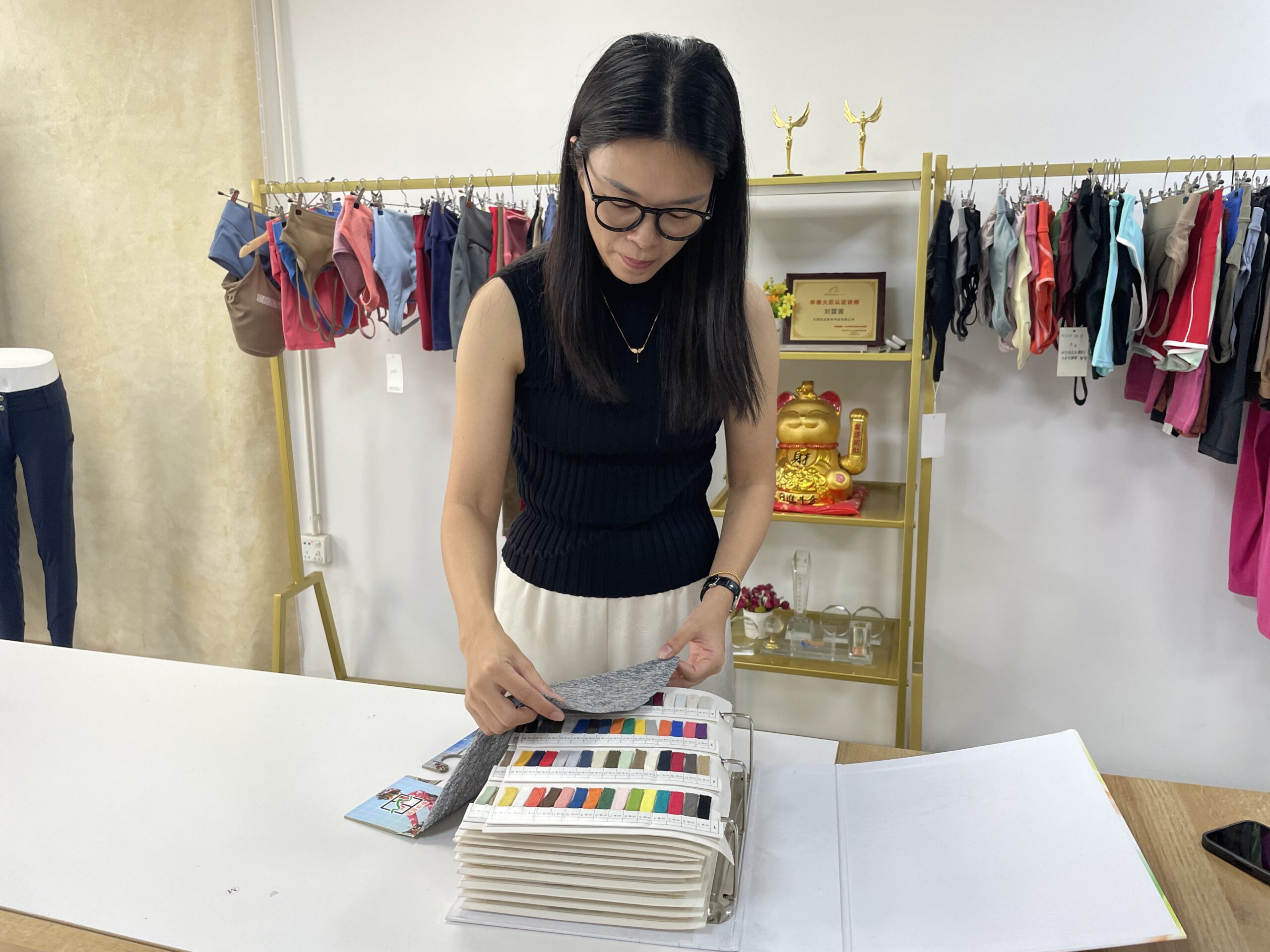
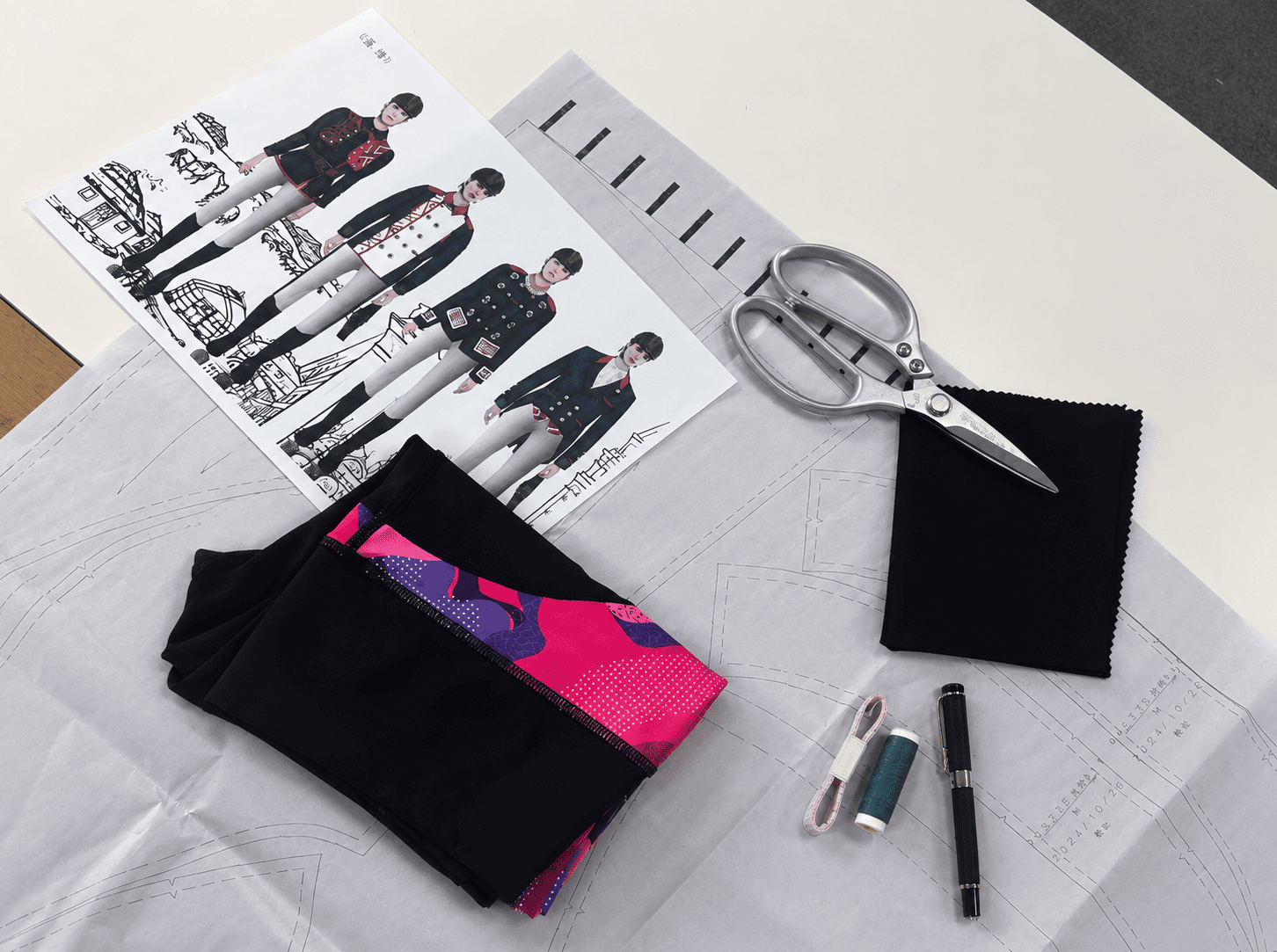
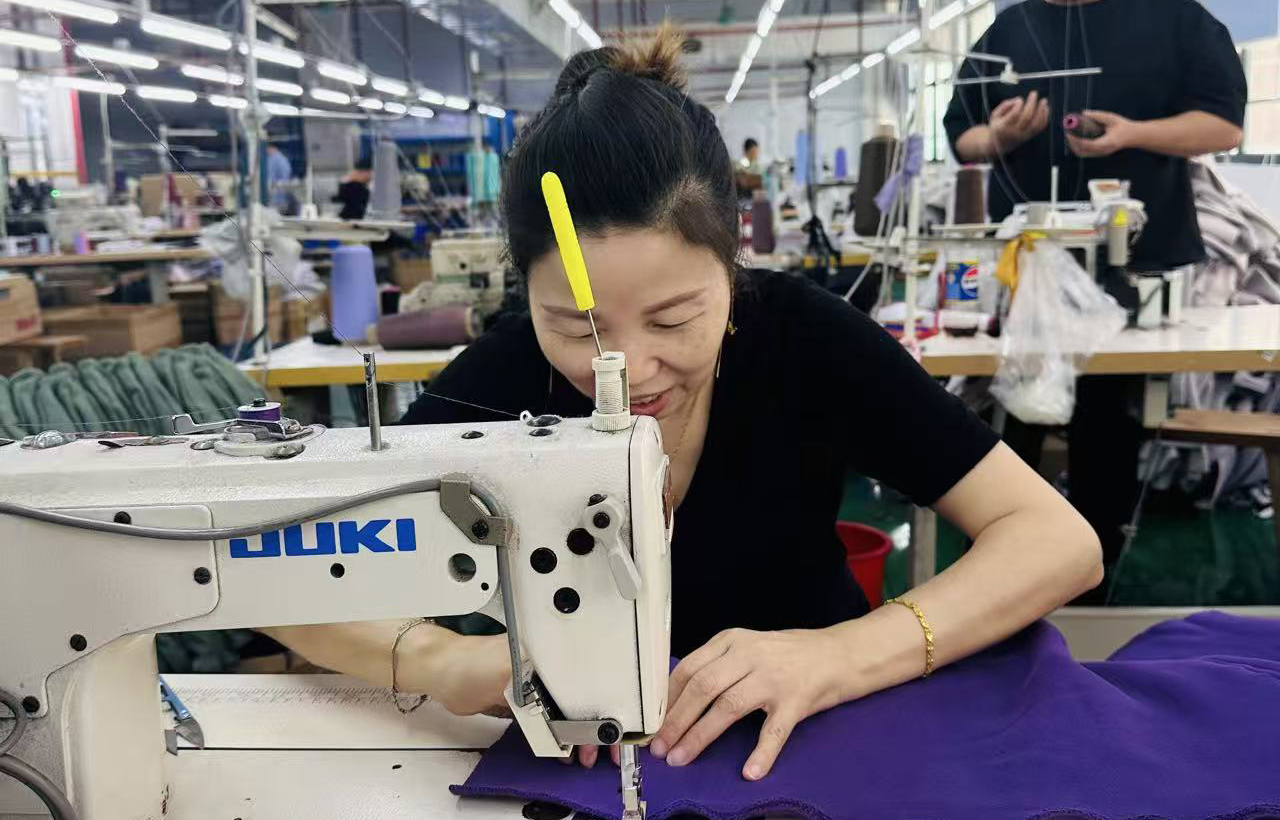
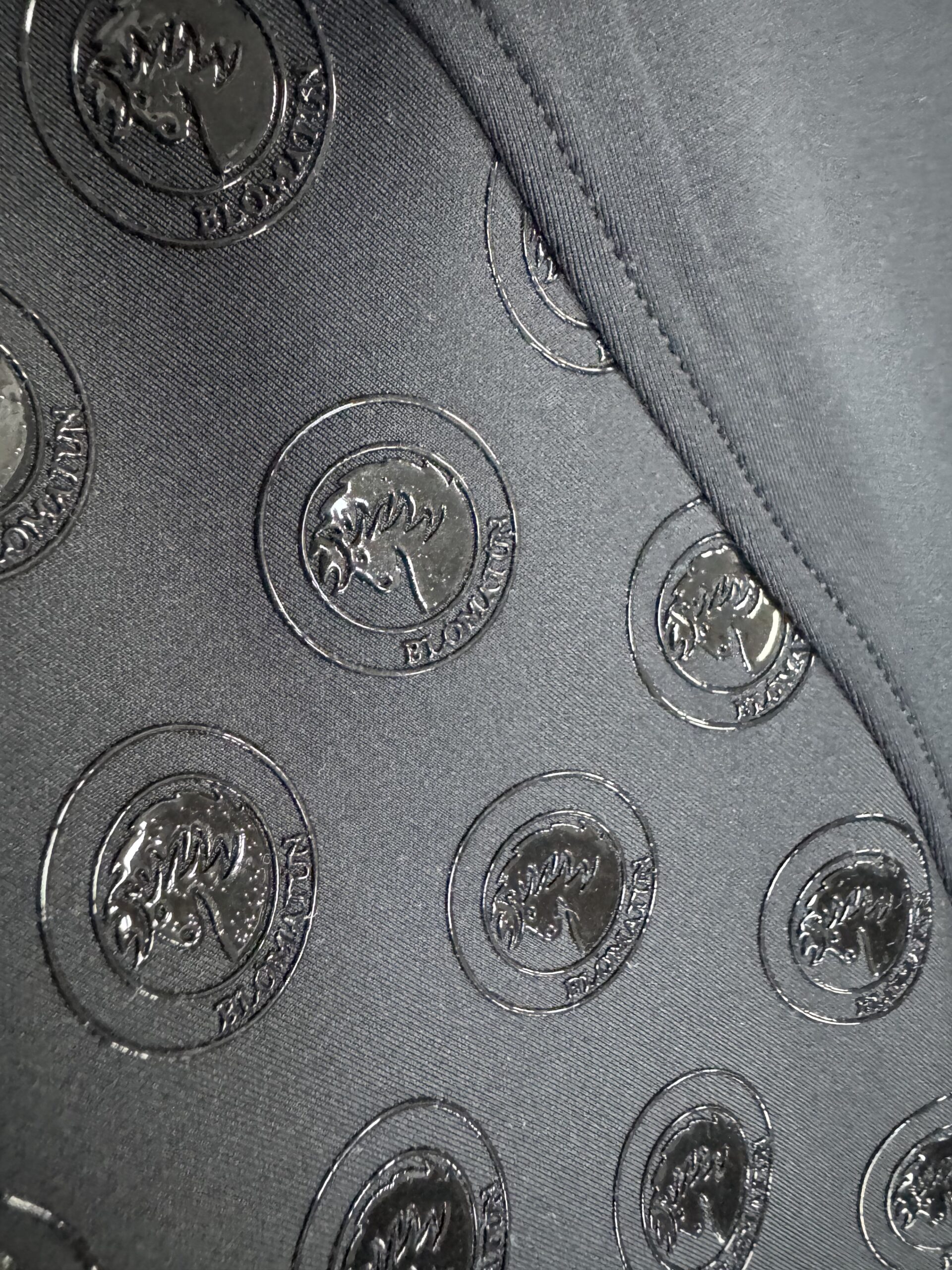
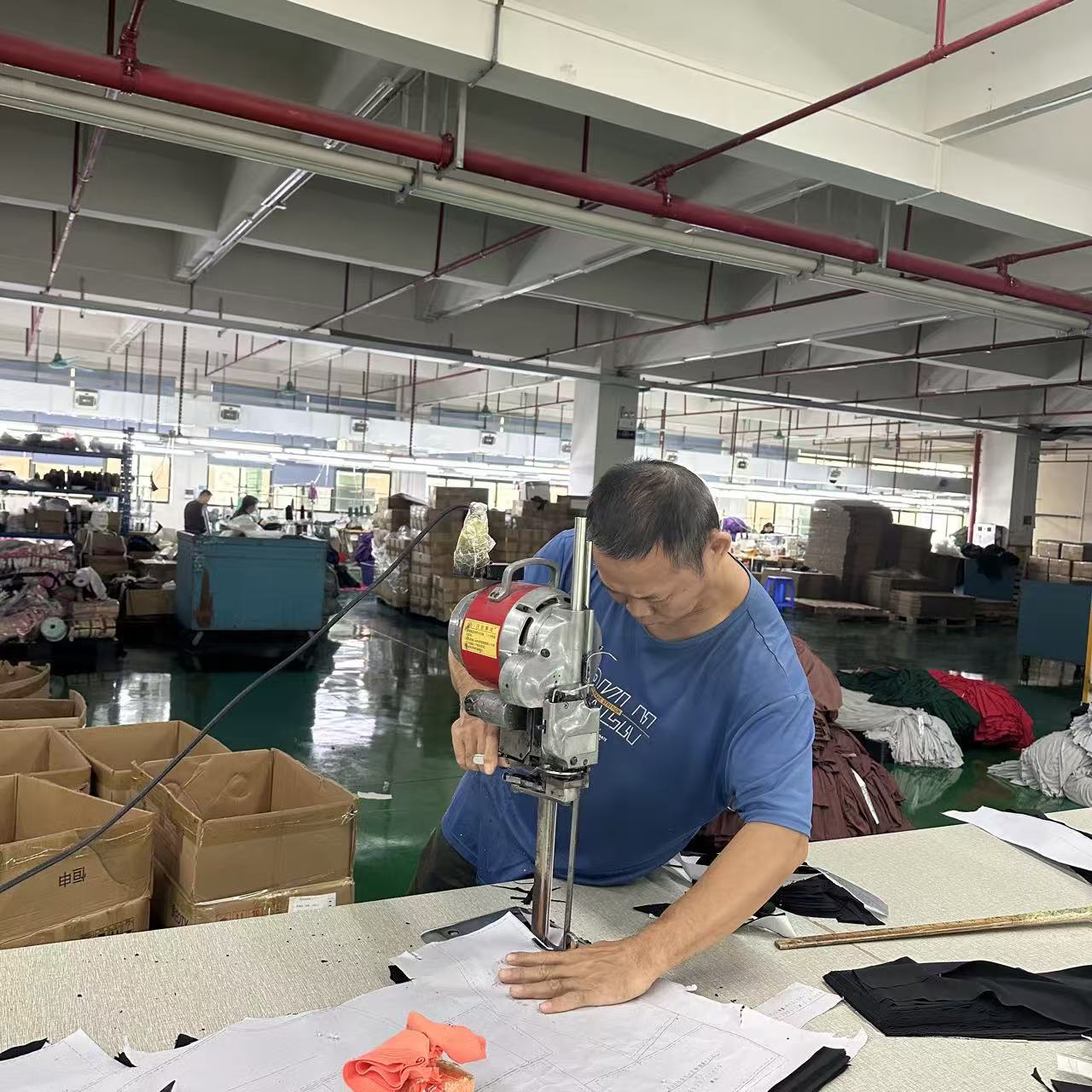
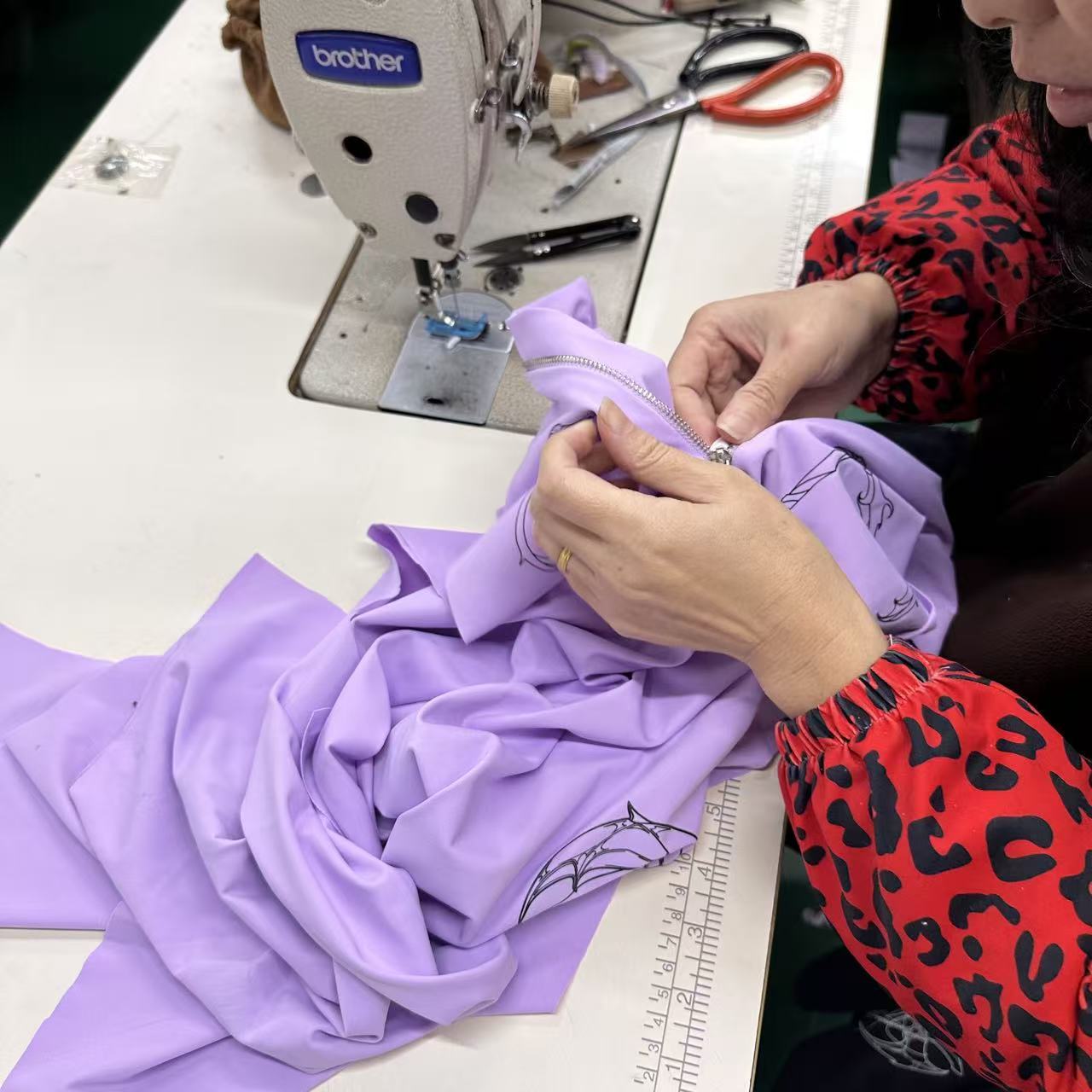
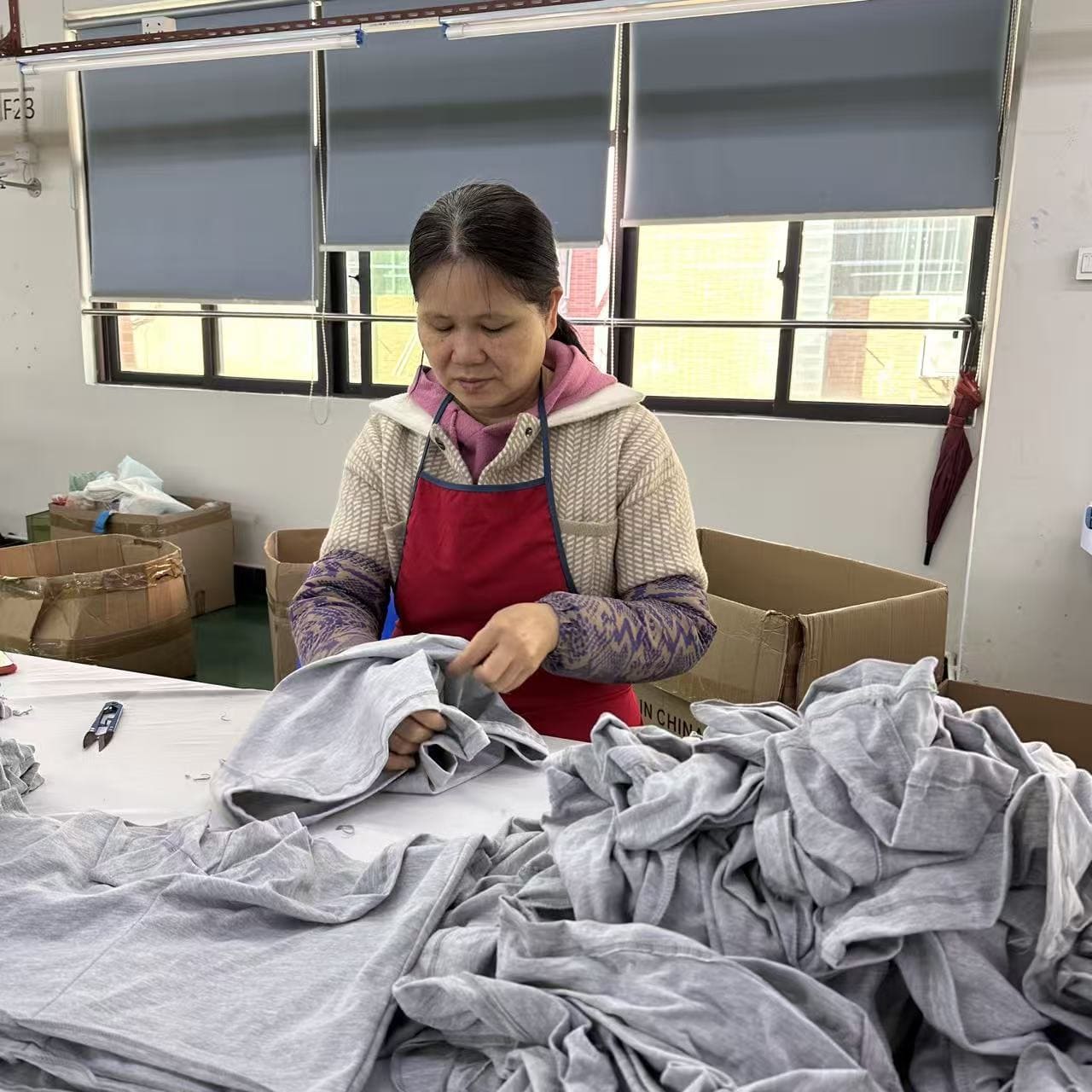
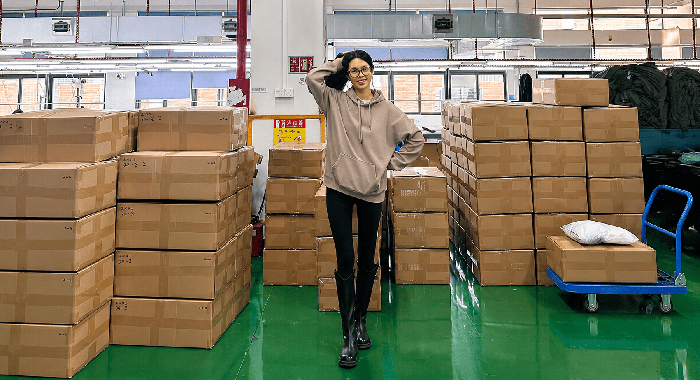
Look for evidence that a supplier can make your specific type of riding pants, rather than accepting general equestrian experience as sufficient. Structured competition breeches, pull-on training tights and children’s jodhpurs present different development questions. Request a comparable sample, examine the relevant construction and ask how the supplier will validate your requirements. A large catalogue is useful for finding possibilities; it does not establish that every product receives the same technical attention.
Riding Breeches vs Riding Tights vs Jodhpurs: What Experience Matters?
Product names alone can create misunderstandings. Suppliers may use “breeches,” “leggings” and “riding tights” interchangeably, so attach a reference image and describe the construction you need.
For structured breeches, examine the waistband, fly, pocket reinforcement and lower-leg finish. For pull-on tights, pay closer attention to stretch seams, waistband recovery and coverage under tension. For jodhpurs, specify the intended boot arrangement and leg finish rather than assuming the supplier interprets the term as you do.
Ask for a sample with similar construction, not merely a similar color or silhouette. If you are developing an original style, Fineactive’s custom riding pants development services provide a separate route for discussing the specification.
Specialist Equestrian Manufacturer vs Activewear Factory: What Should You Verify?
An activewear manufacturer may understand stretch fabrics and close-fitting garments. An equestrian specialist may have more relevant riding-product experience. Neither description replaces evidence.
Ask each candidate to explain how it would address inner-leg seam bulk, grip placement when the knee bends, and lower-leg comfort inside riding boots. A useful response identifies construction choices, sample checks and any unresolved questions. Generic assurances about “premium quality” provide little basis for comparison.
Which Evidence Matters for White Breeches, Winter Styles and Youth Sizes?
Some orders need additional evidence before supplier approval:
| Product requirement | Evidence to request | What to avoid assuming |
|---|---|---|
| White competition breeches | A sample in the proposed fabric and color, assessed when stretched and under realistic lighting | That an opaque dark sample proves white coverage |
| Winter riding pants | A finished sample showing lining, stretch and boot fit | That greater fabric weight guarantees suitable warmth or movement |
| Youth sizes | Graded measurements and an appropriate fit-review plan | That shrinking an adult pattern produces a suitable children’s fit |
| Custom silicone grip | Artwork placement on the garment and agreed adhesion and wash checks | That a silicone swatch proves finished-garment performance |
Use these checks to decide whether to proceed, request further development or remove a candidate. The strongest supplier response is specific enough to test, with limitations stated before you pay for the next stage.
How Do MOQ and Price Change Your Real Order Cost?
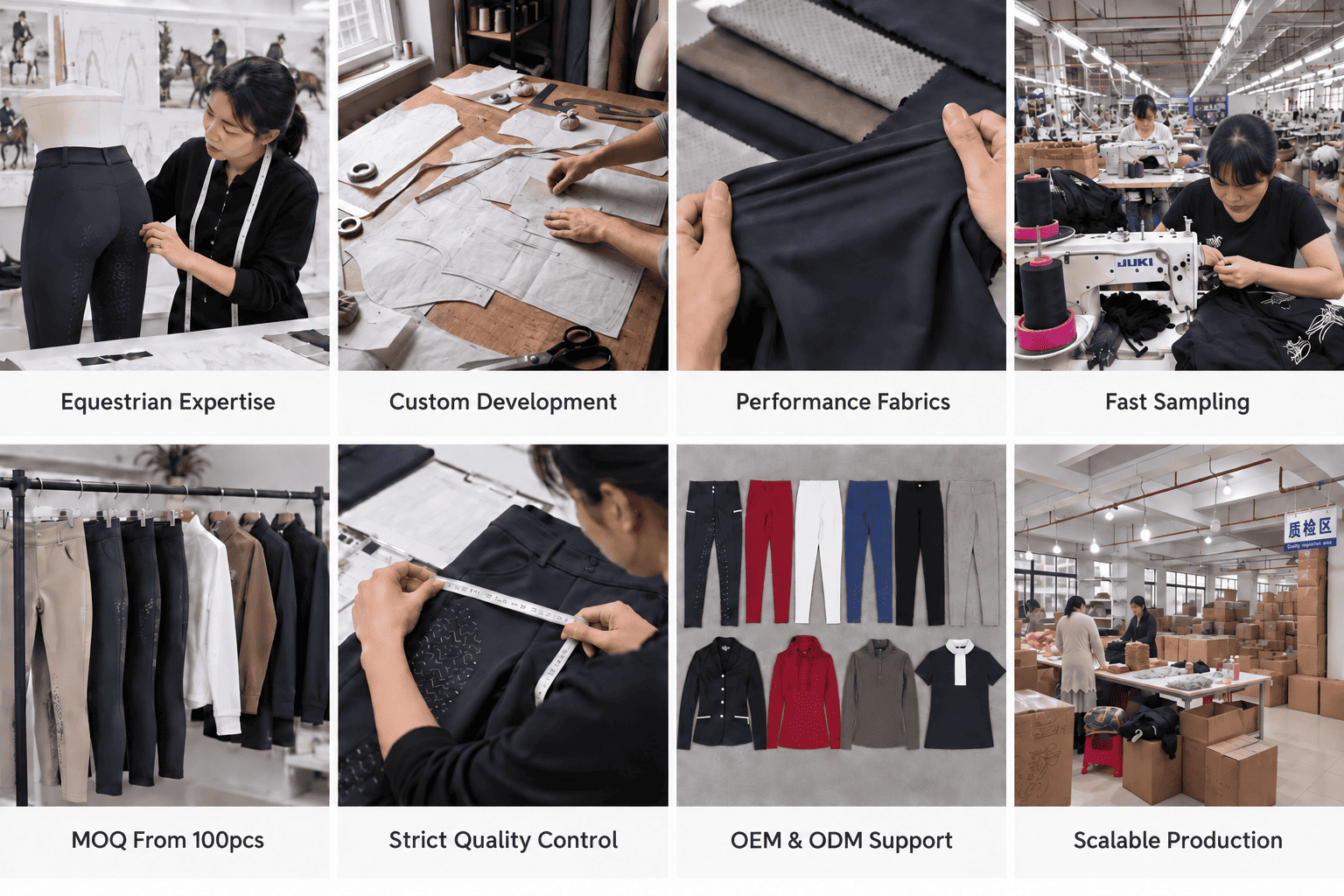
Compare the total commitment required to buy an approved product, not just the quoted price per pair. MOQ rules determine how much inventory you purchase, while fabric, grip development, revisions, testing and delivery terms determine what you pay beyond production. Two quotations become meaningfully comparable only when they cover equivalent specifications, quantities and responsibilities. Ask suppliers to separate confirmed charges from estimates and identify what could trigger a revised quotation.
Is the MOQ per Style, per Color or per Fabric?
“MOQ 100 pieces” is incomplete without a calculation rule. Ask whether it applies to each style, color or fabric, and whether sizes can be mixed within that quantity. A garment minimum may also differ from a custom fabric supplier’s minimum.
Consider this hypothetical comparison, assuming equivalent specifications and costs included in the unit price:
| Quotation | Unit price | Minimum per color | Three-color order | Garment subtotal |
|---|---|---|---|---|
| Supplier A | $18 | 200 pieces | 600 pieces | $10,800 |
| Supplier B | $21 | 100 pieces | 300 pieces | $6,300 |
Supplier A has a lower unit price, but you need to buy more pieces. Supplier B needs less money upfront, but buying fewer pieces also means you have fewer garments to sell. The right choice depends on demand and profit margin, not only the price. These figures are only examples, not actual market quotations.
What Must Match Before You Compare Custom Riding Pants Prices?
Send each supplier the same specification. Confirm fabric composition and weight, construction, grip artwork and coverage, size breakdown, branding and packaging. Ask suppliers to identify proposed substitutions separately. A quote based on stock fabric should not be treated as equivalent to one covering a custom-developed material.
Do Sample Fees Include Patterns, Revisions and Grip Development?
Request an itemized development offer covering the sample type, included revisions, additional sizes, artwork preparation and delivery charges. Confirm whether testing is included. If sample fees can be credited against bulk production, obtain the threshold and conditions in writing. A refund should not be assumed from a verbal promise.
EXW vs FOB vs Delivered Quotes: What Is Still Payable?
Confirm the named place or port and the agreed trade term, using the ICC’s official Incoterms® guidance to clarify delivery responsibilities, costs and risk allocation. Ask who pays for collection, export handling, freight, insurance and applicable destination charges. “Delivered” alone is insufficient: clarify import clearance, duties and taxes.
Before choosing a supplier, combine these charges with the garment subtotal. Keep uncertain amounts visible as estimates so the apparent savings do not disappear after approval.
How Should You Compare Samples Before Approving a Supplier?
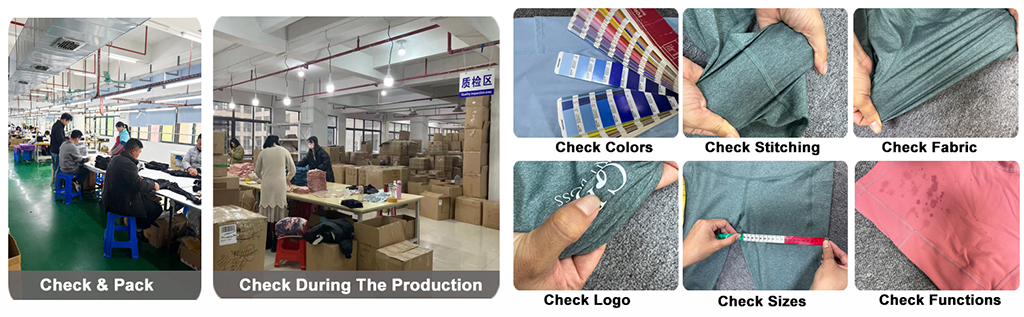
Compare samples against the same product brief, measurement method and review conditions. A stock sample can show workmanship, but it cannot confirm the fit or performance of your custom design. Before approving a supplier, establish what each sample represents, record the findings and separate correctable development issues from repeated failures. The goal is to determine whether the supplier can understand your requirements and turn feedback into a consistently improved garment.
What Does a Stock Sample Prove—and What Does It Leave Unanswered?
A stock sample can help you inspect stitching, finishing and existing grip application. It may use a different fabric, pattern or production route from your order, however. Ask which elements are representative and which will change.
A development sample addresses your proposed design. A fit sample supports sizing decisions, while a pre-production sample should reflect the agreed production specification. Do not treat these approvals as interchangeable. An attractive stock garment is not approval for an untested custom style.
How Do You Assess Fit, Seams, Fabric and Grip Consistently?
Use one review sheet for every candidate. Photograph the same areas, record measurements using the same method and check garments in comparable conditions.
| Review area | What to record | Decision it supports |
|---|---|---|
| Measurements | Actual results against the agreed chart and tolerances | Whether the pattern meets the brief |
| Movement | Waist coverage, pulling and excess fabric in riding positions | Whether fit changes are needed |
| Seams | Bulk, skipped stitches and visible damage during movement | Whether construction needs revision |
| Fabric | Coverage when stretched and appearance after agreed care | Whether the selected material is suitable |
| Silicone grip | Placement, symmetry and changes after agreed checks | Whether artwork or application needs adjustment |
Visual inspection cannot substantiate every performance claim. Where laboratory testing is required, agree on the method and acceptance criteria rather than substituting an informal home check.
Which Findings Need Revision, Testing or Supplier Rejection?
A misplaced pocket may require a straightforward correction. Cracking grip may need investigation into the material, application or curing process. Neither finding alone explains the supplier’s overall capability.
Assess the response: does the supplier identify a plausible cause, propose a specific correction and demonstrate improvement? Repeated faults, undocumented substitutions or refusal to acknowledge agreed requirements are stronger reasons to stop.
Consolidate comments into one dated revision list and retain the approved reference. Approval should identify the sample version and what has been accepted, including any outstanding conditions, before the next payment or production stage.
How Long Does Sourcing Take from First Inquiry to Delivery?
The sourcing timeline includes development, approvals, material preparation, production, inspection and transport, not simply the factory’s quoted sewing time. Ask each supplier to define when its lead time starts and what it excludes. For custom riding pants, the schedule should also allow for sample review and any necessary revisions. Work backward from your required arrival date, using confirmed milestones rather than treating an initial production estimate as a delivery commitment.
When Does Each Supplier’s Lead Time Actually Start?
“Thirty days” can describe different commitments. One supplier may count from receipt of the deposit; another may start after fabric arrives and the pre-production sample is approved. Confirm whether the quotation uses working days or calendar days and whether holidays are excluded.
| Milestone | What should be confirmed |
|---|---|
| Development start | Required files, sample payment and material availability |
| Sample approval | Review time, revision scope and the approved version |
| Production start | Deposit, materials and pre-production approvals |
| Goods ready | Inspection, corrections and packing completed |
| Arrival | Transport, customs clearance and final delivery arrangements |
For Fineactive-specific starting conditions, consult its riding pants sampling and production information and confirm the schedule against your specification.
How Should You Allow for Revisions, Testing and Material Delays?
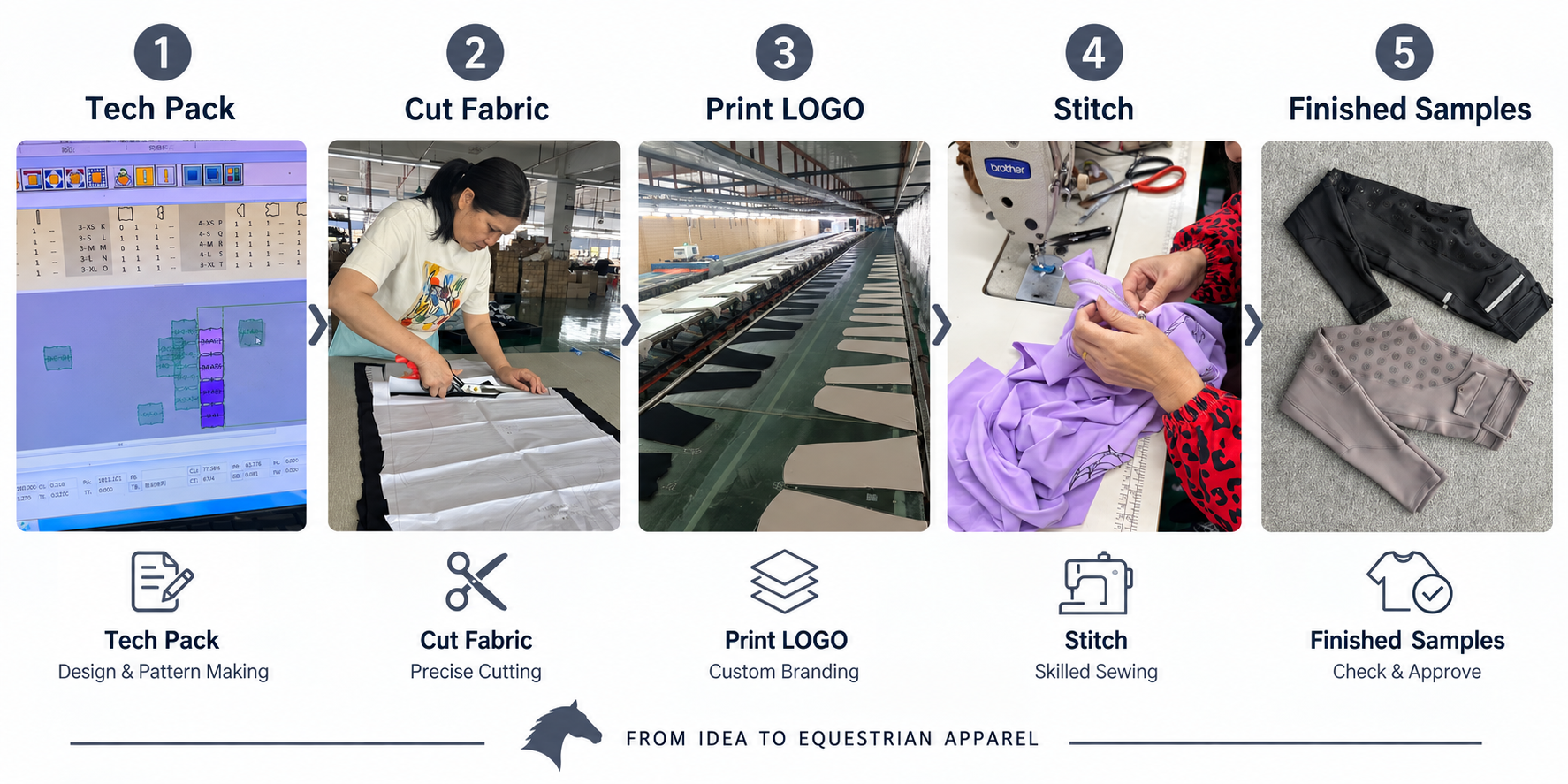
Separate the work that can be done at the same time from the work that needs approval first. Label artwork can be reviewed while the fit sample is being checked, but bulk cutting should not start before the pattern is approved.
Ask what happens if custom-dyed fabric misses the color target or silicone fails an agreed check. A credible schedule identifies the affected milestone and the next decision. Reserve review time for your own team, too: a sample sitting unopened cannot move development forward.
Who Approves Shipment, and What Happens If Inspection Fails?
Agree on shipment-release authority before production. If inspection identifies unacceptable defects, establish the correction, reinspection and release arrangements before dispatch. A completed inspection report does not automatically mean the order has passed.
Keep goods-ready and arrival dates separate. Even finished, approved garments still require the agreed transport and destination procedures.
When Should You Reconfirm Materials for a Repeat Order?
Check availability before promising a replenishment date to customers. Previous fabric, trims or silicone materials may no longer be available on the same terms.
Require proposed substitutions to be disclosed before approval. Changes affecting fit, appearance or performance may need another sample or test. An approved previous order is a reference for replenishment, not a guarantee of unchanged materials or timing.
How Do You Choose the Best Manufacturer for Your Brand?
Choose the manufacturer that demonstrates the strongest fit with your product, order size and operating priorities, rather than the supplier with the broadest catalogue or lowest headline price. Set your non-negotiable requirements first, compare evidence from shortlisted suppliers and use a trial order to check execution. The final decision should account for how the supplier handles questions, changes and problems—not only how well it presents an initial sample.
Which Supplier Profile Fits Startups, Established Brands and Clubs?
Different buyers need different strengths. A startup may need development support and a manageable quantity per color. An established label may place greater weight on specification control and repeatability. A club may prioritize size allocation and a fixed event date.
| Buyer profile | Priority to investigate | Evidence to request |
|---|---|---|
| New equestrian brand | Affordable development and realistic inventory commitment | Itemized sample offer and MOQ calculation |
| Established label | Consistency across sizes and repeat orders | Measurement records, revision control and material references |
| Riding club or team | Suitable size distribution and dependable delivery | Size breakdown, branding approval and dated milestones |
| Wholesaler or distributor | Order accuracy and repeat supply | SKU, packing and replenishment arrangements |
How Can You Score Supplier Evidence Without Rewarding Sales Claims?
Use a simple comparison sheet covering product relevance, sample results, commercial clarity, communication and delivery planning. Define what each score means: a promise of “excellent fit” should not receive the same credit as a sample meeting agreed measurements.
Apply pass-or-fail requirements before scoring. A supplier that cannot meet your essential quantity, product or compliance requirements should not win because it performs well elsewhere. Treat missing information as unresolved, rather than evidence of either excellence or failure.
What Should a Trial Order Confirm Before You Scale?
A trial order should test whether the supplier can carry approved details into production. Check size distribution, workmanship, grip placement, packaging and the handling of any discrepancies. Record whether changes were disclosed and whether agreed milestones were met.
A successful trial reduces uncertainty; it does not guarantee every future order. Reconfirm materials and specifications when the product changes or production resumes after a gap.
What Should You Include in Your Final Supplier Inquiry?
Send the same brief to your final candidates: design reference, intended wearer, fabric requirements, size range, quantity per color, branding, destination and required arrival date. Ask for exclusions and unresolved assumptions alongside the price.
If Fineactive matches your shortlist criteria, submit that brief through its custom riding pants project consultation. A useful inquiry gives both parties enough information to identify whether the project is workable before development begins.
FAQs About Sourcing Riding Pants from China
1. Can I order several riding pants colors under one MOQ?
You can combine colors only if the supplier explicitly agrees; a minimum stated per style per color usually applies separately to every color, while size allocation follows its own agreed rules within that quantity.
Ask for a written breakdown showing the minimum for each style, color and fabric. For example, 100 pieces per color across three colors means 300 garments. Custom-dyed fabric or special trims may introduce additional minimums. Before comparing suppliers, confirm that their quoted quantities cover the same assortment rather than assuming “100 pieces MOQ” means 100 pieces across your entire collection.
2. What should I send suppliers to get comparable riding pants quotations?
Send every shortlisted supplier the same product brief, including design references, fabric specifications, grip requirements, size range, quantities per color, branding, packaging, destination and required arrival date, then ask each supplier to identify assumptions and exclusions.
If some specifications remain open, request separate options rather than letting suppliers choose different materials without explanation. Ask whether development, testing, inspection and freight are included or charged separately. A photograph alone rarely defines the complete product. Comparing written offers against one shared brief makes differences easier to understand and reduces the risk of choosing a price that covers less work.
3. Is a stock sample enough to approve a custom riding pants supplier?
A stock sample can help you assess existing workmanship, but it is not sufficient to approve your custom product unless its fabric, pattern, construction and details match the specification you intend to purchase and have been checked against it.
Ask which sample features represent your future order and which will change. An original design normally needs development and fit review before the final production reference is approved. Keep a dated record of measurements, comments and accepted changes. A good stock sample can justify further investigation; it should not replace approval of the actual garment specification.
4. Does a supplier’s certificate prove that my riding pants are compliant?
A supplier’s certificate does not automatically establish compliance for your order; check the document holder, validity, scope and product relevance, then determine what additional evidence is needed for the specific garment, claims and destination market.
A factory audit, a material certificate and a finished-product test report answer different questions. Request complete documents rather than accepting logos displayed on a website. Where necessary, ask a qualified laboratory or compliance adviser to review the proposed evidence. Requirements should be clarified before production, especially when sourcing children’s products or making performance claims that need supporting test results.
5. What should happen if samples or bulk garments fail the agreed checks?
If a sample or bulk order fails agreed checks, record the findings and agree on correction, further testing, reinspection or another contractual remedy before authorizing the next payment, production stage or shipment, as applicable to the order.
Separate a development adjustment from a failure to follow an approved specification. Provide measurements, photographs or test findings so both teams can investigate the same issue. Ask the supplier to explain the proposed correction and how it will be verified. Do not approve shipment simply because production is complete; release should follow the agreed acceptance and authorization arrangements.
6. Should I choose the manufacturer with the lowest unit price?
Choose the supplier offering the best fit with your specifications, quantity commitment, development needs and delivery requirements, rather than the lowest unit price alone, because a cheaper garment quotation may exclude costs or require more inventory than your brand can support.
Compare development charges, testing, inspection, packaging, freight and applicable import costs alongside the garment subtotal. Assess sample results and the supplier’s handling of changes as well. A higher price does not guarantee better quality, but a lower price is meaningful only when the scope is comparable and the complete order remains commercially workable.
Get In Touch
Contact our OEM/ODM specialists for product development, sampling, pricing, and production support.