Top 10 horse brands clothing Manufacturer Options in China Compared
Compare horse brands clothing Manufacturer options in China by product expertise, minimum orders, sample quality, pricing and delivery terms. Find out what to verify before choosing a supplier for your equestrian brand and building a shortlist that fits your needs.
Top 10 horse brands clothing Manufacturer Options in China Compared
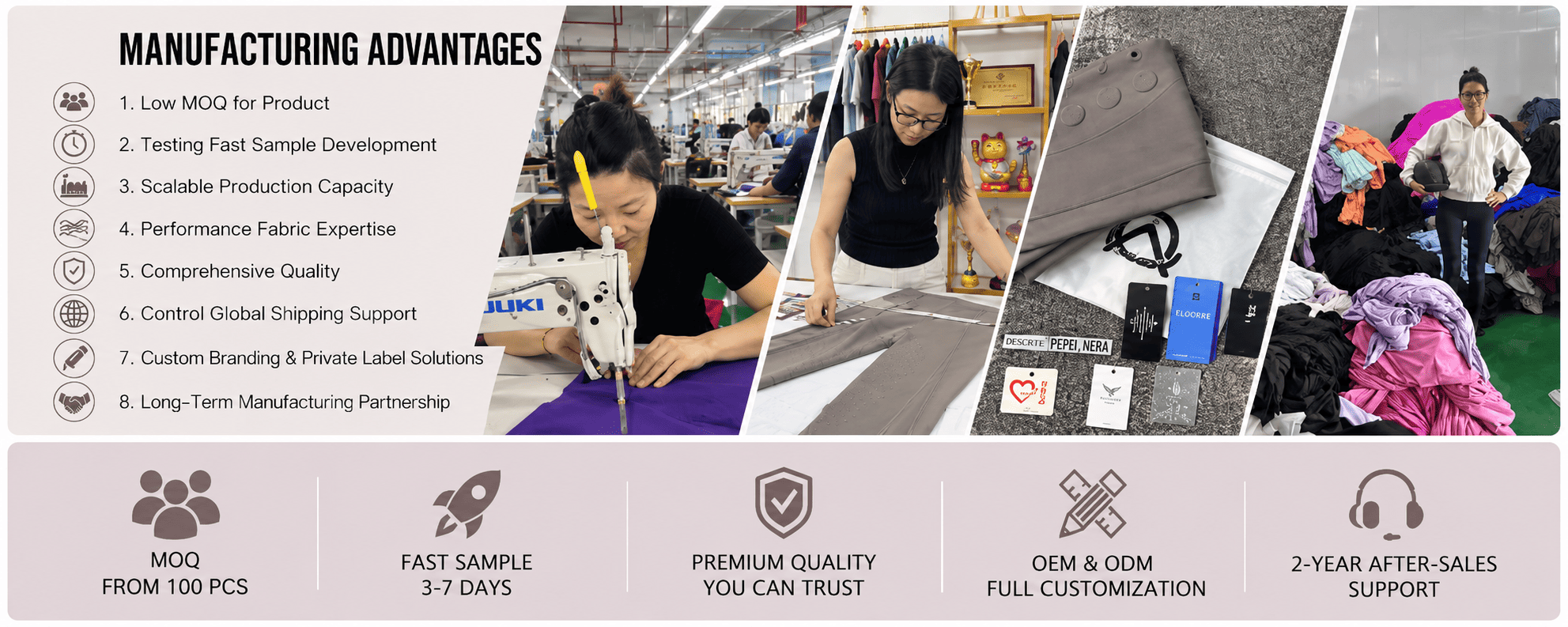
An impressive riding-wear catalog is a starting point, but it cannot tell you which supplier deserves your first order. Two manufacturers may offer similar breeches while taking very different approaches to pattern development, material sourcing and production control. Those differences become expensive when a sample needs repeated revisions, a quotation excludes essential work, or the approved fabric is unavailable for bulk. A useful comparison should help you uncover those differences before you commit.
Ten Chinese suppliers worth comparing are Fineactive, SGL Sports, Zest Equestrian, Equifactory, Kala Apparel, Dongguan Ope Equestrian, Dongguan Shuyu Activewear, REINFORM, Guangzhou Ouzun Clothing and Xiamen Arcadia-Sport. Start with relevant garment experience and order feasibility, then compare equivalent quotations, sample results and supporting records. The strongest candidate is the one that can demonstrate a suitable production approach for your products, quantities and quality requirements—not simply offer the lowest price or broadest catalog.
Published by Fineactive, this guide compares clothing suppliers for equestrian brands. The numbered list is not an independently audited quality ranking. Each profile highlights published information, potential buyer fit and questions to resolve before shortlisting.
1. Which horse brands clothing Manufacturer Options in China Should You Shortlist?
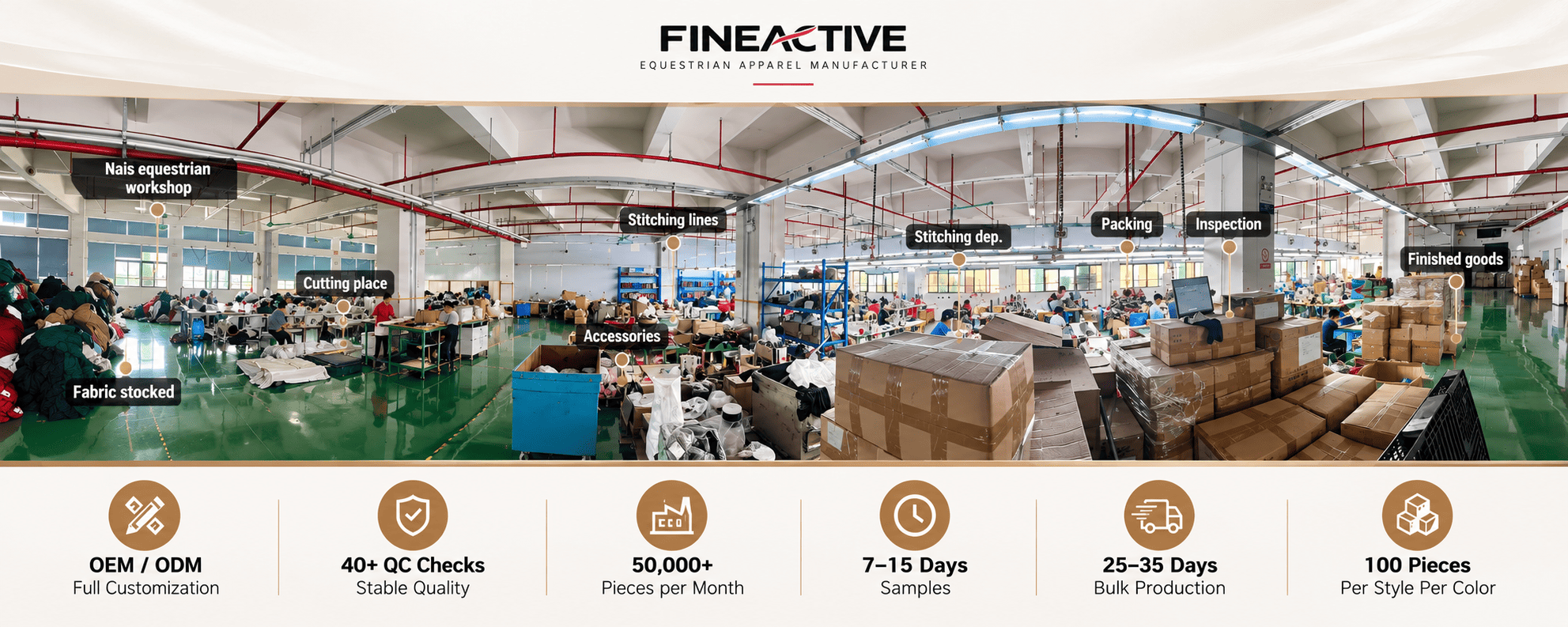
Shortlist manufacturers whose relevant garment experience, order conditions and development approach match your purchasing plan. The ten suppliers below offer different combinations of equestrian apparel, sportswear and broader sourcing services. Compare their published product focus and commercial terms first, then request equivalent quotations and samples. A supplier belongs on your final shortlist when its answers and product evidence support your requirements—not simply because its website lists riding clothes.
Supplier Comparison at a Glance
| Supplier | Published business location | Relevant product focus | Published MOQ information | Main question before shortlisting |
|---|---|---|---|---|
| Fineactive | Dongguan, Guangdong | Breeches, tights, show shirts, competition jackets and riding collections | 100 pieces per style per color | Does the proposed development scope match your collection? |
| SGL Sports | Dongguan, Guangdong | Equestrian apparel and broader sportswear | Low MOQ advertised; confirm the applicable quantity | What minimum applies to your fabric and construction? |
| Zest Equestrian | Dongguan, Guangdong | Rider apparel and wider equestrian products | Clothing page advertises a 200-piece starting order | How is the minimum allocated by style and color? |
| Equifactory | Wuhan, Hubei; business address | Riding apparel and equestrian equipment | Website advertises 100 pieces | Where will your garments be developed and produced? |
| Kala Apparel | Dongguan, Guangdong | Equestrian clothing and other apparel categories | Homepage advertises 30–200 pieces | Which products and customization levels qualify? |
| Dongguan Ope Equestrian | Dongguan, Guangdong | Breeches, riding tops and show jackets | Profile states 100 pieces per design per color, with three sizes | What current lead time and size allocation apply? |
| Dongguan Shuyu Activewear | Dongguan, Guangdong | Equestrian apparel and activewear | Profile states 100 pieces per design per color, with four–five sizes | What production schedule applies to your project? |
| REINFORM | Hangzhou, Zhejiang | Breeches, tights, base layers, show shirts and outerwear | 300 pieces per style per color | Does the minimum fit your inventory plan? |
| Guangzhou Ouzun Clothing | Guangzhou, Guangdong | General apparel with custom riding-wear listings | Riding-wear listing states 100 pieces per color per style for OEM | Can it demonstrate relevant equestrian construction? |
| Xiamen Arcadia-Sport | Xiamen, Fujian | Performance apparel with riding-wear listings | Some riding-wear listings show 500 pieces | What MOQ and manufacturing arrangement apply? |
These figures are starting points for enquiries, not interchangeable offers. A minimum for an existing style may differ from one involving a new pattern, custom-dyed fabric or special trims. Ask each supplier to identify the conditions behind its quotation.
1. Fineactive — Equestrian Apparel Development and Multi-Style Manufacturing
Fineactive is an option for brands developing rider clothing across related product categories. Its purchasing conditions provide a clear starting point for assessing a first collection or extending an existing range.
- Location and history: Dongguan, Guangdong. Company records identify the underlying manufacturing operation as established in 2016; confirm the legal entity named in the contract.
- Core products: Riding breeches, tights, show shirts, competition jackets, technical tops, outerwear, vests, riding socks and headbands.
- MOQ: 100 pieces per style per color, with an agreed size allocation within each combination.
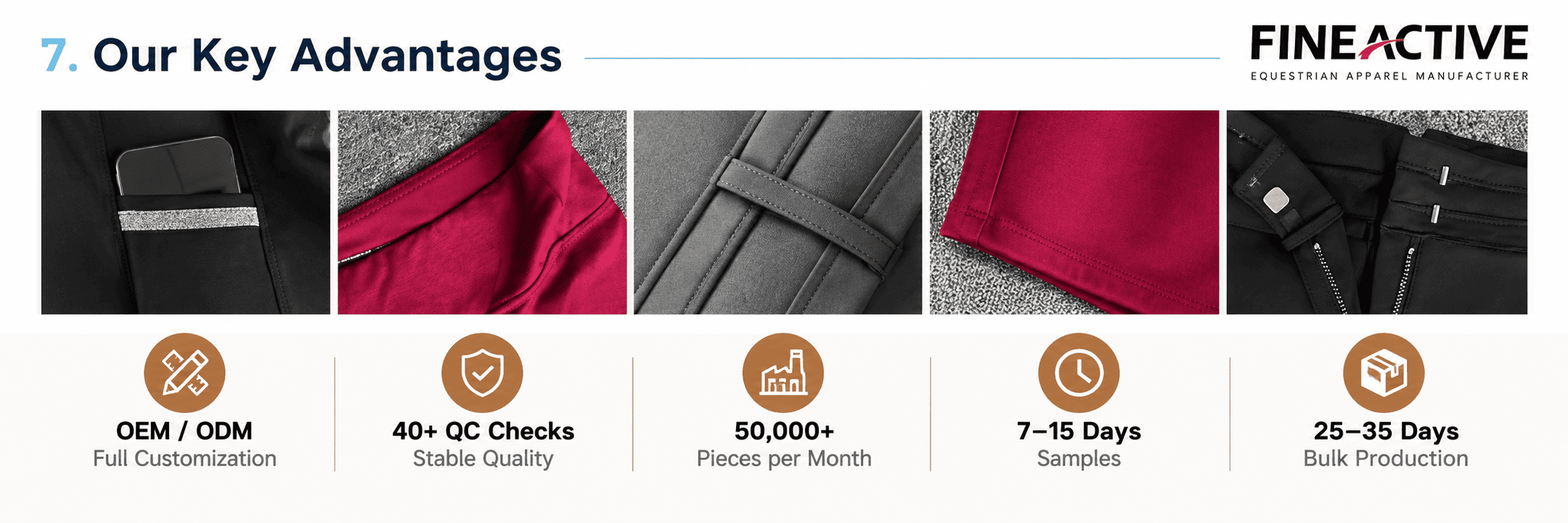
- Sample lead time: Normally 7–15 working days after essential design, material and technical details are confirmed.
- Bulk lead time: Normally 25–35 working days after required approvals, order confirmation, deposit and material readiness.
- Certificates and reports: Request current documents relevant to the proposed materials, garments and production site.
- Potential buyer fit: Emerging labels, established equestrian brands, clubs and sourcing teams seeking rider-apparel development.
- Main advantage to assess: Coordination of product development, riding-specific details and production across related garments.
- Potential mismatch: Buyers seeking horse equipment, helmets, gloves or boots. Special materials may also introduce purchasing minimums beyond the garment MOQ.
For its product-specific service scope and order conditions, review Fineactive’s custom equestrian clothing manufacturing services.
2. SGL Sports — Equestrian Clothing Within a Broader Sportswear Range
SGL Sports offers equestrian clothing alongside activewear and other sports garments. This makes it relevant to buyers comparing a riding collection with a broader performance-apparel range.
- Location: Dongguan, Guangdong.
- Business history: Ask SGL to confirm its establishment date and experience producing your specific garment category.
- Core products: Riding breeches, leggings, base layers, T-shirts and jackets, alongside other sportswear.
- MOQ: Low MOQ is advertised; obtain the exact quantity applicable to your style, color and material.
- Published timing: Its homepage describes sampling around ten working days and bulk production around 35–40 days, subject to scheduling. Confirm whether bulk days are working or calendar days.
- Certificates and reports: Request current documents covering the proposed production site and materials.
- Potential buyer fit: Brands considering equestrian apparel and activewear within one supplier relationship.
- Main advantage to assess: Relevant stretch-garment experience and the development and inspection arrangements described on its website.
- Potential mismatch: Buyers requiring specialist tailored show jackets without first reviewing comparable construction samples.
Ask to see a garment close to your intended product. Experience with stretch leggings is relevant to some riding tights, but it does not establish every capability required for structured competition clothing.
3. Zest Equestrian — Rider Apparel Within a Wider Equestrian Product Portfolio
Zest Equestrian presents both rider clothing and other equestrian products. Buyers considering several product categories may find that scope worth exploring, while clothing-focused brands should establish the apparel team’s responsibilities.
- Location: Dongguan, Guangdong.
- Published history: Its equestrian clothing page states “Since 2009.” Confirm the relationship between the business history, current contracting entity and production operation.
- Core products: Breeches, show shirts, riding jackets and other equestrian products.
- MOQ: The clothing page advertises a 200-piece starting order. Confirm whether this applies per style, color or another order combination.
- Sample and bulk lead times: Obtain a current schedule for your specifications and materials.
- Certificates and reports: Request the actual documents behind relevant standards or compliance statements, including their product scope.
- Potential buyer fit: Brands or retailers evaluating rider apparel alongside a broader equestrian assortment.
- Main advantage to assess: Coordination across the product categories included in your purchasing plan.
- Potential mismatch: Buyers requiring an exclusively apparel-focused operation without verifying how garment development and production are organized.
For a clothing order, keep the assessment specific: who develops the pattern, who produces the garment and who approves changes? A wider product portfolio does not answer those questions by itself.
4. Equifactory — Riding Apparel and Equestrian Equipment Sourcing
Equifactory offers riding clothing and horse equipment, with design, branding and sourcing services described on its website. It is a candidate for buyers considering a coordinated assortment across these categories.
- Published business location: Wuhan, Hubei. Confirm the production address assigned to your garments.
- Business history: Request its establishment date and relevant garment-manufacturing history directly.
- Core products: Breeches, leggings, base layers, show shirts, jackets and equestrian equipment.
- MOQ: Its website advertises 100 pieces. Confirm the applicable style, color, material and size conditions.
- Sample and bulk lead times: Request a project-specific schedule, including material and approval dependencies.
- Certificates and reports: Where certified materials are offered, obtain documents identifying the materials proposed for your order.
- Potential buyer fit: Retailers and brands evaluating apparel and equipment sourcing through one contact.
- Main advantage to assess: Coordination of development, branding and purchasing across the requested assortment.
- Potential mismatch: Buyers requiring production at an exclusively owned site before the manufacturing arrangement has been confirmed.
An office address and a production address serve different purposes. Establish both, together with the party responsible for inspection and corrective action, before committing to bulk.
5. Kala Apparel — Equestrian Clothing with Pattern and Private Label Support
Kala Apparel presents equestrian clothing alongside activewear, golf wear and other apparel. Its public information emphasizes material sourcing, pattern development and private label production.
- Location: Dongguan, Guangdong.
- Published history: The website describes more than a decade of experience. Request the exact establishment date and relevant production history.
- Core products: Equestrian base layers, breeches, leggings and jackets, alongside other clothing categories.
- MOQ: Its homepage advertises 30–200 pieces. Obtain the minimum for your actual garment and customization level.
- Published timing: Samples 7–14 days; bulk production 25–40 days, depending on materials and order size. Confirm working-day or calendar-day definitions.
- Audit information: The website advertises BSCI-related credentials. Request the site-specific audit report, date and findings.
- Potential buyer fit: Brands comparing pattern support, private label services and several apparel categories.
- Main advantage to assess: The proposed development support and how clearly it translates your brief into production requirements.
- Potential mismatch: Orders based on the assumption that the lowest advertised MOQ covers all technical products or custom fabrics.
Ask which conditions qualify for the lowest minimum. Stock materials, existing patterns and fully developed custom garments can involve different purchasing commitments.
6. Dongguan Ope Equestrian — Breeches, Riding Tops and Show Jacket Options
Dongguan Ope Equestrian publishes a range of rider clothing and horse products. Its supplier profile offers commercial starting points, although the applicable timing should be clarified before planning a launch.
- Location: Dongguan, Guangdong.
- Business history: Platform membership dates from 2016; this should not be treated as the company’s establishment date.
- Core products: Breeches, leggings, base layers, polo shirts and show jackets, plus horse products.
- MOQ: Its profile states 100 pieces per design per color with three sizes. Confirm the permitted size allocation.
- Published bulk timing: The company description states 20–30 days; other profile fields use different seasonal timing.
- Sample lead time: Confirm directly for your development scope.
- Audit information: A BV audit reference is displayed. Request the report and check its date, entity and scope.
- Potential buyer fit: Buyers comparing a supplier with visible equestrian tops, bottoms and jacket listings.
- Main advantage to assess: How closely its relevant products and proposed production method match your brief.
- Potential mismatch: A fixed launch commitment based on conflicting public timing fields.
Request one dated quotation and production schedule that applies to your order, rather than selecting the shortest number from different parts of a profile.
7. Dongguan Shuyu Activewear — Equestrian and Activewear OEM/ODM Options
Dongguan Shuyu Activewear offers riding apparel and broader sportswear. It is relevant to brands exploring both categories, provided the order conditions and available production schedule are confirmed.
- Location: Dongguan, Guangdong.
- Published history: Its official profile describes a predecessor garment operation founded in 2012.
- Core products: Riding breeches, base layers, show jackets, technical tops and other activewear.
- MOQ: Its supplier profile states 100 pieces per design per color with four–five sizes.
- Published lead-time fields: The platform profile lists three–six months. Request a current schedule for your project rather than assuming that this field applies unchanged.
- Sample lead time: Obtain a separate development quotation and timing.
- Audit information: The platform displays an audited-supplier label; request the underlying report.
- Potential buyer fit: Brands assessing equestrian apparel and activewear development together.
- Main advantage to assess: Its relevant garment experience and ability to execute the proposed development brief.
- Potential mismatch: Time-sensitive orders placed before the published timing and current availability have been reconciled.
A current quotation may clarify broad platform information. What matters is a supported schedule tied to your materials, approvals and required delivery period.
8. REINFORM — Equestrian Apparel with Published Order and Sampling Terms
REINFORM publishes a focused rider-apparel range and explicit style-and-color minimums. Its stated conditions make it straightforward to assess initial quantity compatibility.
- Location: Hangzhou, Zhejiang.
- Published history: Its website states that its own factory was established in 2016.
- Core products: Riding breeches, tights, base layers, show shirts, polo shirts and outerwear.
- MOQ: 300 pieces per style per color.
- Sample lead time: 7–10 working days after specifications and materials are confirmed.
- Bulk lead time: 30–45 working days, with revisions and transit planned separately.
- Certificates and reports: Request current documents covering the proposed site, materials and product requirements.
- Potential buyer fit: Brands whose order plan can support the published style-and-color quantities.
- Main advantage to assess: Clear starting conditions for evaluating quantity and timing.
- Potential mismatch: A 100-piece custom style-and-color order, unless a different arrangement is agreed.
A higher MOQ does not automatically mean better quality or poorer flexibility. It means the inventory commitment needs to fit the brand’s sales plan before development spending begins.
9. Guangzhou Ouzun Clothing — General Apparel with Custom Riding-Wear Listings
Guangzhou Ouzun Clothing is a broader apparel supplier with a custom equestrian clothing listing. It should be evaluated through relevant samples rather than assumed to have specialist riding-wear expertise.
- Location: Guangzhou, Guangdong.
- Published establishment date: February 27, 2014, according to its supplier profile.
- Core products: General apparel, uniforms and sportswear, with a custom riding-wear listing.
- MOQ: The riding-wear listing states 100 pieces per color per style for OEM.
- Sample timing: The listing distinguishes simple samples from custom development and includes a 20-day indication for customized samples. Confirm the applicable conditions.
- Bulk timing: Request a quotation for your quantity and construction; listing fields vary.
- Certification information: The product listing claims ISO 9001. Request the certificate and check its entity, validity and scope; consult the IAF CertSearch guidance on verifying accredited management system certificates when checking the supporting certification details.
- Potential buyer fit: Buyers exploring broader apparel sourcing who can conduct equestrian-specific development checks.
- Main advantage to assess: Whether its proposed apparel resources can meet your defined riding-wear requirements.
- Potential mismatch: Buyers expecting proven specialist riding-pattern or silicone-grip capability from a product listing alone.
Request a comparable riding garment before drawing conclusions about technical suitability. General apparel experience and equestrian-specific construction should be assessed separately.
10. Xiamen Arcadia-Sport — Performance Apparel with Riding-Wear Listings
Xiamen Arcadia-Sport appears in supplier directories with performance apparel and riding-wear listings. It offers another sourcing route to investigate, particularly where the proposed quantities fit its quoted minimums.
- Location: Xiamen, Fujian.
- Published history: Its directory profile describes factory roots in 1998 and the establishment of Arcadia’s international OEM/ODM business in 2017. Confirm the relationship between these operations and the contracting entity.
- Core products: Performance apparel, with riding tights and outerwear included in directory listings.
- MOQ: Some riding-wear listings show 500 pieces; confirm the minimum for the specific construction.
- Sample and bulk lead times: Obtain current terms directly.
- Certificates and reports: Request applicable documents identifying the proposed materials and production site.
- Potential buyer fit: Brands exploring performance-apparel sourcing at quantities compatible with the quotation.
- Main advantage to assess: The suitability of its proposed material and manufacturing resources for the intended garment.
- Potential mismatch: Small custom orders below the relevant minimum, or specialist products without supporting samples.
Treat the listing as an introduction. Verify where the garments will be made, who controls development and what equestrian-specific evidence is available.
2. What Separates These Manufacturers Beyond Their Product Catalogs?
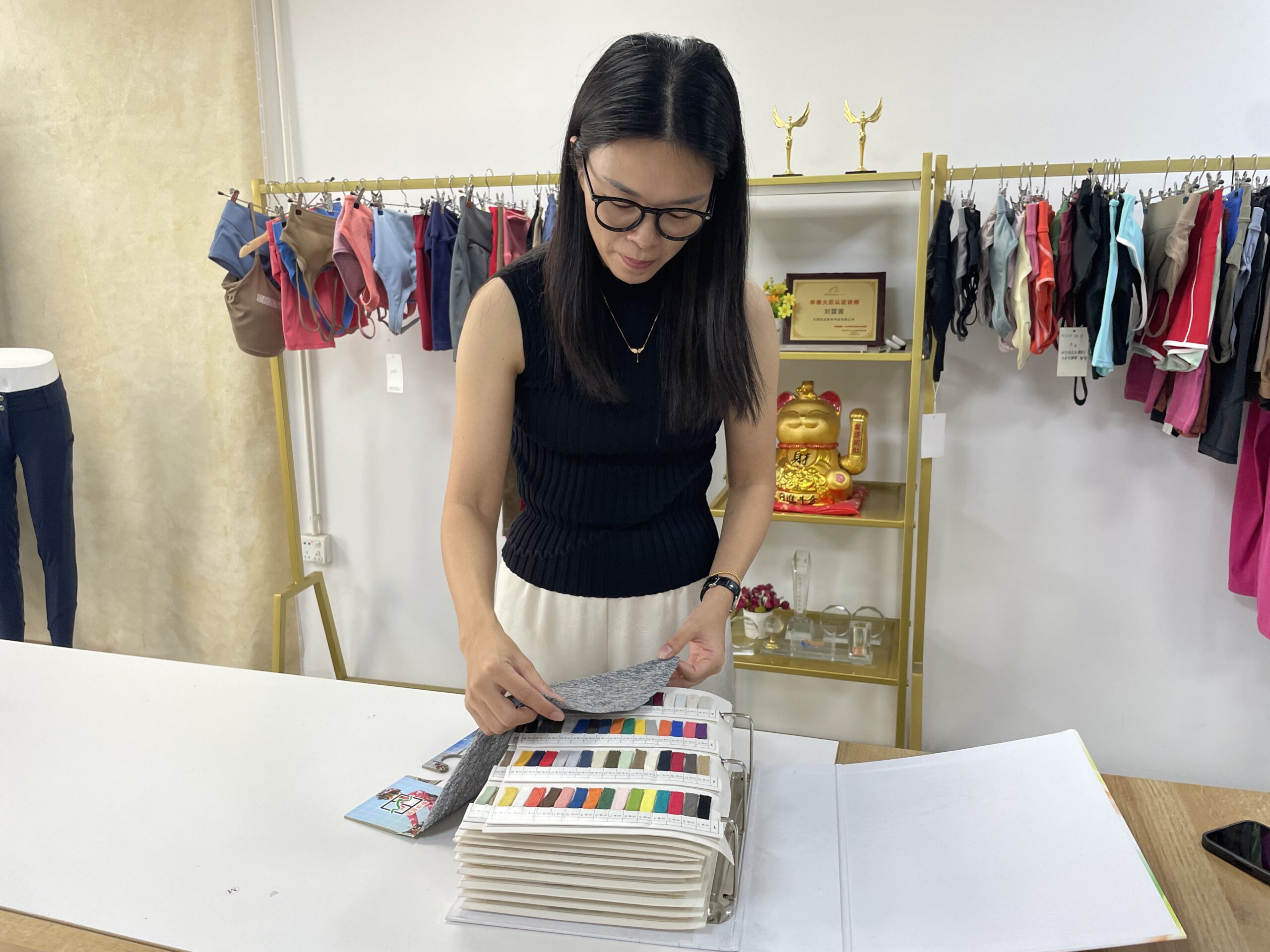
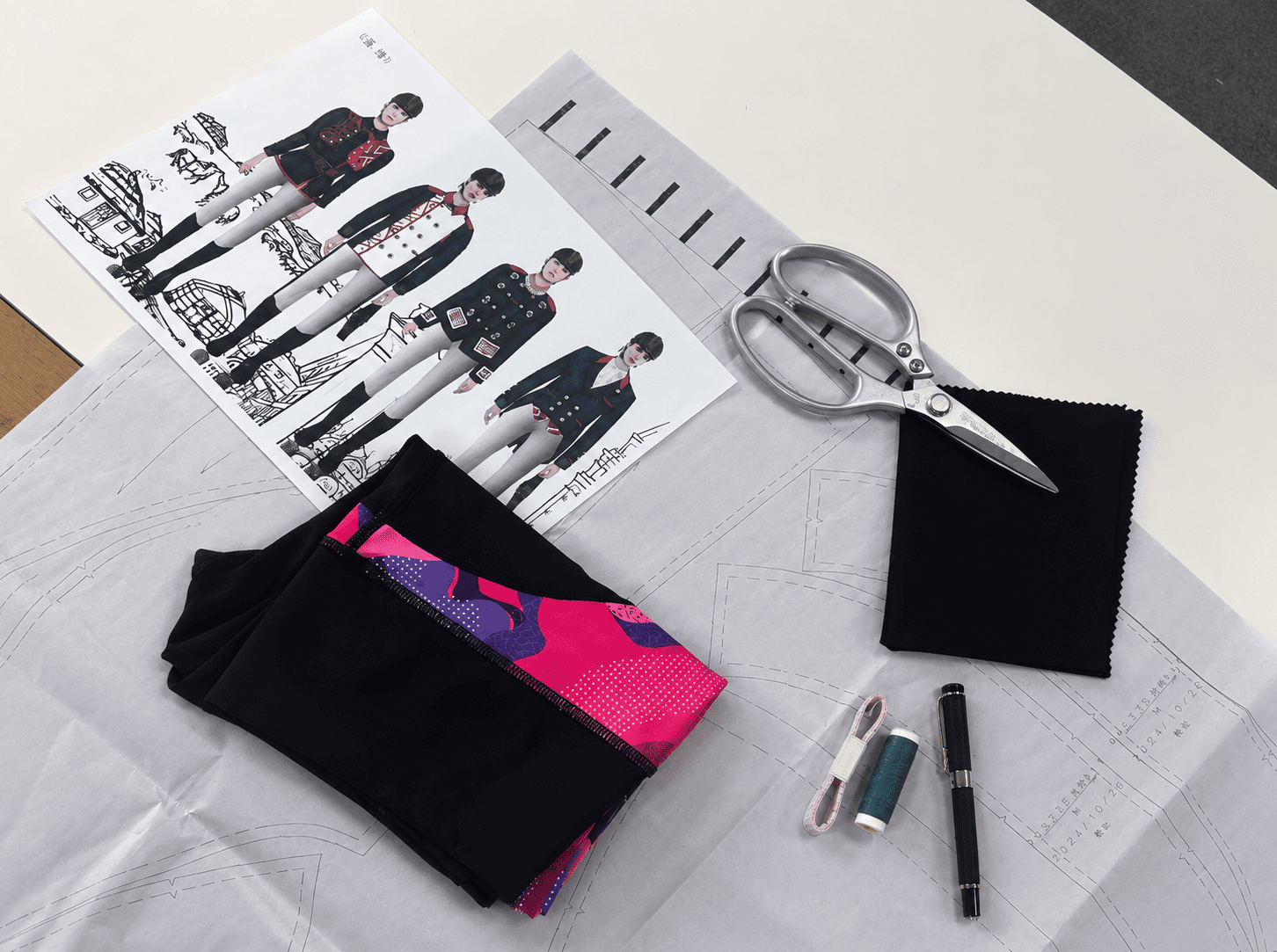
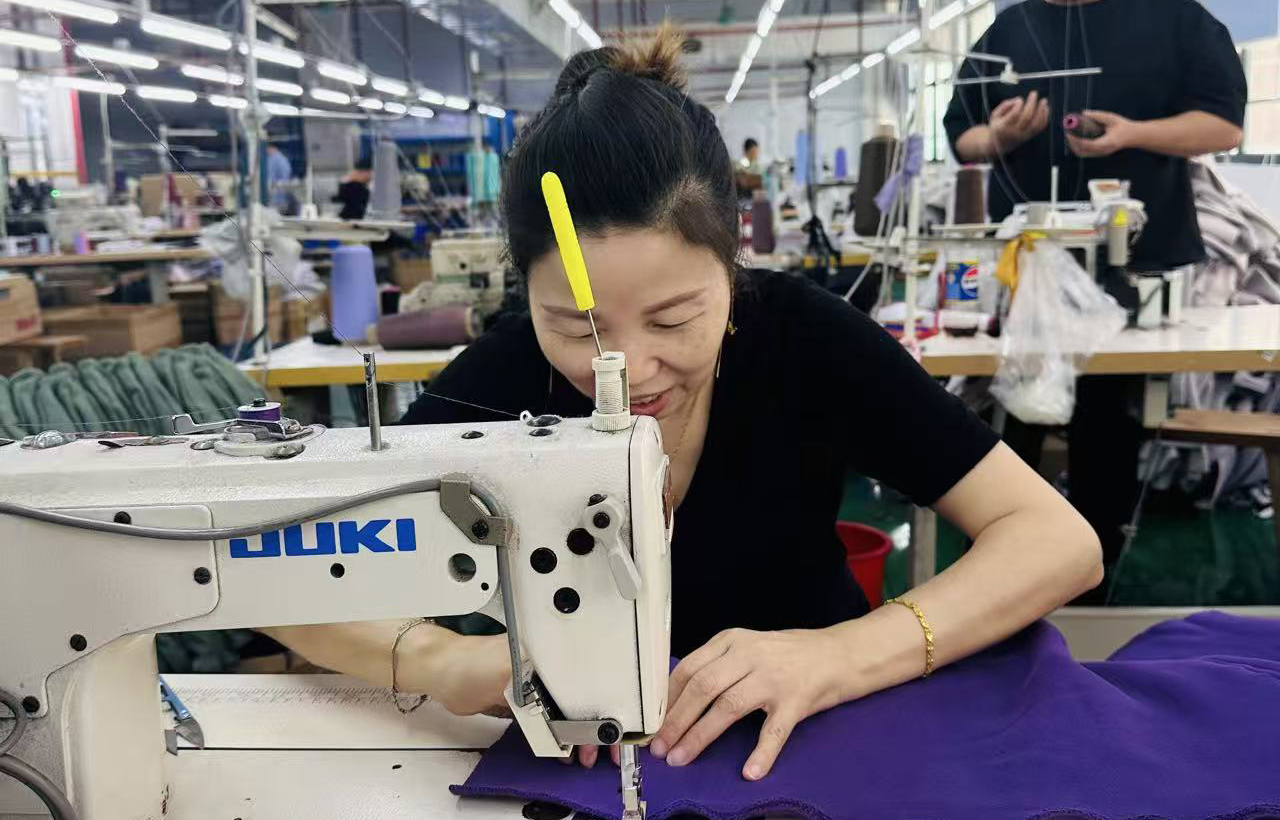
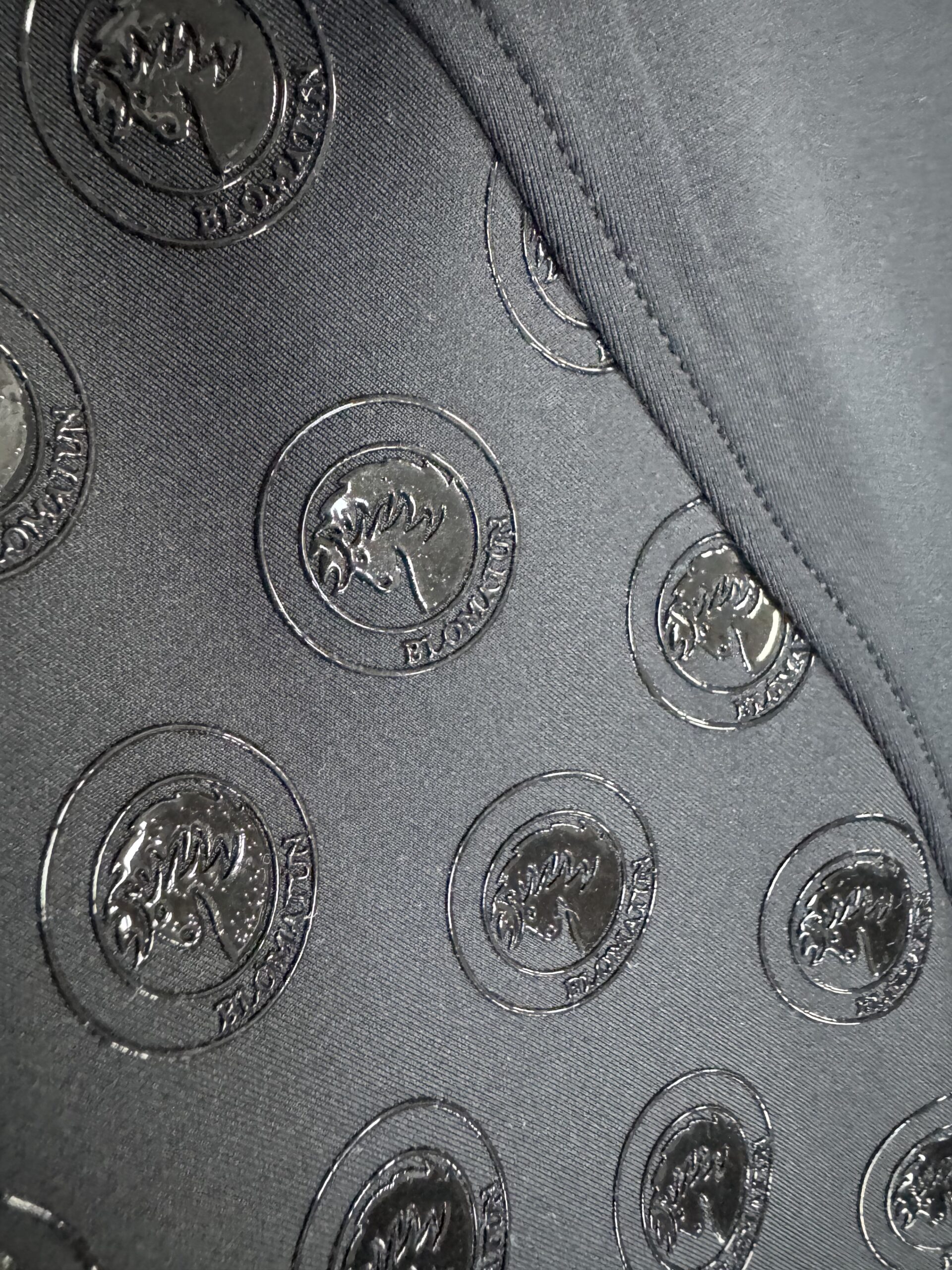
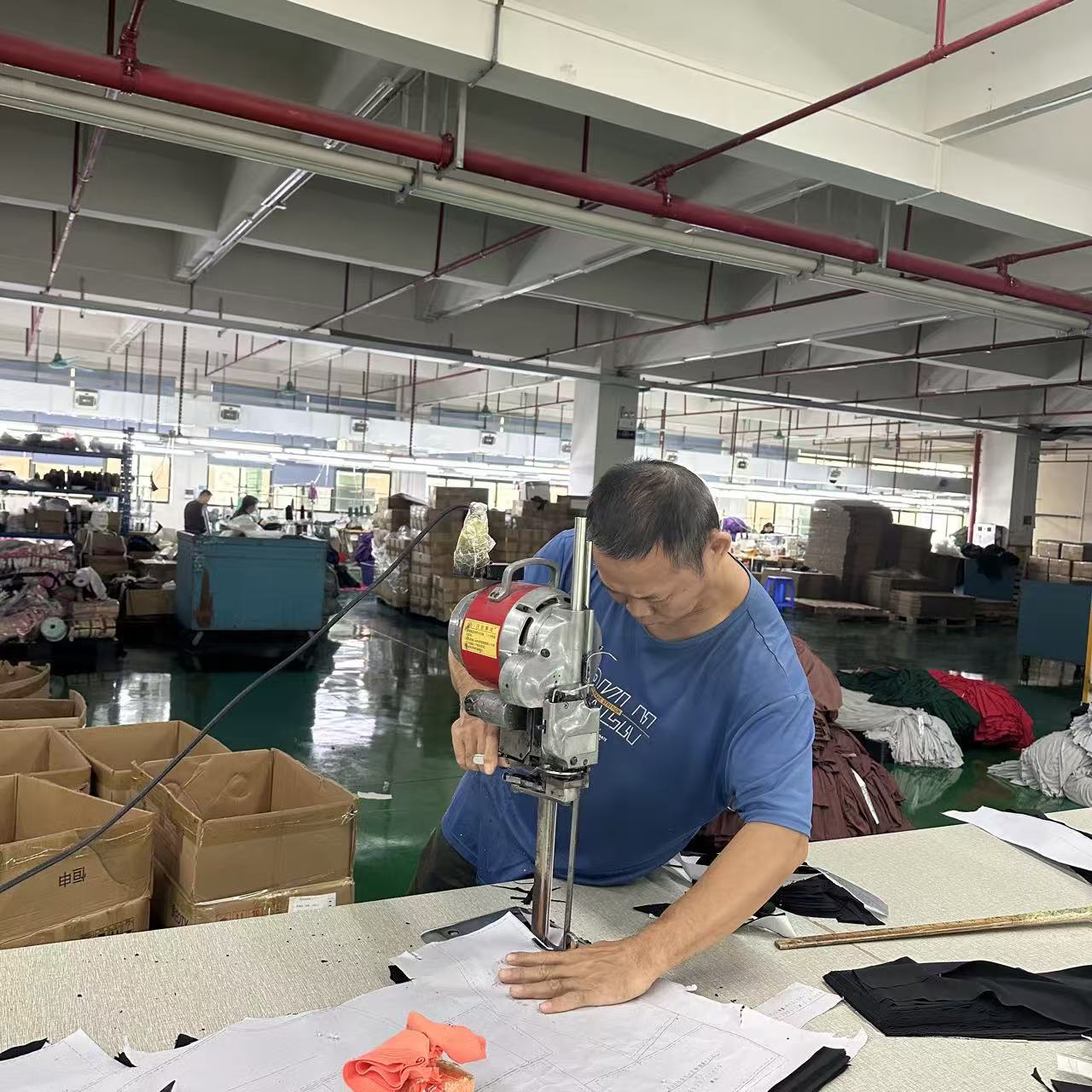
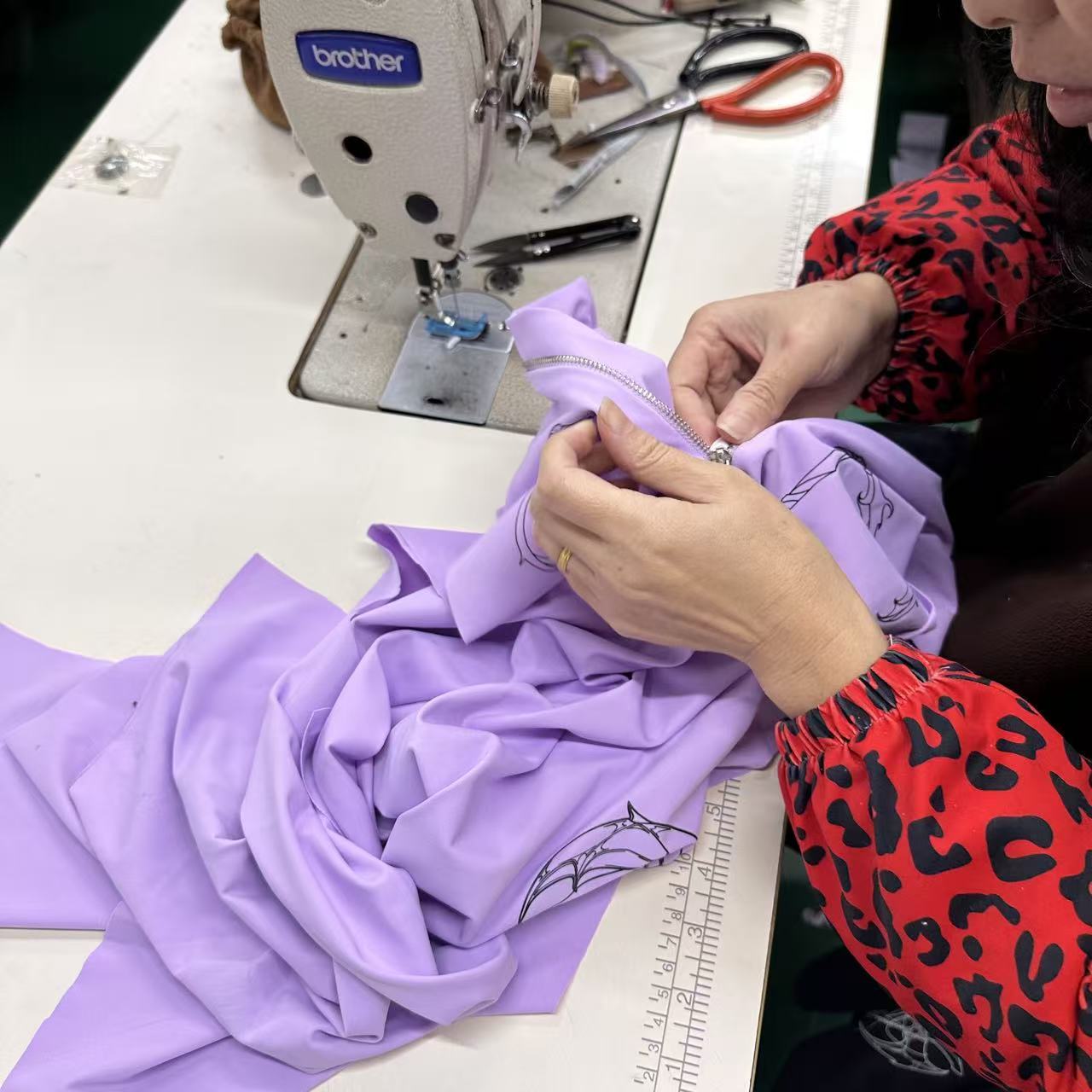
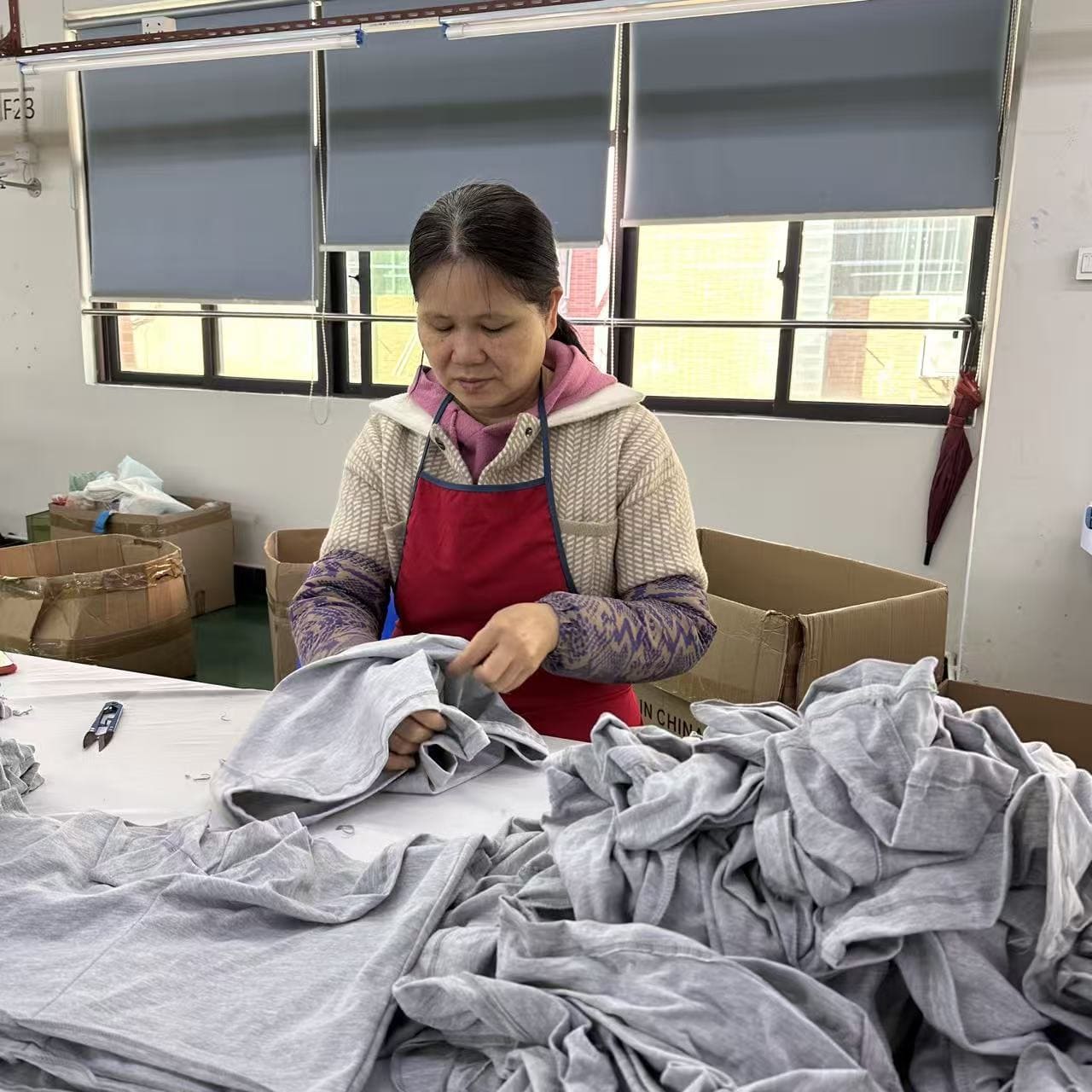

The most useful differences are relevant garment experience, control of critical operations and the ability to explain production decisions. Similar catalogs can hide different development teams, subcontracting arrangements and material resources. Compare each supplier against the construction your collection needs, then ask for samples and records that support its answers. A broad product range can simplify purchasing, but it does not establish equal capability across riding tights, structured breeches and competition jackets.
Equestrian Specialists vs General Activewear Manufacturers: Which Experience Matters?
An equestrian specialist should be able to explain how riding changes a garment’s fit and construction requirements. Ask what happens to waist coverage when the rider sits, where an inner-leg seam contacts the saddle and whether a loaded phone pocket interferes with movement. Specific answers reveal more than a general promise of comfort.
A general activewear manufacturer may also be suitable, particularly for stretch tops and tights. The question is whether it can adapt its experience to riding use. Request a comparable sample and discuss the changes needed; a gym-legging pattern with added silicone should not automatically qualify as a finished riding product.
Riding Tights vs Breeches vs Show Jackets: Where Does Expertise Differ?
| Product category | Capability to compare | Evidence worth requesting |
|---|---|---|
| Riding tights | Waistband stability, stretch seams and grip compatibility | Comparable sample, riding-fit comments and wash observations |
| Structured breeches | Panel balance, closures and seat-to-knee movement | Relevant sample and measurement records |
| Show jackets | Shoulder balance, sleeve mobility, lining and seated shape | Comparable jacket assessed during forward reach and sitting |
| Technical outerwear | Compatibility between fabric, closures and seam construction | Material specifications and tests relevant to the stated performance |
A supplier may perform well in one category while needing further development in another. Approve capability by product rather than extending one successful sample to the entire collection.
Apparel-Focused vs Broader Equestrian Suppliers: Which Scope Fits Your Purchase?
An apparel-focused supplier may suit a clothing development brief, while a broader equestrian business may help consolidate several purchasing categories. Neither structure guarantees better execution. Buyers considering Fineactive can review its rider apparel development capabilities and assess the proposed garments against the same criteria used for other candidates.
Direct Factory vs Trading Company: Who Controls the Critical Work?
Ask who develops the pattern, applies silicone, purchases materials and handles failed inspections. An intermediary can coordinate specialist production effectively, while an owned factory may outsource particular operations. Clear responsibility matters more than the “factory direct” label. Establish who approves changes and resolves problems before placing the order.
3. Why Choose Chinese Manufacturers—and When Should Buyers Consider Alternatives?
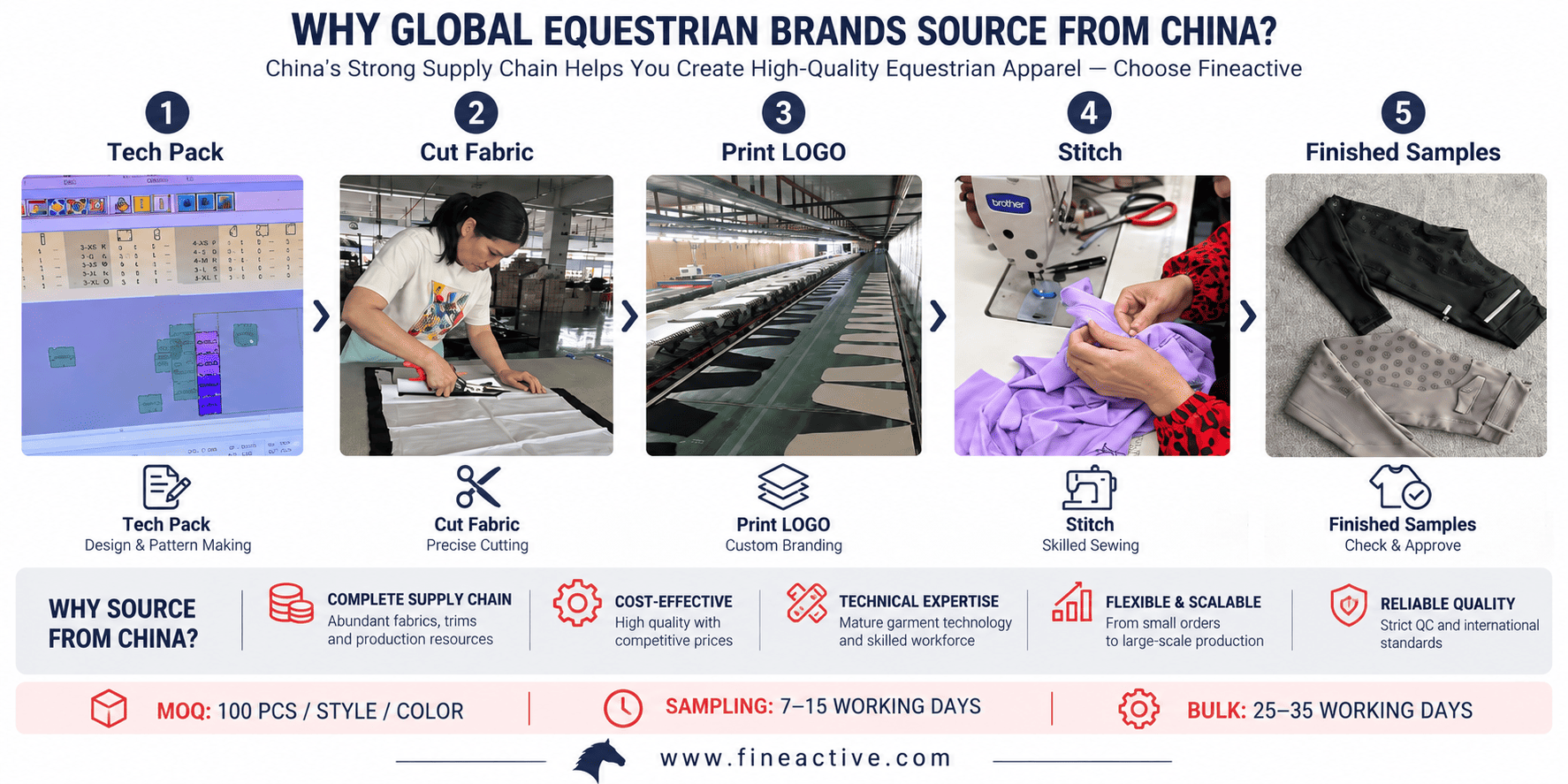
China is worth considering when a supplier can bring together the materials, garment expertise and production arrangements your order needs at a workable total cost. Compare that offer with local or regional alternatives using the same specifications, quantities and delivery requirements. The decision should account for development spending, inventory exposure and transport—not just unit price. Small orders, frequent fittings or an urgent launch may make another sourcing route more practical.
What Supply-Chain Advantages Should Buyers Verify?
A supplier’s access to stretch fabrics, silicone printing, specialist trims and garment production can simplify development. However, access only helps when those resources are available for your quantity and schedule. Ask which materials are regularly stocked, which require separate purchasing minimums and whether the proposed grip application has been used on a comparable fabric.
For example, an attractive fabric option may require more material than your first order consumes. Establish who pays for the balance, who owns it and whether it can be retained for replenishment. A large material selection is useful only when the purchasing conditions work for your brand.
China vs Local Production: What Should You Compare?
| Decision factor | Questions for a Chinese supplier | Questions for a local or regional supplier |
|---|---|---|
| Development access | How will fittings, revisions and sample shipments be coordinated? | Can your team attend fittings, and what does that service cost? |
| Order commitment | What garment and material minimums apply? | What minimums and small-run surcharges apply? |
| Delivered cost | What remains outside the quotation before goods reach your warehouse? | Does the quote include equivalent materials, finishing and delivery? |
| Replenishment | Can the approved materials be obtained again, and on what schedule? | Is capacity available for the quantities and frequency you need? |
Request comparable offers before deciding which location provides better value, and use the ICC’s explanation of Incoterms® rules to clarify how the quoted delivery terms allocate tasks, costs and risks between buyer and seller. A shorter distance does not guarantee faster production, and a lower overseas unit price does not guarantee a lower delivered cost.
When Can Small Orders or Tight Deadlines Change the Decision?
Suppose your launch depends on a new fit that has not yet been tested on riders. If the schedule leaves no room for another sample shipment, the sourcing plan is already under pressure. Consider a supplier that supports closer fitting access, simplify the first release or move the launch date.
Likewise, do not increase quantities merely to reach an appealing price tier. The saving per garment may be outweighed by cash tied up in untested sizes or colors.
Who Benefits Most from a Chinese Manufacturing Partner?
Brands are better placed to evaluate Chinese suppliers when they have a defined target rider, realistic quantities and someone responsible for timely approvals. A startup can meet those conditions; an established brand can overlook them.
Before shortlisting, establish three things: what must be developed, what you can afford to commit and when stock must arrive. Those answers make supplier comparisons more useful than choosing a manufacturing country first.
4. How Do You Compare Supplier Quotes Without Mistaking a Lower Price for Better Value?
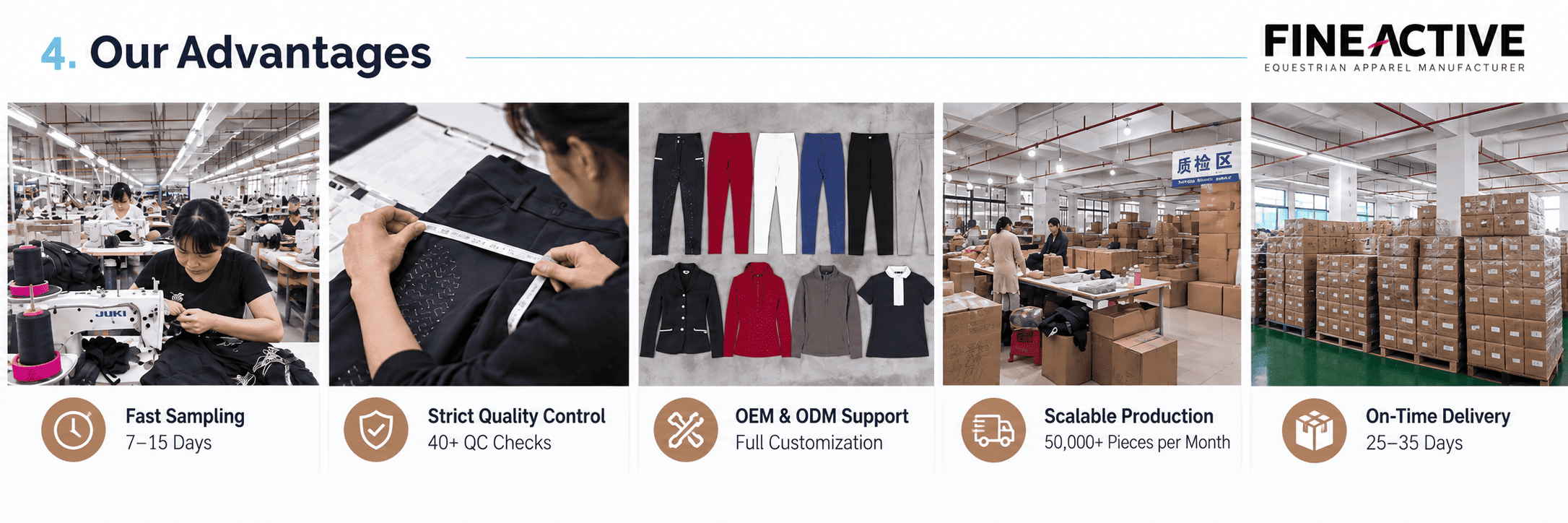
Compare quotations against the same product specifications, quantities and delivery conditions before judging which supplier offers better value. A lower price may reflect different fabric, reduced grip coverage, simpler construction or excluded services. Separate confirmed requirements from proposed alternatives, then compare the full cost of reaching an approved product and receiving saleable goods. Keep first-order development charges visible so they do not distort your assessment of repeat-order pricing.
Are the Quotations Based on the Same Product and Order Specifications?
“High-waisted silicone riding breeches” leaves too much open for a fair comparison. Two suppliers may interpret that description differently, particularly around fabric structure, waistband construction and silicone coverage. Send one version of the product brief to every candidate and ask each to identify any departure from the requested specification.
| Comparison point | What should match |
|---|---|
| Main fabric | Composition, construction, weight and required finish |
| Fit and sizing | Reference size, measurement chart and size breakdown |
| Grip application | Placement, artwork, coverage and agreed performance requirements |
| Construction | Panel arrangement, seams, closures, pockets and reinforcement |
| Branding and packing | Logo method, labels, hangtags and individual packaging |
| Order basis | Quantities by style and color, currency and delivery terms |
A supplier can propose a useful cost-saving alternative. Request it as a separate option, with its effect on fit, appearance or durability explained, rather than allowing it to replace the original quotation unnoticed.
What Does Each Supplier Mean by MOQ, Sample Fee and Production Lead Time?
Ask whether the MOQ applies to each style, color or material combination. For sampling, establish whether the charge includes pattern work, revisions, additional sizes and delivery. For lead time, clarify the starting conditions and the completion milestone. A first sample is not an approved product, and factory completion is not warehouse arrival.
Which Exclusions Can Reverse the Apparent Price Advantage?
Consider an illustrative comparison: Supplier A quotes $18 per garment and Supplier B quotes $19. For 300 garments, A initially appears $300 cheaper. If A excludes $450 of required development and packing that B includes, A becomes $150 more expensive before other differences are considered.
The example is not a market-price estimate. It shows why buyers should reconcile exclusions before choosing. Check charges for special trims, artwork preparation, testing, inspection and transport, and avoid counting an expense twice when it is already included elsewhere.
How Should Buyers Compare First-Order Cost with Repeat-Order Cost?
Keep one-time development charges separate from recurring garment costs. Ask what remains reusable on a reorder and which changes trigger new fees. A retained pattern may reduce development work, while a new fabric or revised fit may require further sampling.
When requesting Fineactive’s offer, review its collection quotation requirements and provide a defined purchasing brief. Then compare the resulting proposal with other suppliers on the same basis.
5.Which Sample Results Best Distinguish One Supplier from Another?
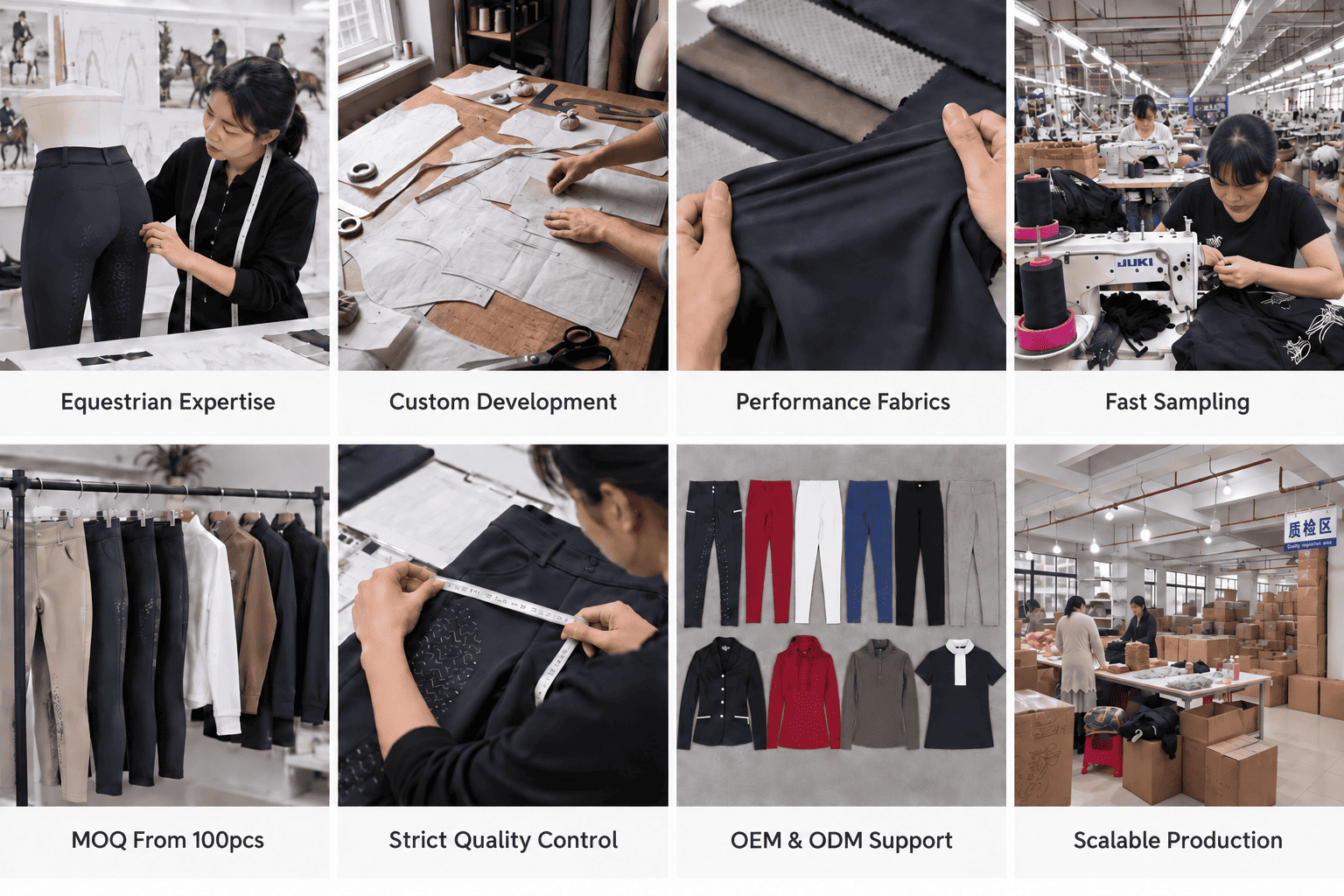
The most useful sample results show whether a garment performs as intended, whether the supplier can resolve problems and whether the approved result can be repeated in bulk. Compare candidates using the same product brief, wearer references and review conditions. Record observations before requesting changes. An attractive first sample deserves attention, but its value depends on the materials used, the construction proposed for production and the supplier’s response when something needs improvement.
How Can a Shared Sample Brief Make Supplier Comparisons Fairer?
Give each candidate the same reference size, measurement chart, material requirements and priority features. Explain whether you are evaluating an existing style or commissioning new development. Otherwise, one supplier may send a stock garment while another develops a pattern, making their sample fees, timing and results difficult to compare.
Record substitutions clearly. A sample made in an alternative fabric may help assess construction, but its stretch can change the fit. Know which decisions each sample can support—and which remain open.
Which Riding-Fit and Durability Results Should Buyers Record?
A standing fitting can miss problems that appear during riding. Review relevant movements with the intended wearer, then repeat the agreed checks after laundering. Keep washing and drying conditions consistent across suppliers; where standardized laboratory laundering is required, agree an appropriate procedure with the testing laboratory using ISO 6330:2021 for textile washing and drying.
| Review area | What to observe | What to record |
|---|---|---|
| Waist and seat | Slipping, rolling, gaping or restricted movement | Garment size, wearer reference, position and photographs |
| Crotch and inner leg | Pulling, bulky seams or contact discomfort | Location, movement and when the issue appears |
| Grip application | Placement, stiffness, cracking or lifting | Sample version and condition before and after washing |
| Fabric behavior | Coverage, growth, surface change or distortion | Review method, care conditions and observed changes |
| Show-jacket mobility | Restricted reach, collar movement or lining tension | Standing, seated and forward-reaching observations |
Agree product-specific acceptance criteria before scoring. Appearance checks alone cannot establish every performance claim; use relevant testing where required.
What Evidence Connects Sample Quality with Repeatable Bulk Production?
Ask whether the sample uses the proposed bulk fabric, trims, grip process and construction. Identify anything made differently and what must be checked again before approval. Photographs and measurements help, but they do not replace material identification.
For example, satisfactory grip on one fabric does not establish adhesion on a replacement fabric. Changes affecting performance require review, even when the replacement looks similar.
How Should Buyers Compare Revision Quality, Explanations and Response Time?
Judge the explanation as well as the correction. If a waistband slips, does the supplier examine dimensions, fabric recovery and waistband structure, or simply suggest making it tighter? A useful proposal identifies the likely cause, explains the adjustment and acknowledges possible side effects.
Record what changed between versions and whether the original problem improved without creating another. Fast replies help coordination; accurate diagnosis and effective revisions provide stronger evidence of development capability than an immediate promise to fix everything.
6. How Do You Verify a Manufacturer’s History, Capacity and Quality Claims?
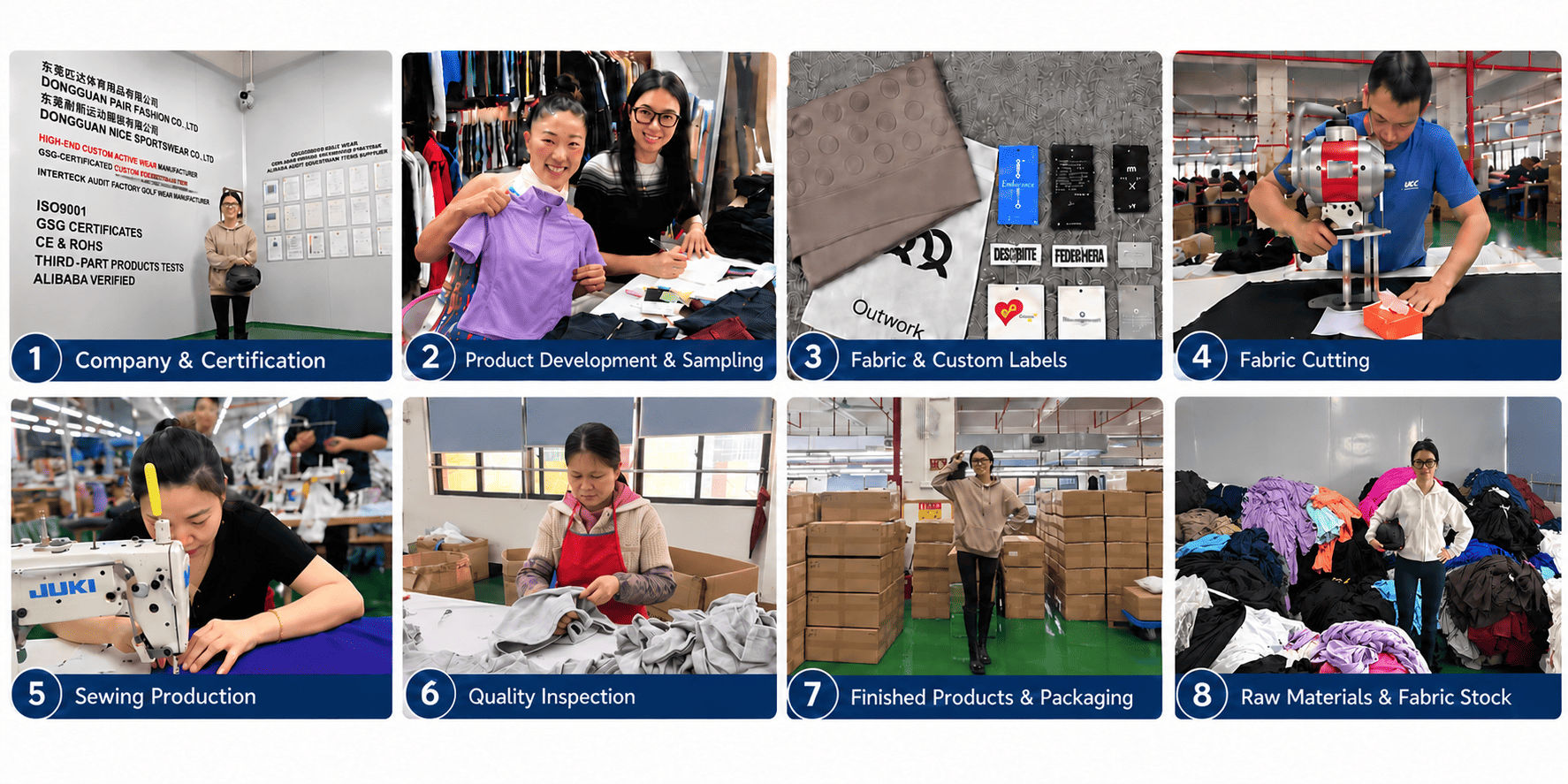
The most useful sample results show whether a garment performs as intended, whether the supplier can resolve problems and whether the approved result can be repeated in bulk. Compare candidates using the same product brief, wearer references and review conditions. Record observations before requesting changes. An attractive first sample deserves attention, but its value depends on the materials used, the construction proposed for production and the supplier’s response when something needs improvement.
How Can a Shared Sample Brief Make Supplier Comparisons Fairer?
Give each candidate the same reference size, measurement chart, material requirements and priority features. Explain whether you are evaluating an existing style or commissioning new development. Otherwise, one supplier may send a stock garment while another develops a pattern, making their sample fees, timing and results difficult to compare.
Record substitutions clearly. A sample made in an alternative fabric may help assess construction, but its stretch can change the fit. Know which decisions each sample can support—and which remain open.
Which Riding-Fit and Durability Results Should Buyers Record?
A standing fitting can miss problems that appear during riding. Review relevant movements with the intended wearer, then repeat the agreed checks after laundering. Keep the conditions consistent across suppliers.
| Review area | What to observe | What to record |
|---|---|---|
| Waist and seat | Slipping, rolling, gaping or restricted movement | Garment size, wearer reference, position and photographs |
| Crotch and inner leg | Pulling, bulky seams or contact discomfort | Location, movement and when the issue appears |
| Grip application | Placement, stiffness, cracking or lifting | Sample version and condition before and after washing |
| Fabric behavior | Coverage, growth, surface change or distortion | Review method, care conditions and observed changes |
| Show-jacket mobility | Restricted reach, collar movement or lining tension | Standing, seated and forward-reaching observations |
Agree product-specific acceptance criteria before scoring. Appearance checks alone cannot establish every performance claim; use relevant testing where required.
What Evidence Connects Sample Quality with Repeatable Bulk Production?
Ask whether the sample uses the proposed bulk fabric, trims, grip process and construction. Identify anything made differently and what must be checked again before approval. Photographs and measurements help, but they do not replace material identification.
For example, satisfactory grip on one fabric does not establish adhesion on a replacement fabric. Changes affecting performance require review, even when the replacement looks similar.
How Should Buyers Compare Revision Quality, Explanations and Response Time?
Judge the explanation as well as the correction. If a waistband slips, does the supplier examine dimensions, fabric recovery and waistband structure, or simply suggest making it tighter? A useful proposal identifies the likely cause, explains the adjustment and acknowledges possible side effects.
Record what changed between versions and whether the original problem improved without creating another. Fast replies help coordination; accurate diagnosis and effective revisions provide stronger evidence of development capability than an immediate promise to fix everything.
7. Which Manufacturer Is the Best Fit—and How Should You Make the Final Decision?
Choose the supplier whose evidence best matches your product requirements, purchasing limits and delivery priorities. Remove candidates that cannot meet essential conditions before comparing scores. Then assess the remaining suppliers using equivalent samples, complete quotations and credible production arrangements. A defined pilot order can test execution before a larger commitment. The best choice is the strongest match for your business—not necessarily the supplier with the highest capacity or lowest advertised price.
How Should Startups, Established Brands and Riding Clubs Weight Their Priorities?
Set priorities before scoring candidates. A startup may need to protect cash while developing its first reliable fit. An established brand may place greater emphasis on consistency with existing products. A riding club may have an event date that leaves little room for delay.
Use the following as an illustrative scorecard, adjusting the weights to your purchasing needs. These are not ratings assigned to the ten suppliers.
| Criterion | Example weight | Evidence to compare |
|---|---|---|
| Relevant capability and sample performance | 35% | Comparable garments, fitting results and effective revisions |
| Quotation completeness and total cost | 20% | Equivalent specifications, clear inclusions and identified exclusions |
| Delivery credibility | 20% | Current schedule, available capacity and stated dependencies |
| Quality evidence and traceability | 15% | Relevant reports, inspection records and acceptance arrangements |
| Communication and change control | 10% | Accurate replies, clear responsibilities and version records |
Which Red Flags Should Disqualify a Supplier Regardless of Price?
Treat refusal to identify the manufacturing arrangement, unauthorized material substitutions or pressure to skip unresolved approvals as reasons to pause the order. If a supplier cannot agree essential acceptance requirements, a favorable price does not resolve the problem.
Distinguish these issues from missing website information. An unpublished founding date or MOQ may be clarified through documents and a quotation. Judge how the supplier closes an information gap, rather than treating every gap as evidence of poor performance.
How Can a Weighted Scorecard Narrow Ten Options to Two or Three?
Rate each criterion from one to five using collected evidence. Multiply the rating by its weight and divide by five to calculate its contribution to a total out of 100. Mark unsupported items as pending instead of assigning optimistic scores.
Shortlist two or three candidates whose strengths remain convincing after sample review and quotation clarification. Small score differences deserve discussion: a slightly higher total should not conceal a weakness in the product feature your customers care about most.
When Should Buyers Use a Pilot Order or Keep a Backup Supplier?
Use a pilot order that meets agreed minimums while keeping exposure manageable. Define success through accepted quality, accurate quantities, required records and delivery against the confirmed plan. A backup supplier also needs its own material and product approvals.
If Fineactive remains on your shortlist, discuss your shortlisted equestrian apparel project with the garment category, unresolved technical questions, quantities and required arrival date. Request a proposal addressing those points so your team can evaluate the next step against the same purchasing criteria.
Frequently Asked Questions About Comparing Chinese Horse Clothing Manufacturers
1. Can a General Activewear Manufacturer Make Reliable Equestrian Clothing?
Yes, a general activewear manufacturer can be a suitable option if comparable samples demonstrate the riding-specific fit, construction and material performance your garments require, and the supplier can explain how those results will be maintained in production.
For riding bottoms, check seated waist coverage, crotch tension, inner-leg seams, pocket position and grip behavior. Assess structured show jackets separately because their development requirements differ from stretch tights. Ask the supplier to explain proposed corrections when problems appear. Relevant samples and effective revisions provide stronger evidence than a broad sportswear catalog.
2. How Many Manufacturers Should a Brand Sample Before Choosing One?
Two or three suppliers are a practical starting point for comparable sampling, provided each has already met your essential product, quantity and verification requirements, and your budget allows enough room for revisions and material checks.
This is a purchasing approach, not a fixed rule. Remove clearly unsuitable candidates before paying sample fees. Give the remaining companies the same brief and explain whether existing styles or new development are required. Compare both the first sample and the response to feedback. Sampling more companies adds little value if each receives different instructions.
3. Does a Low MOQ Make a Manufacturer Better for a Startup?
A low MOQ benefits a startup when it applies to the required garment, fabric, color and customization, while keeping the total development and delivered cost within budget without forcing compromises that weaken the product’s commercial appeal.
Ask whether the advertised minimum covers stock garments, logo application or new construction. Confirm material and trim minimums separately, including responsibility for unused balances. Then compare the cash required for the entire launch, not one style alone. A smaller order with unresolved fit problems may carry more risk than a carefully planned order with a higher minimum.
4. Should Sample Fees Be Refunded After a Bulk Order?
A sample-fee refund is a negotiable commercial benefit, so buyers should compare the written eligibility conditions and included development work before treating it as a saving, particularly when the refund depends on a later bulk purchase.
Confirm the required order quantity or value, deadline, eligible styles and whether the benefit is a refund or credit. Ask if pattern work, revisions, extra sizes and freight are excluded. Keep the answer with the quotation. A clear development charge can offer better value than a refund threshold your purchasing plan is unlikely to reach.
5. How Long Should Brands Allow for Supplier Selection and Sampling?
Allow for supplier screening, quotation clarification, sample making, transport, fitting and possible revisions before adding the confirmed bulk-production and delivery periods, because an advertised sample lead time covers only one part of the complete sourcing process.
Work backward from the date stock must be available for sale. Ask each supplier to identify start conditions, material dependencies and the time needed after feedback. Separate a first sample from an approved product. If the schedule cannot accommodate another revision, simplify the development scope or reconsider the launch date before committing to bulk.
6. Is an Audited Supplier Automatically a Safe Choice for a Bulk Order?
No, an audit provides evidence only within its stated scope, so buyers still need to assess the proposed manufacturing arrangement, relevant sample results, material identity, acceptance requirements and commercial terms before approving a bulk clothing order.
Check the report’s entity, production address, date, findings and any required follow-up. Distinguish social-audit evidence from material tests and garment inspection results. Ask how unresolved issues will be handled and who can authorize shipment. A useful supplier file connects each document to a purchasing requirement; the number of badges on a website does not establish order suitability.
Get In Touch
Contact our OEM/ODM specialists for product development, sampling, pricing, and production support.